








Introduction:Want to make your pour over coffee showcase a rich interplay of sour, sweet, bitter, and salty notes with clear flavors? This article dives deep into how to enhance the complexity of coffee through bean selection, grinding, pouring, and more. From the impact of altitude and processing methods, to fine particle control, brew ratio adjustments, and practical tips on staged pouring, we’ll guide you through a systematic approach to brewing layered, multi-dimensional coffee.
Many coffee enthusiasts hope that the coffee they brew is not just a single note, but rather presents a diverse and rich sensory experience in the mouth—this quality is what we call “layered flavor.” So, what exactly is layered flavor in coffee? It’s not only reflected in the gradual transition and interplay of basic tastes such as sour, sweet, bitter, and salty, but also in how clearly each individual flavor can be distinguished. Brewing a cup of coffee with rich layers actually requires a comprehensive consideration of multiple factors, including bean selection, processing method, fine particle retention, brew ratio, and pouring technique. This article will start by explaining the concept, then gradually break down the key steps to achieving flavor layers, helping you adjust various parameters with more direction during your daily brewing, so that the aroma and taste of your coffee become more vivid and three-dimensional.
 So, what really constitutes “layered flavor” in coffee? When something is described as having “layers,” it usually means it is more engaging than something that presents a single dimension. The same applies to coffee. When it gradually releases a variety of distinct taste experiences in the mouth, the drinker’s sense of satisfaction significantly increases—and that is precisely the charm of layered flavor. If this concept still feels abstract to you, try breaking it down and understanding it from different sensory perspectives.
You can start with the basic tastes: sour, sweet, bitter, and salty. When tasting pour over coffee, if you only perceive a single taste throughout the experience—from the first sip to swallowing—such as just sourness or just sweetness, even if there are no unpleasant off-notes, such coffee is hard to call outstanding. In fact, it may easily come across as monotonous and dull. On the contrary, if the first sip brings a refreshing acidity, followed by gradually emerging sweetness, and finally a noticeable aftertaste upon swallowing, this kind of taste evolution is a key representation of rich layering.
 In addition to taste layers, flavor clarity is also essential. That is, whether the various flavors in the coffee can be clearly identified. We can use fruit as an analogy: when you taste orange juice, apple juice, and watermelon juice separately, most people can easily distinguish their unique flavors. But if you mix all three juices together, it becomes difficult to tell each one apart, and the overall taste may become blurred. Similarly, the multi-layered flavors in coffee also need to be presented with clear differentiation. If various flavors blend into a mush, the result is a murky experience, losing the intended delicacy and richness.
How can you enjoy a cup of coffee with rich layers? Here are several practical aspects worth focusing on.
1. Start with selecting the coffee beans
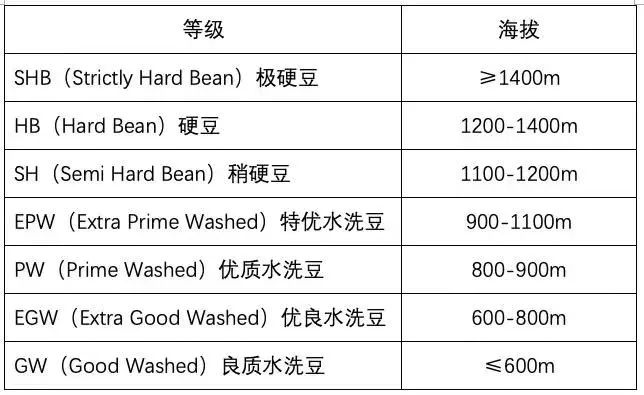
It is recommended to prioritize coffee beans grown at higher altitudes. Generally speaking, the higher the altitude, the slower the coffee cherries ripen, allowing for more thorough nutrient accumulation. As a result, the beans have higher density and greater content of flavor compounds. This is also why many Central American countries use altitude as one of the key criteria for grading coffee beans.
 In addition, the processing method of coffee beans also significantly affects flavor layering. Processing methods such as natural (sun-dried), honey, and anaerobic fermentation often offer advantages in flavor complexity compared to traditional washed processing. It’s important to note that this refers to an “advantage,” not an absolute. These methods usually involve longer fermentation periods, which allow for more transformation possibilities of flavor compounds. Therefore, if you’re seeking a rich layered experience, choosing coffee beans with higher degrees of fermentation generally yields better results.
2. Appropriately retain fine particles
After grinding coffee beans, it’s inevitable that some particles smaller than 0.3mm—known as fine particles—will be produced. Retaining an appropriate amount of these fine particles can bring additional layers of complexity to the overall flavor of the coffee. Fine particles have a dual nature: too many can clog the filter paper, leading to over-extraction and resulting in negative tastes such as bitterness and astringency.
 However, if fine particles are retained in moderation, the uneven extraction they cause can actually contribute to a more diverse flavor profile. Since different particle sizes have varying extraction efficiencies, finer particles typically extract faster than coarser ones. This difference in extraction efficiency can create a richer taste layering. Based on practical testing, keeping the fine particle ratio around5%of the total coffee grounds is an ideal balance point—avoiding over-extraction and filter clogging while extracting more flavor layers.
3. Adjust the brew ratio by moderately increasing it
When coffee is too concentrated, flavors tend to become blurred, the overall taste feels muddy, and individual flavor notes are hard to distinguish. In this case, moderately increasing the brew ratio can help. For example, if you’re currently using a 1:14 brew ratio and find the flavor clarity lacking, you can try adjusting to 1:15. If that’s still not ideal, you can further increase it to 1:16. This adjustment is simple yet effective, helping to enhance both flavor clarity and layering.
4. Use the staged pouring technique
Since different flavor compounds are released at different times, using a staged pouring method allows you to selectively emphasize specific flavor expressions during particular stages, thereby achieving a richer layered experience. Some might ask, why not just use the “blooming & continuous pour” method (a single continuous pour)?
 In practice, the continuous pour method usually has a shorter extraction time. The water flow impact during pouring accelerates the drainage speed of the coffee bed, causing most flavor compounds to be released earlier in the extraction process—especially the acidic and sweet elements. In contrast, staged pouring allows flavor compounds from the early, middle, and late stages to be extracted more evenly. As a result, it often delivers better flavor layering than a single pour. By adjusting your pouring technique and staging strategy based on your own brewing habits and equipment conditions, you can more easily brew coffee with clear, distinct layers.
The above content is compiled by CoffeeHunters, a coffee news website.


