








Introduction:The Golden Cup extraction is a key metric for evaluating how good a cup of coffee tastes. By analyzing data on concentration and extraction yield, it helps you adjust brewing parameters to craft a cup that better suits your personal taste. This article will introduce—in an easy-to-understand way—the historical background of the Golden Cup extraction, the scientific definitions of concentration and extraction yield, as well as practical calculation methods. This way, you won’t be limited by a single set of numerical ranges but can flexibly apply these concepts in your daily pour over practice.
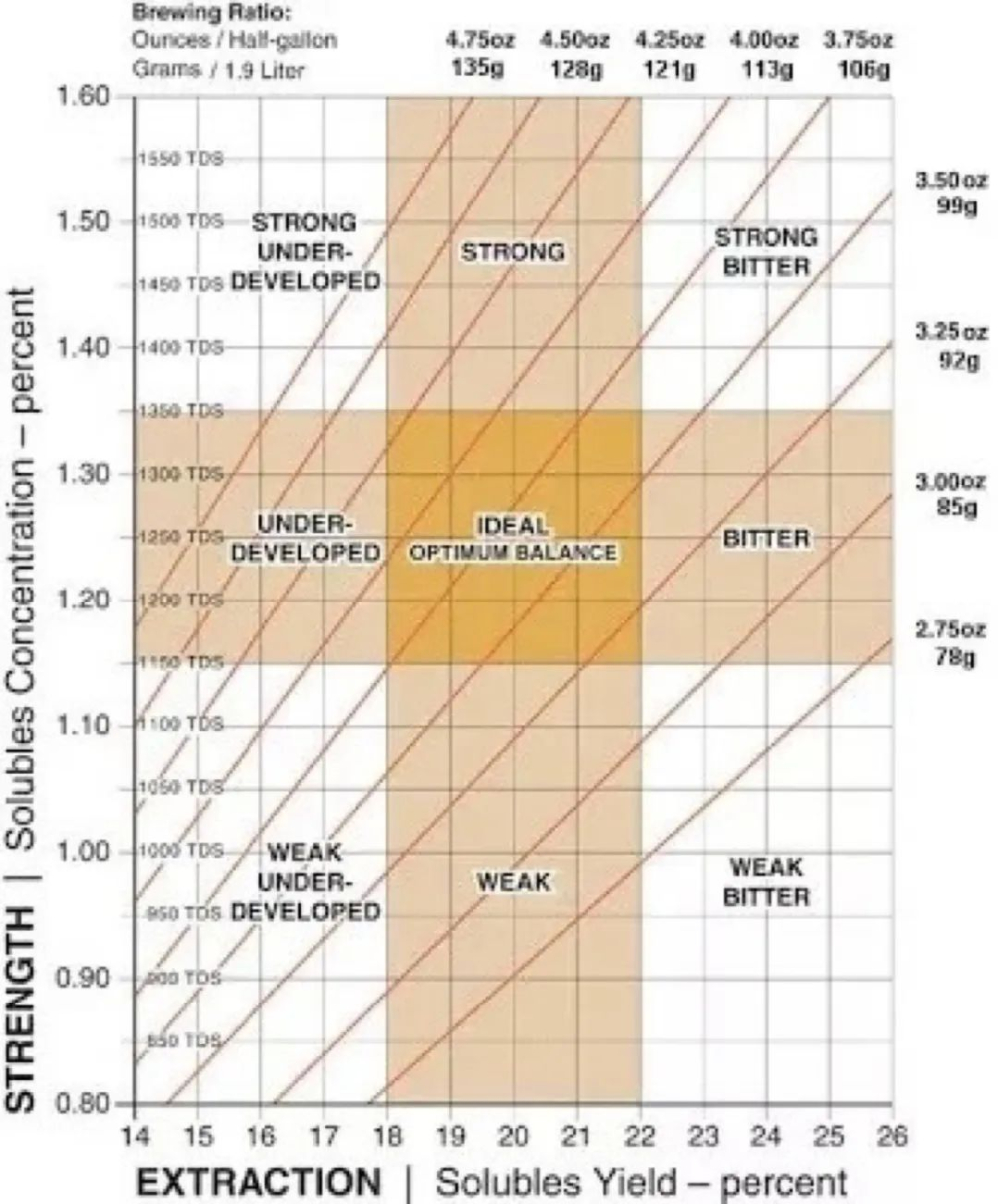
When it comes to pour over coffee, the term “Golden Cup extraction” is surely no stranger to you. This is a scientific evaluation system primarily based on two key metrics—“concentration” and “extraction yield”—to determine whether a cup of coffee has achieved an ideal extraction balance. The currently internationally recognized “Golden Cup range” is an extraction yield between 18% and 22%, with concentration falling within the range of 1.15% to 1.35% . However, these figures are not a one-size-fits-all magic formula for brewing great coffee, but rather a practical tool to help us better understand the principles behind coffee flavors.

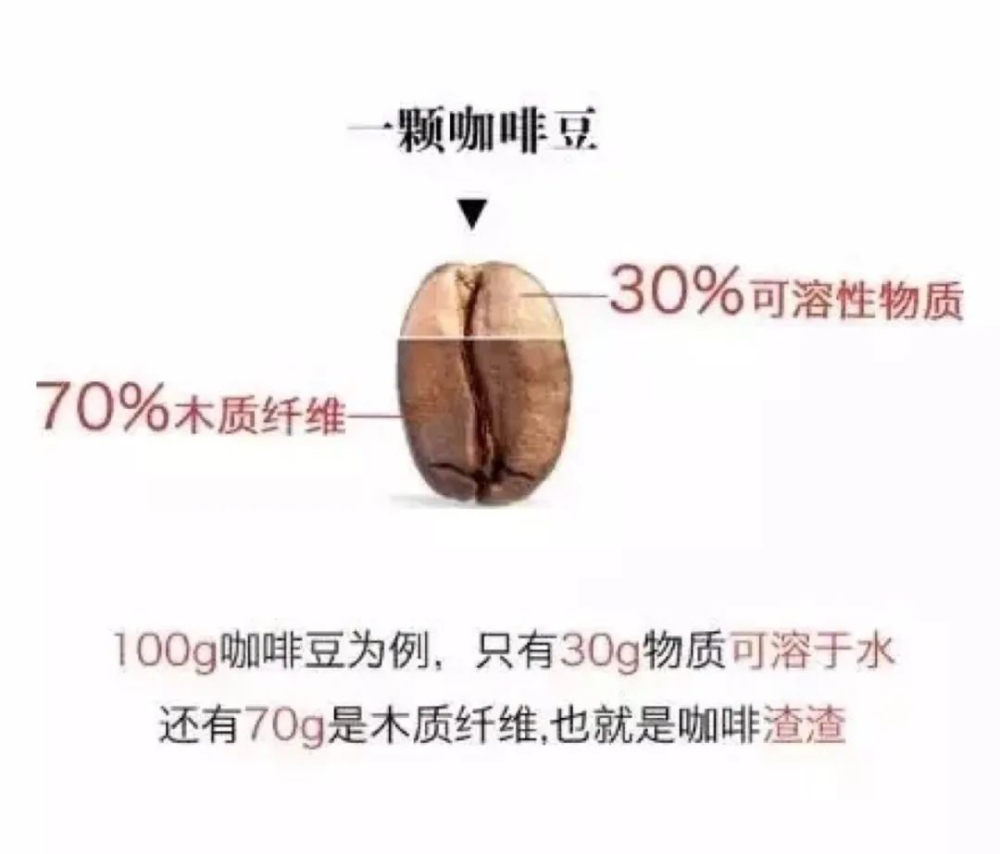
The concept of Golden Cup extraction can be traced back to 1952, when the United States Coffee Association collaborated with chemical engineer Lochhart from MIT to conduct in-depth research on the coffee brewing process. They specifically established the “Brewing Committee,” which analyzed the chemical composition of coffee beans in detail and found that about 30% of coffee beans are soluble substances, while the remaining 70% consists of insoluble fiber. This foundational research laid an important cornerstone for the subsequent development of the Golden Cup theory.

After understanding the basic chemical properties of coffee beans, the research team further conducted a large-scale survey on the coffee preferences of average American consumers. Through questionnaires and actual tasting results, they initially derived an extraction range: extraction yield around 17.5% to 21.2%, and concentration between 1.04% and 1.39%. It’s worth noting that at that time, the mainstream brewing method in the U.S. was not the pour over popular today, but rather using coarser grind sizes, higher water temperatures, and extraction times often lasting as long as 4 to 8 minutes, which is quite different from today’s pursuit of precision and control.
As time passed and technology evolved, subsequent professional institutions and experts continued to rigorously validate and adjust these values. Eventually, the extraction yield was revised to the more widely accepted range of 18% to 22%, and the concentration adjusted to 1.15% to 1.35%. This revised version was also officially recognized by the Specialty Coffee Association of America (SCAA), becoming the “Golden Cup Standard” that is still widely referenced today.
So, what do concentration and extraction yield actually represent? Simply put, concentration refers to the ratio of dissolved soluble substances in a cup of coffee relative to the total volume of the coffee liquid. In other words, the higher the concentration, the usually stronger the taste; conversely, the flavor tends to be lighter. Extraction yield, on the other hand, is the percentage of soluble substances successfully extracted from the coffee grounds compared to the total amount of coffee powder used. For example, if you use 135 grams of coffee powder and end up extracting 19 grams of soluble substances, the extraction yield would be roughly 14.07%[calculation result]. For precise calculations, you can use the formula: “coffee liquid volume × coffee concentration ÷ coffee powder weight” to derive the extraction yield value.
To better intuitively grasp these values, we can refer to the Golden Cup extraction chart. The horizontal axis of the chart represents extraction yield, while the vertical axis shows concentration. Through this graph, we can clearly see which combinations fall within the ideal extraction range. The dark-shaded area on the chart is considered the “Golden Cup range,” or the ideal extraction zone: extraction yield 18% to 22%, with concentration around 1.2% to 1.45%. As long as the coffee data falls within this area, it typically means the cup has achieved a good extraction balance in the scientific sense. But it's important to note that this is just a reference, not an absolute “guarantee of deliciousness.”

Some may mistakenly think that as long as you brew with a coffee-to-water ratio that falls within the Golden Cup range on the chart, you’ll definitely brew a cup of coffee with exceptional flavor. But in reality, the Golden Cup range only helps us clarify the basic numerical indicators of extraction, showing us which parameter combinations are more likely to achieve ideal extraction. The true flavor of coffee is still influenced by multiple factors such as bean variety, roast level, grind size, water temperature, and brewing technique. Therefore, the real value of learning about Golden Cup extraction lies in helping you scientifically understand how each variable affects the final flavor, so you can adjust to find the brewing method that best suits your own taste.
In short, Golden Cup extraction provides a “reference framework,” not an “absolute formula.” Don’t let the so-called “golden coffee-to-water ratio” limit you, to the point where you overlook the flexibility and fun of flavor adjustment. Once you’re familiar with these fundamental principles, you’ll be able to face various brewing challenges with more confidence, and fine-tune your own perfect cup according to your personal preferences.
The above content is compiled by CoffeeHunters, a coffee news website.


