







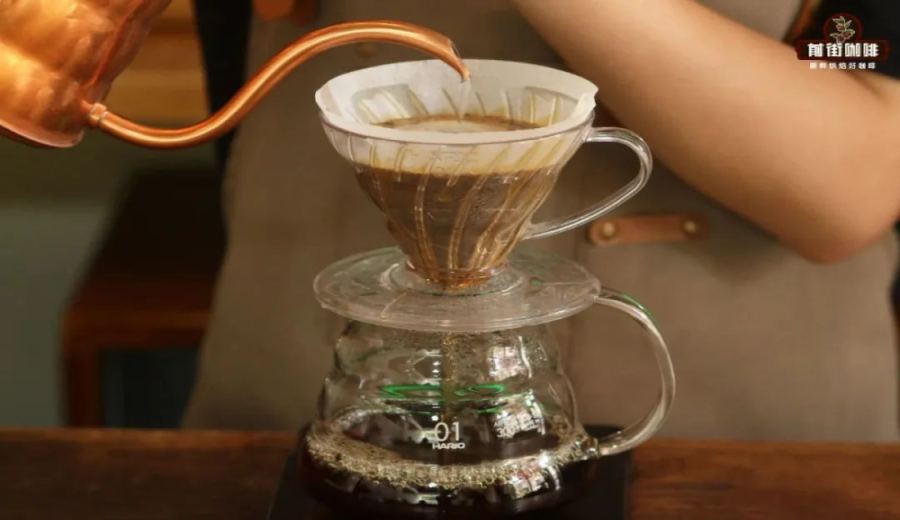
Introduction:One of the charms of pour over coffee lies in how the design of the dripper directly influences extraction flavor. This article delves into the differences in coffee bed structure among the V60 conical dripper, Kalita wave flat-bottomed dripper, and Wave flat-bottomed dripper, and provides practical pouring techniques and operational details for each type. Whether you're a beginner or an enthusiast looking to refine your skills, you’ll learn key techniques to achieve more even extraction, and understand how to adjust your method based on dripper characteristics to enhance flavor expression.
The joy of pour over coffee largely comes from the unique extraction flavors brought by different drippers. Many beginners often wonder: do fan-shaped drippers also require circular pouring? What should be noted when pouring into a flat-bottomed dripper? This article will take three representative drippers—the V60 (conical), Kalita (fan-shaped), and Wave (flat-bottomed)—as examples. Starting with coffee bed distribution, it explains the circular pouring techniques for each type, offers advice for when water flow is unstable, and helps you control extraction more precisely to improve coffee flavor.
Why do we need to pour in circles? The core purpose is to uniformly agitate the coffee bed through the flow and impact of the water stream, allowing hot water to extract various flavor compounds more efficiently and ensuring that every part of the coffee grounds receives consistent extraction time and intensity. In short,even extractionis the ultimate goal of circular pouring.
Currently, pour over drippers on the market can generally be divided into three types: conical, fan-shaped, and flat-bottomed. Below, we’ll use the V60 (representing conical), Kalita (representing fan-shaped), and Wave dripper (representing flat-bottomed) as examples to explain their pouring methods and key points one by one.
First, let’s look at the V60 conical dripper, which is arguably the most iconic model of conical design. If you cut it open sideways, you’ll notice the coffee bed has a distinct triangular distribution: the layer is thicker near the central drain hole and gradually becomes thinner toward the outer edge of the dripper. Therefore, when using the V60 for circular pouring, it’s recommended to start from the very center and slowly draw a circle outward in a spiral pattern similar to a mosquito coil, moving all the way to the outermost circle before gradually returning to the center, repeating this cycle. This pouring method helps ensure that the entire coffee bed is evenly exposed to the water flow, achieving a more consistent extraction.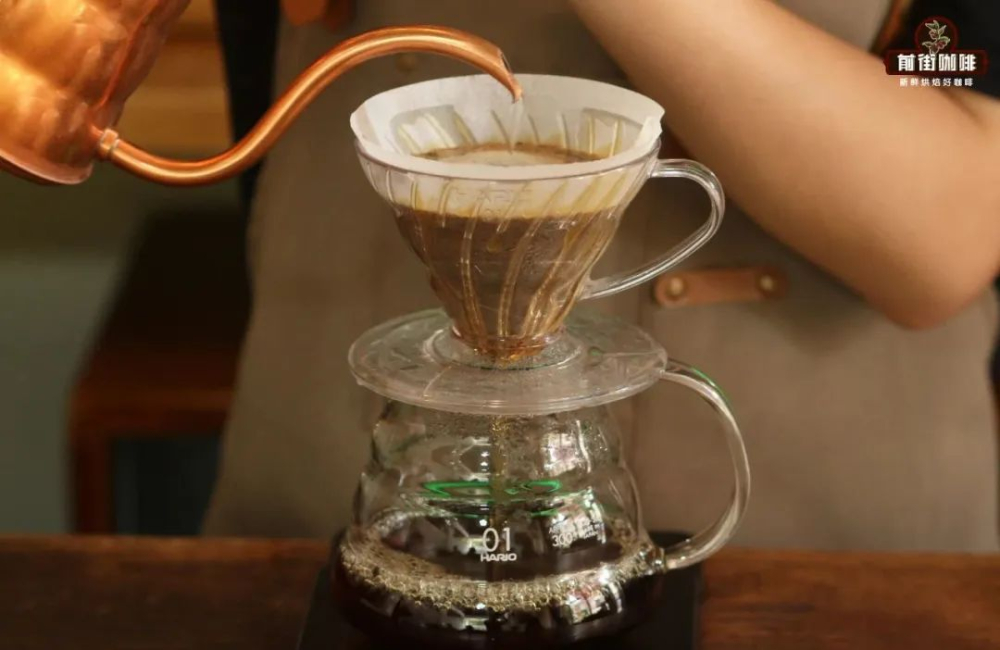
Next is the Kalita fan-shaped dripper, a classic three-hole model with a side profile that is wider at the top and narrower at the bottom, and an elliptical-shaped opening. This structure allows for more concentrated water flow and a more even distribution of coffee grounds. Compared to the conical dripper, the difference in coffee bed thickness is relatively smaller. However, because the opening is elliptical rather than perfectly round, directly applying a “perfect circle” pouring method may not yield the most even extraction. Therefore, it’s recommended to use an “elliptical mosquito coil” pouring path—starting from the center as usual, but following an elliptical path that matches the shape of the dripper opening. This helps stabilize extraction across the entire coffee bed.
Finally, let’s introduce the Wave dripper, also known as the common flat-bottomed (or cake) dripper. This dripper was first introduced by Kalita and features a design that combines a circular opening similar to a conical dripper with a unique flat-bottomed structure, resulting in a more uniform vertical distribution of the coffee bed. Because of its resemblance to a paper cupcake, it’s also referred to as the “cake dripper.” It’s important to note that the Wave dripper must be used with its dedicated filter paper. The special shape of this filter paper weakens the effect of the dripper’s built-in flow channels, thus requiring more precise pouring technique—when circling, be sure to avoid letting the water directly hit the inward-folded edges of the filter paper, as this can cause the coffee bed walls to collapse and affect extraction evenness. It’s recommended to start pouring from the center, spiraling outward in a circular mosquito coil pattern, but keep the maximum range of your circles within the area of the inward folds of the filter paper, then slowly return to the center.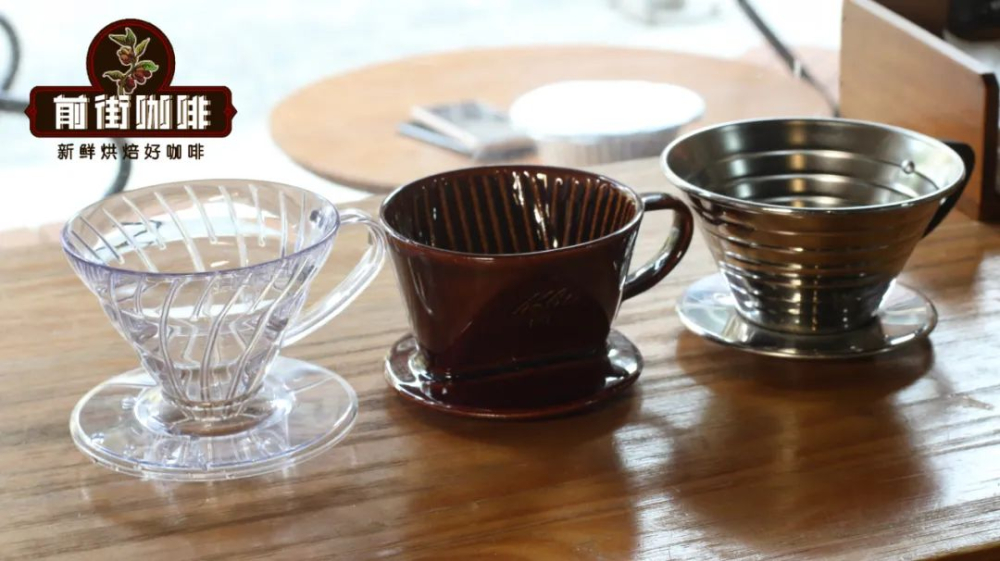
For those who are new to pour over and still struggling with water control, there’s no need to worry too much. If you find your pour is uneven—sometimes fast, sometimes slow—you might try switching to a fixed center pour after the bloom phase, letting the water naturally spread and complete extraction through immersion. This way, you only need to focus on maintaining a steady flow rate, which can effectively reduce extraction inconsistency caused by uneven pouring, and still produce a well-balanced cup of coffee.
The pouring paths introduced in this article are mainly designed to help beginners quickly understand the characteristics of their dripper and gradually get familiar with handling it. In reality, there are many models of drippers on the market, each with varying materials and designs. Once you’ve practiced enough to steadily control your pour, feel free to experiment with combinations of different drippers and techniques. By comparing actual brews, you can personally experience the subtle differences in flavor expression and extraction characteristics of each dripper, and gradually develop your own pour over insights.
In summary, the world of pour over coffee is full of endless possibilities. Whether it’s the versatile V60, the stable extraction of Kalita, or the even coffee bed of the Wave—each dripper has its own unique charm and challenges. With time, learning, and practice, you too can easily master a variety of drippers and brew coffee with satisfying flavor profiles.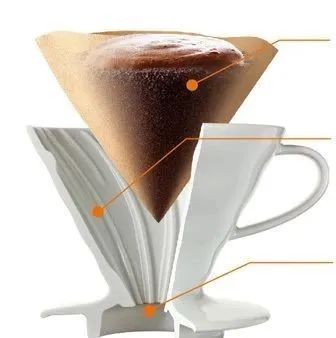
The above content is compiled by CoffeeHunters, a coffee news website.


