








Introduction:In the world of specialty coffee, numerically named varieties are gradually gaining attention, among which 74110 is one of the important disease-resistant varieties from Ethiopia. This article delves into the origins, breeding background, plant characteristics, and flavor profile of 74110, while also exploring Ethiopia’s native variety protection policies and its performance in the COE competition, helping readers gain a more comprehensive understanding of this highly acclaimed coffee variety.
In the specialty coffee field, an increasing number of numerically named varieties are entering the public eye, and 74110 is one of the most notable among them. Originating from the birthplace of coffee—Ethiopia—this variety was carefully bred by the country’s Jimma Agricultural Research Center (JARC) as a disease-resistant strain, particularly excelling in resistance to coffee leaf rust. This article will provide a detailed analysis of the naming rationale, breeding process, plant and cupping characteristics of 74110, along with an extension into Ethiopia’s unique practices in variety protection and breeding, as well as this variety’s outstanding performance in international competitions.

With the rapid development of the specialty coffee industry, over a hundred coffee varieties have been identified and named globally, including those presented in numerical codes such as 74110 and 74112. These varieties often carry profound scientific research backgrounds and regional characteristics. Among many options, 74110 is not only a frequent contender in the COE competition but also a focus for many coffee farmers and roasters. Before diving deeper into 74110, we need to first clarify a common yet often misunderstood concept—"Heirloom" (原生种).
Ethiopia is recognized as the genetic treasure trove of coffee, estimated to possess around ten thousand coffee varieties. However, due to the vast diversity and lack of a complete genetic map, most varieties cannot be clearly identified through conventional genetic testing, and are thus primarily classified based on the experience of coffee farmers. To protect these precious and yet incompletely studied varieties from being excessively imported by international growers, the Ethiopian government has collectively categorized them as "Heirloom," which is the commonly referred to "native variety."
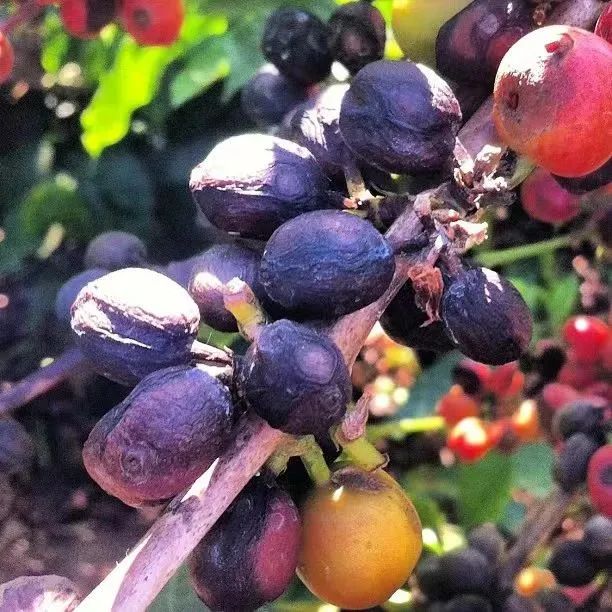
Dating back to the 1970s, Ethiopia experienced a severe outbreak of coffee leaf rust. This disease primarily attacks coffee cherries, infecting both ripe and unripe fruits. Infected cherries develop water-soaked lesions on their surface, which then gradually become sunken, changing color from bright hues to dark brown or even gray-black, ultimately leading to fruit necrosis or premature drop. Statistics indicate that this disease can cause coffee yields to plummet by 20% to 30%, and in severe cases, up to 70% to 80%. At the time, the Harrar and Yirgacheffe regions, located on the eastern side of the East African Rift Valley, were hit especially hard, while areas on the western side were relatively less affected.
Faced with this disease crisis, relying solely on chemical control was not a sustainable solution. The fundamental approach lay in cultivating varieties with disease resistance. Thus, the Jimma Agricultural Research Center (JARC) launched a large-scale “bean-hunting mission,” venturing deep into the primeval forests of the western part of the East African Rift Valley and collecting seeds from over 600 wild coffee trees. After scientific testing and years of field trials, the research team successfully screened out a series of varieties resistant to leaf rust, among which 74110 was one of the first 13 publicly released disease-resistant new varieties.
Regarding the variety code 74110, it actually conceals important information: '74' refers to the year the variety was discovered—1974, and '110' is the experimental sample number. Therefore, 74110 is not just a code name but represents a single coffee variety that has undergone rigorous screening and verification.
In terms of plant characteristics, 74110 is compact and small in stature, with small-sized leaves, coffee cherries, and green beans. It features a green tip and short internodes, and overall demonstrates excellent yield performance. In flavor, 74110 exhibits bright citrus acidity and soft floral notes, with a strong sense of the Ethiopian growing region’s signature characteristics. As coffee expert Han Huai-zong described in his book “The Fourth Wave of Specialty Coffee,” this coffee is like a “fruit bomb,” vividly illustrating its rich and diverse layers of fruity flavors.
Since its discovery in 1974, 74110 has become one of the most widely planted modern varieties in Ethiopia today, thanks to its outstanding disease resistance and environmental adaptability, standing alongside 74112 as two of the main varieties. In addition, it is also a preferred parent variety used in many breeding programs to improve new generations of strains. With strong promotion by the government and producing regions, 74110 not only performs exceptionally well in the field but has also repeatedly stood out in the international COE (Cup of Excellence) competitions. According to statistics, between 2020 and 2022, 74110 won over twenty awards, demonstrating its dual recognition in both cupping quality and market acceptance.
The above content is compiled by CoffeeHunters, a coffee news website.


