








Introduction:Every year when Ethiopia’s new harvest season arrives, the "Hua Kui" coffee beans always spark heated discussions. After the arrival of Hua Kui 7.0 in 2023, many coffee enthusiasts noticed significant differences in its flavor profile compared to previous versions, with some even questioning whether it still belongs to the "Hua Kui" series. This article delves into the origins and background of Hua Kui, the distribution of processing stations in the Guji-Hambella region, explores the actual flavor performance of Hua Kui 7.0, and compares it with the typical characteristics of Yirgacheffe natural-processed beans, helping readers gain a more comprehensive understanding of this popular coffee bean and master key tasting points and purchasing advice.
Even before each new season’s "Hua Kui" coffee beans arrive in port, they have already stirred up conversations in the coffee community. In May 2023, Hua Kui 7.0 officially entered the Chinese market but quickly sparked numerous discussions: "Why doesn’t this Hua Kui taste like it used to?", "Why does the flavor resemble Yirgacheffe more?", "If it’s not from the Buku Abel processing station, can it still be called Hua Kui?" This article will start with the historical background of Hua Kui, detail the origins of the 2017 TOH competition-winning batch, clarify the connection between Buku Abel village and surrounding producing areas, analyze the actual flavor characteristics of Hua Kui 7.0, and share medium-to-dark roast and cupping test results, taking you deeper into this highly anticipated Yirgacheffe natural-processed coffee bean.

Hua Kui coffee beans have always been a focal point for domestic coffee enthusiasts, especially as the new harvest season approaches, with many eagerly anticipating it. What people look forward to the most is experiencing that unique strawberry sweetness and silky smooth mouthfeel—qualities that made the 2017 Hua Kui an instant hit. However, Hua Kui 7.0, which arrived in port in May 2023, left some consumers puzzled, doubting whether it still retained its former flavor.
Many first-time buyers of Hua Kui 7.0 reported that the beans tasted vastly different from their previous impressions of Hua Kui, with some even pointing out that the flavor was closer to the Yirgacheffe profile, leading to questions like: "If these beans aren’t from the Buku Abel processing station, can they still be called Hua Kui?"

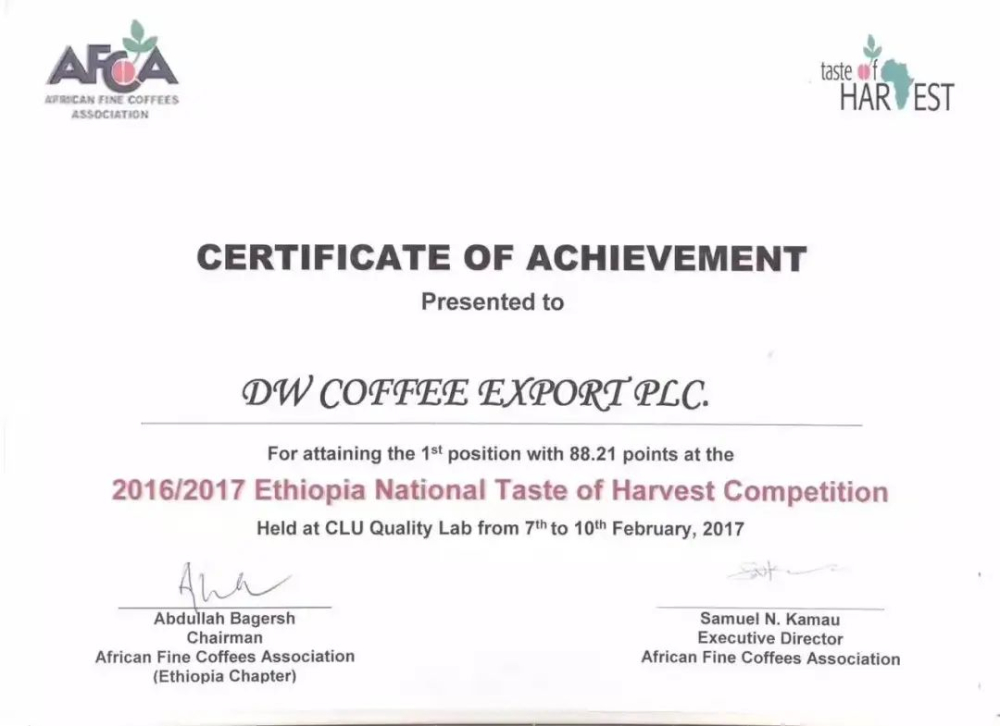
In fact, the origin of the name "Hua Kui" dates back to the 2017 TOH (Taste of Harvest) competition, an African coffee evaluation event organized by the African Fine Coffees Association and held among coffee-producing countries in Africa. That year, a natural-processed lot from the Guji-Hambella region of Ethiopia, processed by the "Buku Abel" station under DW Company, stood out in the natural category with its intense strawberry and creamy aromas, winning the championship.
This champion lot was later introduced to the Chinese market by a Beijing-based green coffee trader and given the distinctly Eastern name "Hua Kui," meaning the foremost flower of unparalleled beauty. What truly catapulted Hua Kui to fame, however, was during the 2017 World Brewers Cup, where Chinese runner-up Li Jianfei used this lot to defeat most competitors using Geisha, rapidly propelling Hua Kui to stardom in China’s coffee scene.
Many coffee aficionados have vivid memories of the strawberry aroma and rich body of the 2017 Hua Kui, gradually forming the impression that Hua Kui must come from the Buku Abel processing station and must have a strong strawberry flavor. But this is actually a misconception.

After winning the championship in 2017, DW Company continued to expand its coffee drying facilities in Dimtu Town, located in the core producing area of Hambella Wamena Wereda. The main natural processing zones are distributed across five villages: "Buku Abel Kebele," "Tirtiro Goye Kebele," "Seke Bokosa," "Haro Soresa," and "Buku Saysay." Buku Abel is actually a small village under Dimtu Town and was often mistakenly referred to as a processing station; to be precise, it is a processing site within the village.
It is understood that Buku Abel Village is relatively small, covering about 25 square kilometers, with 3 to 5 processing stations inside. Each station is equipped with approximately 20 to 30 raised African beds. Each processing station typically handles coffee cherries from within a 5-kilometer radius, producing around 50 to 100 tons of natural G1 grade coffee beans per season. The overall estimated production of Buku Abel Village is around 500 tons per season.
Notably, although Buku Abel Village is the origin of the championship lot and most Hua Kui beans on the market still come from this area, the harvesting scope has expanded over time, and today’s Hua Kui is no longer limited to beans processed in Buku Abel Village. In fact, the natural G1 coffee beans processed in all five villages—"Buku Abel Kebele," "Tirtiro Goye Kebele," "Seke Bokosa," "Haro Soresa," and "Buku Saysay"—are part of the Hua Kui series and are uniformly managed by DW Company.
As for other village names such as Buku xxx, these are mostly neighboring villages not far from Buku Abel, with some separated only by a road. Due to similar geographical and climatic conditions, the coffee grown in these villages also exhibits relatively stable flavor profiles, and exports are correctly labeled according to the actual processing village, without affecting their status as Hua Kui beans.
So why does Hua Kui 7.0 from 2023 taste so different from previous versions, even prompting doubts of it "lacking the Hua Kui flavor"? In reality, Hua Kui is fundamentally a natural G1 coffee bean from the Guji-Hambella region, processed using traditional sun-drying methods. As an agricultural product, its flavor is influenced by multiple factors each year, including climate, temperature, humidity, sunlight duration, and processing details, all of which can lead to annual variations.
The 2017 Hua Kui was unforgettable because that year achieved an exceptional balance of timing, terroir, and technique, resulting in its intense strawberry aroma and creamy mouthfeel—but such performance cannot be replicated every year. For this reason, domestic green coffee traders have, since 2018, used the X.0 numbering system to distinguish Hua Kui lots from different harvests, such as Hua Kui 2.0 in 2018, and Hua Kui 3.0 and 3.1 in 2019.
During cupping, it was found that some smaller-sized Hua Kui beans exhibited flavor profiles strikingly similar to the 2017 championship batch, particularly in aroma. However, they were slightly inferior in body and aftertaste. It was also discovered that these smaller beans occasionally mixed into regular batches—about a few sacks out of every ten. Starting in 2020, the Hua Kui series was officially divided into a standard version and a small-bean Hua Kui, with the latter not included in the X.0 numbering system.
Hua Kui 7.0 from the 2023 new harvest initially did not go on sale immediately due to appearance concerns upon arrival, but after the first inspection, it was confirmed that the quality of this season’s beans had stabilized. Being a new-season lot with higher moisture content, initial grassy notes were more pronounced, so roasters adjusted the roasting curve accordingly, roasting it to a medium-light level to preserve more of its inherent flavors.
Cupping conducted within 12 hours of roasting revealed the following: Hua Kui 7.0’s dry fragrance featured distinct citrus notes, while the wet aroma emitted berry-like scents. During tasting, citrus acidity, sweet notes reminiscent of apricot juice, and passion fruit aromas were noticeable, with a tea-like clean and refreshing finish. These characteristics align closely with the typical flavor profile of Yirgacheffe natural-processed beans—citrus sweetness, rich berry tones, and tropical fruit layers—proving that Hua Kui 7.0 remains a representative example of a Yirgacheffe natural coffee bean.
The above content is compiled by CoffeeHunters, a coffee news website.


