








Introduction:Want to explore China’s specialty coffee rising stars? This article starts with the historical development of Yunnan coffee, delves into the genetic background and flavor characteristics of the dominant Catimor variety, and compares four major producing regions to help you grasp typical flavor profiles such as nuts, citrus, and caramel. Whether you're a pour over beginner trying Yunnan beans for the first time or a roaster seeking inspiration for a high-value bean list, you’ll find practical guidance on selection and tasting here.
When you walk into a specialty café and see “Yunnan coffee” listed on the menu, would you order it? Many customers, faced with a wide array of origin options, often ask baristas: “What variety is this Yunnan coffee? What processing method was used?” This reflects not only curiosity about flavor, but also an increasing consumer focus on origin and quality. As a representative coffee-producing region in China, Yunnan’s small-bean coffee is gradually carving out its own niche in the global specialty market.

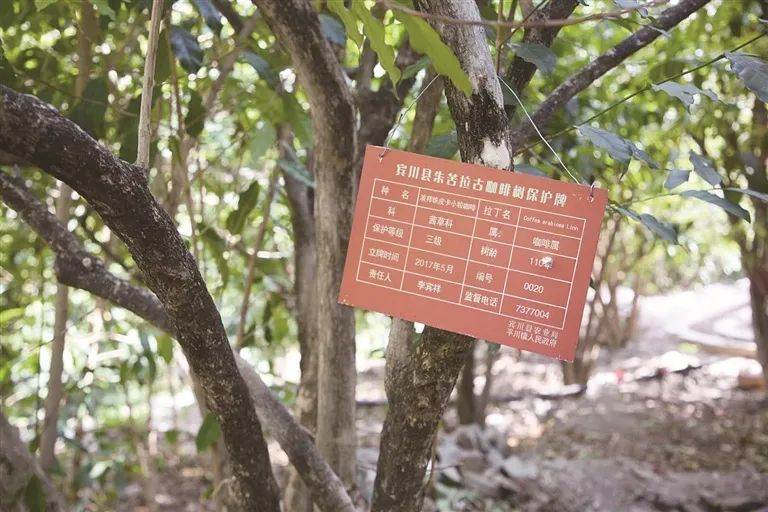
Tracing back to the history of Yunnan coffee, it dates as early as 1892, when French Catholic missionary Térence Dufour introduced coffee seeds from Vietnam and planted the first coffee trees in Zhukula Village, Binchuan County, Dali Prefecture—marking the beginning of Yunnan’s connection with coffee. By the 1950s and 1960s after the founding of the People’s Republic of China, to fulfill trade agreements with the Soviet Union and Eastern European countries, Yunnan began large-scale coffee cultivation, with centralized state procurement, laying the preliminary foundation for the local coffee industry.
In the 1970s, coffee-growing regions in South America were hit by rust disease, leading to a global supply shortage and sharp price fluctuations. To diversify supply risks, international coffee companies turned their attention to Asia and Africa. In the late 1980s, with the advancement of China’s reform and opening-up policies, the Swiss brand Nestlé entered China to establish a joint venture, officially founding its Coffee Agriculture Department in 1992. The department focused on researching and improving coffee varieties suited to Yunnan’s growing conditions and procured beans based on international futures prices. This became a key turning point in scaling up Yunnan’s coffee industry.
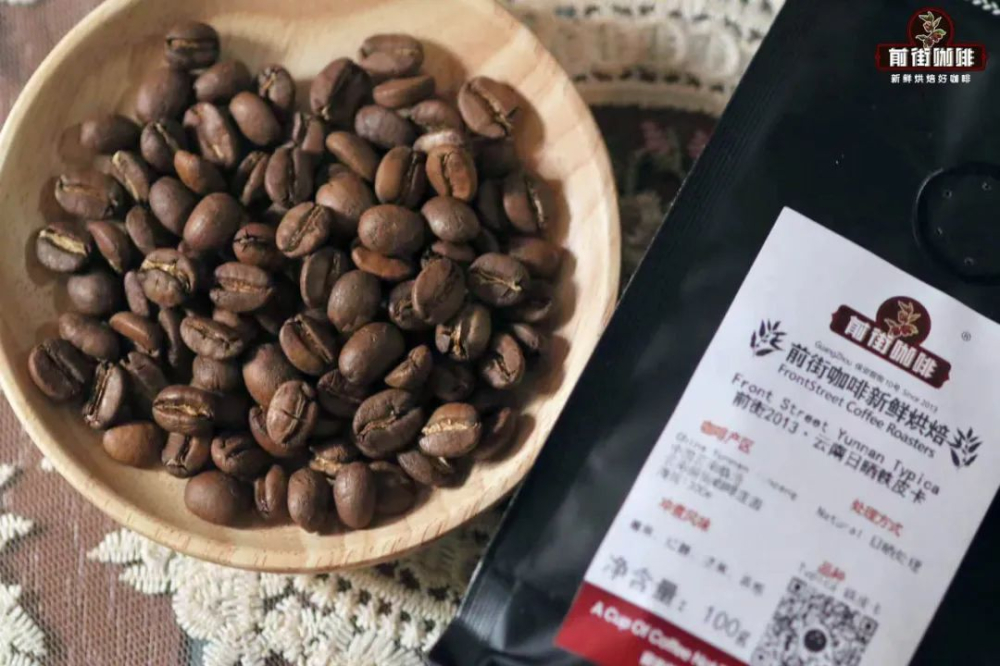
Today, Yunnan’s small-bean coffee generally refers to Arabica, but there’s been a pivotal shift in variety selection. Influenced by Nestlé’s technical team, many farmers phased out older varieties like Typica and switched to Catimor, which boasts strong growth vigor, high disease resistance, and greater per-unit yield. Catimor is actually a hybrid of Timor and Caturra, with the Timor lineage containing around 25% Robusta genes. This gives Catimor stronger adaptability and leaf rust resistance, but also introduces flavor limitations—less aromatic, muted acidity, and if processed improperly, it can easily exhibit noticeable bitterness, astringency, or off-flavors.
According to the 2021–2022 "Yunnan Coffee Flavor Map Atlas" published by Torch Coffee Lab, Yunnan-grown coffees generally feature nutty tones, bright citrus acidity, and sweet sugar notes as their core flavor profile. Common descriptors also include cereal, caramel, chocolate, and herbal aromas, while some high-altitude or uniquely microclimatic regions occasionally present cupping notes with woody undertones. These flavor traits are closely tied to the region’s focus on the Catimor variety alongside diverse processing methods.
If you’re looking to get started with Yunnan coffee, we recommend beginning with washed-process Catimor from Baoshan. As one of Yunnan’s earliest hubs for coffee cultivation, Baoshan has a history of large-scale planting dating back to the 1950s and 1960s, and its small-bean coffee was once exported and earned recognition in international markets. The region has accumulated extensive planting and post-harvest experience, and even after fully transitioning to Catimor, some legacy estates still preserve earlier varieties, offering potential for future diversity and specialty development. Additionally, the washed process highlights the intrinsic flavor characteristics of the beans more clearly, helping you understand the regional terroir and foundational flavor profile.
Yunnan coffee faces two major challenges in its journey toward specialty status: first, the genetic limitations of the dominant Catimor variety, which make it difficult to compete with traditional specialty Arabicas in terms of aroma and finesse; second, a historical reliance on low-cost processing methods, leading to a market perception of Yunnan beans as “industrial-grade” or “instant coffee material.” While recent years have seen experimentation with innovative post-harvest techniques like natural, honey, and anaerobic fermentation, without simultaneous improvements in variety and cultivation management, these efforts sometimes result in flavors that are overly “experimental” or imbalanced.
In summary, Yunnan coffee’s flavor spectrum is gradually taking shape, built on a base of nuts, citrus, and sweetness, and showcasing diversity through regional microclimates and processing methods. Whether you’re a pour over novice just starting out or a roaster looking to expand your bean list, you can begin with washed Catimor from Baoshan and gradually explore this promising Eastern origin—one that may surprise you with even more potential in the future.
The above content is compiled by CoffeeHunters, a coffee news website.


