








Introduction:Have you ever taken a sip of coffee and immediately detected that clean, bright acidity, guessing right away that it’s a washed processed coffee? This article will delve into the washed coffee processing method, starting with the structure of the coffee cherry, to help you understand the differences between washed and natural processing methods. We’ll focus in particular on analyzing how the fermentation stage influences the final flavor profile, with an emphasis on the Kenyan-style washed process—uncovering the key principles behind the pronounced acidity of washed beans—while also providing practical details to help you better appreciate coffee.
In the world of specialty coffee, experienced coffee enthusiasts can often quickly tell whether a bean is washed processed just from one sip. These coffees typically exhibit vibrant fruit acidity and a clean mouthfeel, especially when roasted to a medium or light level, where they more easily showcase refreshing acidity reminiscent of green mandarin or lemon, leaving a lasting impression. If you prefer coffees with bright acidity, washed beans are definitely a top choice to consider.
So, why do washed processed coffee beans present such unique acidity and clean taste? To solve this mystery, we need to start with the basic structure of the coffee cherry, then gradually explore each step of the washed processing method, compare it with the traditional natural process, and deeply understand how fermentation shapes different flavor profiles.

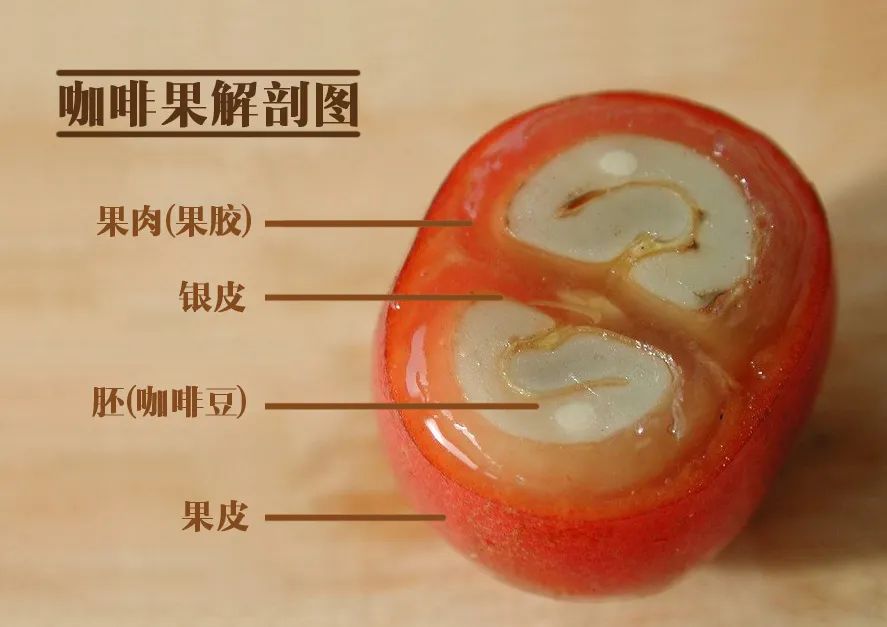
From the outside in, a coffee cherry is composed of the skin, pulp, mucilage layer, parchment (also known as the inner skin), silver skin, and at the very core, the seed (what we call the coffee bean). In simple terms, the purpose of processing is to safely and efficiently extract the internal seed from the ripe coffee cherry while influencing the final flavor characteristics of the coffee bean.
The earliest coffee processing methods were mainly divided into two categories: “wet processing” (also called Wet Process or Washed Process) and “dry processing” (i.e., Dry Process or natural process). Among these, the natural process is the most primitive and simplest method—just expose the whole coffee cherry directly to sunlight until the moisture evaporates completely, then use mechanical force to remove the outer layers and obtain the green bean inside. In contrast, wet processing is more complex but is therefore able to bring out a clearer, cleaner coffee character.
A typical washed processing flow goes like this: First, harvested coffee cherries undergo flotation to remove low-density impurities such as twigs, overripe or underripe cherries. Next, the beans go into a pulper to remove the outer skin and most of the pulp—though at this point the coffee beans are still coated with a sticky mucilage layer. These mucilage-covered beans are then placed into fermentation tanks for approximately one night or even longer.

The key during the fermentation stage is to use microbial action to break down the mucilage layer. This process can be either water-based (with water) or waterless (without water), depending on the specific practices of the producing region and processing facility. After fermentation, the beans are thoroughly washed with clean water to remove residual mucilage, followed by drying. During drying, the parchment coffee (still covered with silver skin and parchment) is usually spread out, and the moisture content is reduced to 11%–13% using sunlight or mechanical equipment, making it suitable for storage and transportation.
Compared to the natural process, washed processing removes the pulp and most of the mucilage early on, resulting in lower overall moisture content. This not only significantly shortens the drying time and reduces dependence on stable weather conditions, but also improves processing efficiency and flavor consistency—this is one of the key reasons why many large coffee estates and producing regions favor the washed method.
So, what’s the scientific principle behind the bright acidity commonly seen in washed beans? The key lies in the organic acid generation reactions that occur during fermentation. No matter which processing method is used, coffee beans go through some degree of fermentation during processing—a metabolic process in which microorganisms convert sugars and organic substances into other compounds (including acids, alcohols, and carbon dioxide).
In an oxygen-rich environment, sugars are more likely to break down and produce various organic acids, thereby influencing the acidity profile of the coffee. Traditional washed processing using “wet fermentation” (i.e., water-based fermentation) is generally semi-aerobic fermentation, which encourages the release of various organic acids from the coffee beans, including citric acid, malic acid, and acetic acid. Among these, the Kenyan-style washed process is a classic example that takes this fermentation process to the extreme.
Kenyan processing facilities often perform an initial 24-hour fermentation of the parchment coffee, followed by thorough washing and re-soaking in fresh water for repeated fermentation cycles—the entire process is repeated three times for a total of 72 hours. This long-duration, multiple-water-change, semi-aerobic fermentation environment helps generate richer and more stimulating organic acids, especially citric acid and acetic acid, which significantly affect taste perception. When these beans are roasted to a relatively light level, more of the original fruit acids are preserved, and the final brewed coffee not only features prominent acidity but also offers a fresh berry-like flavor with a clean and layered mouthfeel.
The above content is compiled by CoffeeHunters, a coffee news website.


