








Introduction:It’s almost inevitable to produce fine coffee grounds when grinding beans, but the proportion of fines can affect extraction stability and flavor. This article delves into the differences in fine particle generation between hand grinders (mostly conical burrs) and electric grinders (commonly flat burrs), using test data for comparison, and explores how burr structure influences fine particle production. This helps you understand grinder characteristics and make more suitable choices.
In the process of coffee grinding, the production of fine particles is nearly impossible to completely avoid, whether you’re using a high-end professional grinder or an affordable entry-level hand grinder. However, the amount of fines directly impacts the stability of coffee extraction and the final flavor profile. Choosing a suitable grinder can effectively reduce the negative effects caused by fines. This article will explore in depth the differences in fine particle generation between hand grinders and electric grinders, starting from burr structure, to help you better understand the characteristics of different grinders and thus make a more suitable choice.

Whether it’s an expensive high-end grinder or an entry-level model that costs just a hundred yuan, it’s still difficult to completely eliminate the appearance of fine particles when grinding coffee beans into powder. However, the quantity of fines directly affects the brewing process, leading to less stable extraction results. Therefore, selecting a suitable grinder can reduce the impact of fines to some extent. With this in mind, we specifically compared the differences in fine particle production between hand grinders and electric grinders to help you understand their different grinding performances, thereby making a better choice of grinder for your needs.
Generally speaking, most hand grinders on the market use conical burr designs, while electric grinders commonly come equipped with flat burrs or gear burrs. For a deeper comparison, we selected a hand grinder with a conical burr and an electric grinder with a flat burr, and conducted a practical test comparing the amount of fine particles produced.
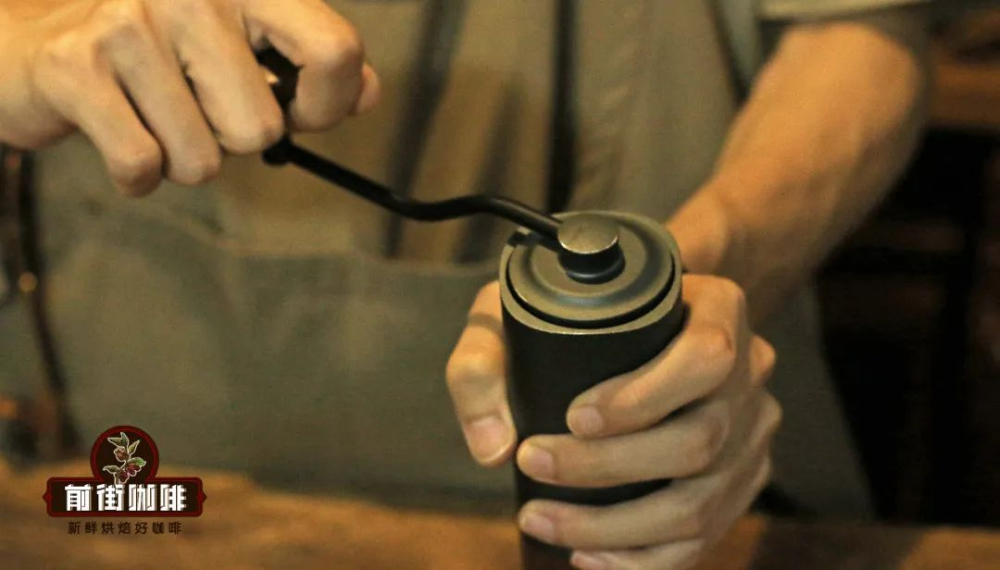
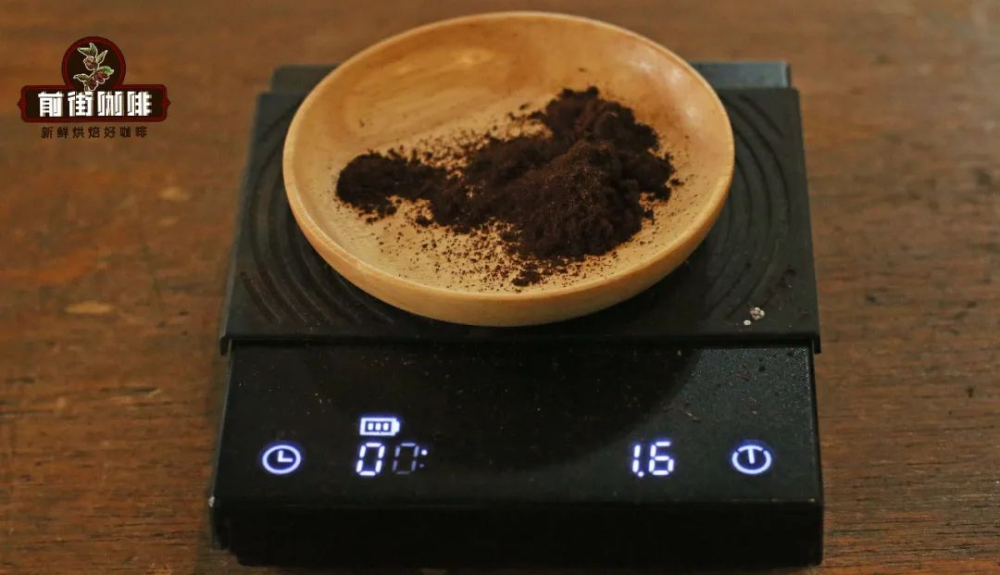
In the practical test, we used both a hand grinder and an electric grinder to grind 10 grams of dark-roasted Golden Mandheling coffee beans, with the grind size set to achieve 80% passing through a Chinese No. 20 standard sieve. The ground coffee was then poured into a sieve shaker and gently shaken to separate the particles. Finally, the extremely fine particles were weighed and compared.
The test results showed that the hand grinder produced 1.6 gramsof extremely fine particles, while the flat burr electric grinder produced only 0.9 gramsof extremely fine particles. This shows that under the same grinding conditions, the hand grinder produces significantly more fines than the electric grinder.

Why does this difference occur? The key lies in the burr structure design. The conical burrs commonly used in hand grinders typically consist of an outer stationary ring burr and an inner rotating conical burr, with the cone diameter tapering from top to bottom. While this design provides certain grinding capabilities, it is harder to control grinding uniformity and is more prone to producing a higher amount of extremely fine particles.
In contrast, electric flat burr grinders use two parallel burrs, one fixed to the machine body and the other driven by a motor to rotate. The coffee beans are ground into powder under centrifugal force and expelled through the gap between the burrs. Since the coffee beans spend less time being crushed between the flat burrs, combined with the stable operation of the motor, this reduces errors caused by manual operation, resulting in more consistent grinding speed and a more uniform grinding effect. As a result, fewer fines are produced.
If you find that your hand grinder is producing too many fines, you can try an additional step: sift the ground coffee to remove excess extremely fine particles. Then, you can add back a moderate amount of the sifted fines to the coffee grounds. This way, you can effectively reduce excessive fines while retaining their contribution to flavor complexity, achieving a balanced extraction.
The above content is compiled by CoffeeHunters, a coffee news website.


