








Introduction:Jamaica Blue Mountain coffee is hailed as one of the world’s top-tier coffees, but behind its prestigious reputation lies a rigorous regional regulation system and quality control framework. This article delves into the core characteristics of the Blue Mountain coffee growing region, the founding background and key functions of the Coffee Industry Board (CIB), and explains how to identify authentic products through packaging labels and certifications. From altitude conditions and varietal purity to cupping standards, gain a comprehensive understanding of the key appreciation points and purchasing guide for Jamaica Blue Mountain coffee.
The reason Jamaica Blue Mountain coffee has become the dream delicacy in the hearts of global coffee enthusiasts is not only due to its unique geographical environment, but also thanks to a stringent regional management system and an official certification body — the Jamaica Coffee Industry Board (CIB). Established in 1952, this institution not only delineated the legal production area for Blue Mountain coffee, but also set comprehensive standards for variety, cultivation, harvesting, processing, and grading, ensuring that every bean meets the pinnacle of quality.
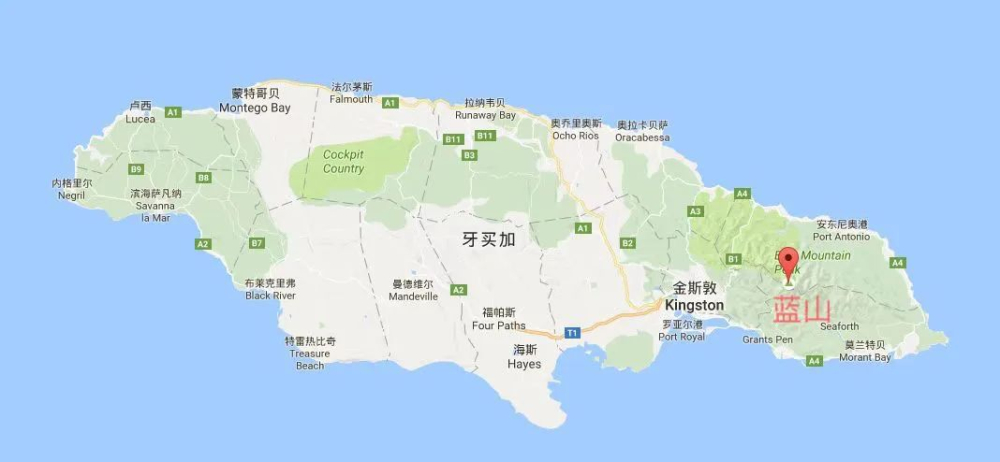
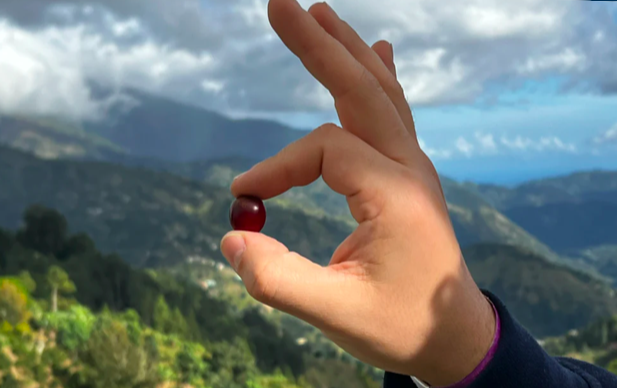
The growing region of Blue Mountain coffee is located in the Blue Mountains of Jamaica, at altitudes of approximately 900 to 1700 meters. Such elevation endows the beans with slow growth, balanced acidity and sweetness, and delicate aroma.The CIB explicitly stipulates that only Arabica coffee planted and harvested within this specific altitude range can be legally labeled as “Jamaica Blue Mountain Coffee.”Coffee produced outside this range can only be sold under designations such as “Jamaica High Mountain Coffee” or “Jamaica Prime Coffee.”

Looking back at history, the cultivation of Blue Mountain coffee can be traced back to the early 18th century. At that time, King Louis XIV of France obtained a coffee seedling from the Dutch, which originally came from Indonesia, and planted it in the garden behind the Palace of Versailles. Later, these coffee plants were introduced to Martinique in the Caribbean, becoming an important source of coffee varieties for Central and South America. In 1728, the Governor of Jamaica introduced Arabica seeds from Martinique, first experimenting with planting in the Saint Andrew area. However, due to the economic structure being dominated by other crops at the time and high taxation, the scale of coffee cultivation remained limited.
It was not until 1790, when the British government reduced the coffee tax, that the Jamaican coffee industry gradually took off. By 1814, export volumes had significantly increased, bringing substantial foreign exchange earnings to Britain. However, after the abolition of slavery in 1838, many coffee farmers left the original plantations, leading to the abandonment or division of large coffee estates, resulting in a subsequent decline in both quality and yield, and the reputation of Blue Mountain coffee was once tarnished.
To revive the coffee industry, the Jamaican government established the Coffee Industry Board in 1948, dedicated to improving quality and expanding the market. In 1952, this board was officially upgraded to the Jamaica Coffee Industry Board (CIB), becoming the world’s first official body specifically responsible for regulating the coffee industry. The establishment of the CIB was key to Jamaica Blue Mountain coffee’s return to the international specialty coffee stage.
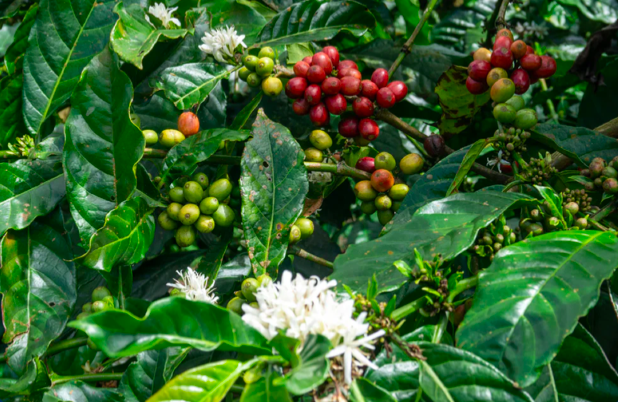
To ensure the excellent quality of Jamaica Blue Mountain coffee, the CIB has established a series of standards that are still regarded as industry benchmarks to this day. First, in terms of regional designation,only coffee produced at elevations between 900 and 1700 meters in the Blue Mountains can bear the name “Jamaica Blue Mountain Coffee.”Coffee produced in other areas is categorized as part of the High Mountain series. Secondly, in terms of variety, Jamaica insists on planting pure Arabica, particularly the Typica variety, which is also referred to by some in the industry as the “Blue Mountain variety,” preserving its original flavor characteristics.
In addition, the CIB is also responsible for promoting farmer education, including handpicking ripe fruits, washed processing techniques (which were advanced practices at the time), and environmental sustainability concepts. In terms of quality grading, Blue Mountain coffee is classified into NO.1, NO.2, NO.3, and PB (peaberry) based on bean size and defect rate.Among them, the standard for Blue Mountain No.1 is that the beans must be 17 mesh or above, with a defect rate below 3%.This ensures that every coffee bean meets a very high standard.
The CIB was also the world’s first institution to introduce a cupping score sheet system, with evaluation criteria covering dry and wet aroma, acidity, flavor, body, and cleanliness, laying the foundation for modern cupping scoring. This move preceded other scoring systems by more than twenty years. This strict quality control process enabled Jamaica Blue Mountain coffee to rapidly gain popularity in the global premium market during the 1980s.
However, precisely because of its outstanding reputation, some unscrupulous vendors began selling coffee from other regions under the pretense of being Blue Mountain. To eliminate this phenomenon, the CIB introduced exclusive labels between 1984 and 1985, which could only be affixed to packaging barrels containing 100% pure Jamaica Blue Mountain coffee, ensuring consumers could distinguish authenticity.
It is worth mentioning that Jamaica Blue Mountain coffee still insists on using handmade wooden barrels for export packaging, rather than the commonly seen burlap sacks. These wooden barrels are only authorized for use with Blue Mountain grades No.1 to No.3, PB, as well as Jamaica High Mountain Prime and High Mountain PB, with strict specification distinctions (70kg, 30kg, 15kg). Other grades can only use burlap bags. The wooden barrel itself has also become one of the important indicators for identifying authentic Blue Mountain coffee.
Each wooden barrel is printed with the Rainforest Alliance-certified green frog logo, signifying that the coffee beans are grown in a pollution-free environment and are organically cultivated. The upper part of the barrel indicates the estate name, while the center clearly states information such as G (gross weight), T (barrel weight), and N (net weight); the barrel lid is stamped with the grade, and the lower edge is engraved with the Jamaica production mark and a unique ICO number. These details are all important evidence for verifying authenticity.
Additionally, all exports of Blue Mountain coffee must obtain permission from the Jamaican government and pass the quality inspection and certification procedures of the Jamaica Coffee Industry Board. Each batch of coffee comes with an official label and relevant certification documents. It is recommended that consumers ask merchants to show the relevant certificates for Jamaica Blue Mountain coffee when purchasing, to ensure they are getting authentic coffee truly originating from the Blue Mountain region.
For example, a certain coffee brand’s offering of Blue Mountain No.1 comes from the Clifton Estate, and includes a quality certificate issued by the Jamaica Coffee Board, an authorized sales certificate from the producer, and a certificate of origin. Every step, from origin to cup, stands up to scrutiny.
The above content is compiled by CoffeeHunters, a coffee news website.


