







Introduction:The pouring techniques in pour-over coffee are incredibly diverse, among which "one-pour" and "three-pour" are two mainstream methods frequently discussed by coffee enthusiasts and professional baristas alike. These two approaches not only differ significantly in their operational logic, but also have varying impacts on water flow control, extraction time, and even the final flavor profile of the coffee. This article presents a practical comparative experiment to analyze the operational details, coffee bed changes, and flavor differences between the two, helping you find the brewing strategy that best suits your needs.
One of the charms of pour-over coffee is that even when using the same coffee beans, simply changing the pouring method can yield a completely different flavor experience. Among the many brewing techniques, "one-pour" and "three-pour" are the most commonly compared. The former emphasizes continuous and stable pouring, while the latter extends extraction and enhances layering through segmented pouring. What exactly are the differences between these two methods in actual brewing? How do they affect the extraction efficiency and flavor of the coffee? Let’s break it down step by step—from parameter settings to flavor expression.
The so-called "one-pour" does not literally mean pouring all at once in one stroke, but rather refers to pouring all the remaining hot water after the bloom phase,in a single continuous pour,dividing the process into just two phases: the bloom and the main extraction, without interrupting the water flow. This technique originates from the concept of Japanese kendo and may seem simple, but it actually demands a high level of stability and rhythm in pouring. Many people mistakenly think it’s the same as a single pour (so-called "one-shot" method), but the latter typically means pouring all the water from the very beginning without any segmentation—these two should not be confused.
On the other hand, the "three-pour" method is currently preferred by many professional baristas, especially in scenarios where highlighting the rich layers of coffee is desired. Its operational logic involves dividing the main extraction phase into two or more pours after the bloom,using the pauses between pours to allow the coffee grounds more time to absorb water and release flavors,thereby extending the overall extraction time and enabling more precise control over concentration and temperature changes at each stage. This method is not only stable but also relatively easy to adjust based on the condition of the beans.
To more intuitively understand the differences between the two methods, we used the same batch ofwashed Yirgacheffe coffee beans,with fixed parameters: grind size passing about 80% through a #20 sieve (equivalent to setting 10 on an EK43s grinder), 15 grams of coffee, a 1:15 coffee-to-water ratio, 92°C water temperature, and brewing with a resin V60 filter cone. The only difference was the pouring method—one group used the one-pour method, the other the three-pour method.
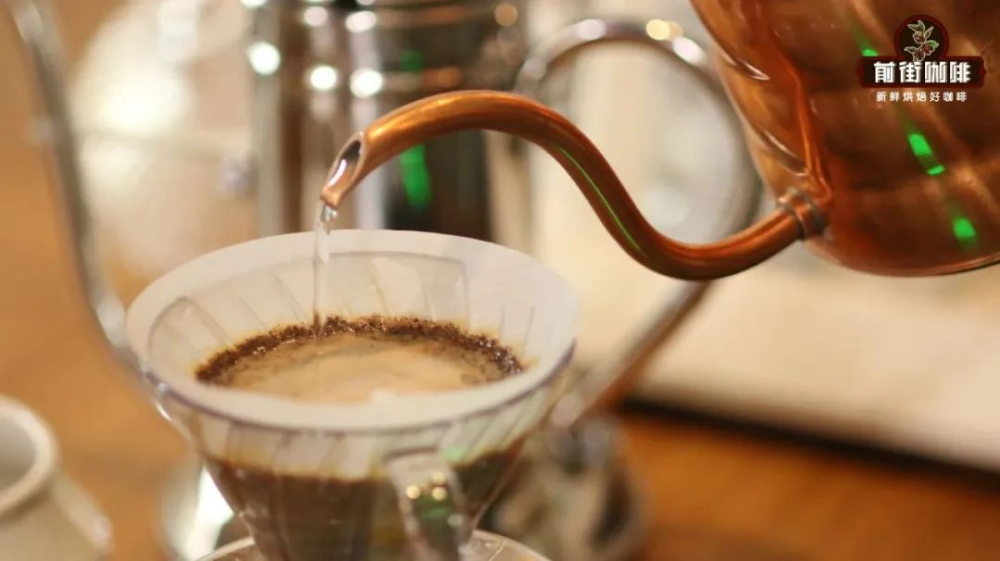
After the actual brewing, observing the coffee bed revealed that,the three-pour method resulted in a flatter coffee bed crater with evenly distributed coffee grounds and no obvious pile-up,while the one-pour method produced a relatively flatter crater with more coffee grounds concentrated at the bottom, indicating a more focused water flow and less agitation. These differences in coffee bed presentation directly influenced the resulting flavor profiles.
In terms of flavor, the coffee brewed with the one-pour method featureda profile dominated by lemon acidity and citrus aromas,with a cleaner and crisper mouthfeel, but overall the flavor layers were thinner, the body slightly lacking, and the aftertaste shorter. In contrast, the three-pour method, in addition to lemon and citrus, also brought outfloral notes, green tea, and subtle grassy tones,with a rounder and fuller acidity, pronounced sweetness, a richer overall flavor profile, and a long-lasting, memorable aftertaste.
Why is the three-pour method more likely to achieve stable and layered flavors? The key lies in the "pauses" and "agitation effects" created by segmented pouring. The intervals between pours give the coffee grounds time to reabsorb water and expand,increasing the contact time between coffee and water by about ten seconds or more,allowing flavor compounds to be extracted more thoroughly. Additionally, by adjusting the water flow intensity and pouring position at different stages, it’s possible to more flexibly guide the direction of the flavor, avoiding over-extraction or uneven extraction.
For beginners, the three-pour method also has a clear advantage—higher fault tolerance. If you pour too quickly or misjudge the water amount at a certain stage, you can often compensate in subsequent stages by adjusting the flow rate or extending the pouring time, reducing the overall error rate. For this reason, many specialty coffee shops and training courses list the three-pour method as the preferred advanced technique after mastering the basics.
So why is the seemingly simpler one-pour method actually more challenging? Because the one-pour method involves only a single pour during the entire main extraction phase,making it impossible to fine-tune the extraction rhythm through segmentation,thus placing stricter demands on the stability of the pour, the water flow rate, and the control of the pour point. Once the pour is unstable, it can easily lead to uneven extraction, with some parts over-extracted and others under-extracted. Moreover, mastering the bloom time is also a key factor in the success of the one-pour method; if the coffee bed doesn’t fully absorb water, even the most precise subsequent pours may fail to bring out the intended layers and flavors.
In summary, whether you choose the one-pour or three-pour method, there is no absolute right or wrong—it all depends on the characteristics of the coffee beans you’re using, the grind size, water temperature, and your own pouring control skills.If you’re aiming for stable and layered flavors, the three-pour method is usually the more user-friendly and easier-to-master choice; if you want to challenge your pouring fundamentals or prefer a clean and refreshing style, you might want to start practicing with the one-pour method.Only by understanding the principles and limitations of each method can you truly brew an ideal cup of coffee that suits your taste.
The above content is compiled by CoffeeHunters, a coffee news website.


