








Introduction:Dirty coffee has become a top choice for many coffee enthusiasts due to its striking hot-and-cold layering and strong visual contrast. However, whether it’s necessary to pre-chill the cup before brewing has long been a hot topic in the industry. This article conducts real-world tests using glasses at three different temperatures—room temperature, refrigerated, and frozen—to analyze how these conditions affect the layering effect and how long it is maintained. We also delve into how milk quality and cup temperature actually influence the overall flavor, helping you master the art of crafting a Dirty coffee that looks as good as it tastes.
In recent years, Dirty coffee has rapidly risen in popularity in the global specialty coffee scene for its high visual appeal and intense flavor contrast, becoming a signature offering in many cafés. Among its standout features, the visual separation between hot and cold layers is one of the most captivating aspects. Many tutorial videos and articles emphasize that “pre-chilling the cup” is a key step. But how much does cup temperature really affect the layering? Is it truly necessary to chill the cup in advance? In this article, we put glasses at room temperature, refrigerated, and frozen to the test, providing an in-depth analysis of their impact on both the layering and taste of Dirty coffee.
In our experiment, we consistently used 20 grams of coffee grounds and extracted a shot of espresso over a 27-second brew time. We then poured the same conditions of iced milk (Bright Dairy Fresh Farm) into the bottom of the cup. Next, we served the drink in glasses at room temperature, refrigerated, and frozen, respectively, observing the differences in layering effect, visual presentation, and how long each setup maintained its appearance.

The test results showed that with room-temperature glasses—since their temperature is higher than that of the milk—the layering was still clearly visible, but the hot-and-cold contrast was less pronounced. Additionally, by the second sip, the milk had quickly warmed up to near room temperature, affecting the overall chilled drinking experience. For refrigerated glasses, whose temperature was closer to that of the milk, the color transition at the hot-cold boundary was more natural. The layering remained stable and lasted longer; the first couple of sips delivered a sharp hot-and-cold contrast, but after about three minutes, the crema began to dissipate, and after five minutes, the overall temperature approached room temperature.
As for frozen glasses, although their temperature was lower than that of the milk—resulting in less obvious color contrast at the layering boundary—the visual “dirty” effect was even more pronounced, and the way the coffee stained the milk was more impactful. Moreover, frozen glasses preserved the crema best, displayed the clearest distinction between hot and cold layers, and had the longest optimal drinking window. However, it's worth noting that glasses taken directly from a frozen environment tend to develop condensation on the outer walls, which can affect transparency and how photogenic the drink appears.
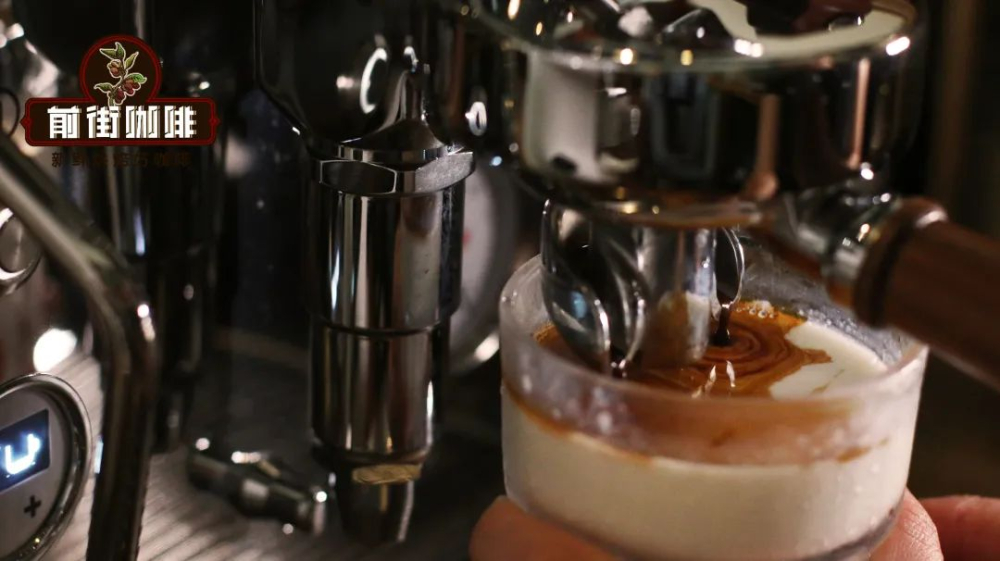
This shows that whether or not a cup is pre-chilled is not the absolute determining factor for successful layering. The key lies in the quality of the milk itself and the extraction parameters of the espresso. As long as the milk can support the weight and temperature difference of the coffee, a Dirty coffee can still display good layering. The lower the cup temperature, the stronger the chilled sensation, resulting in a sharper contrast with the hot espresso and a richer overall drinking experience.
Interestingly, the creator of Dirty coffee, Masayuki Tanaka, when launching his signature Dirty (listed on the menu as B.P Dirty) at Bear Pond Espresso in Kita-Shimizu, Tokyo, in 2009, did not use the pre-chilled cup method. Masayuki Tanaka is known for his unique espresso called “Angle Stain (Angel’s Stain),” and he insisted on using a bottomless portafilter for extraction, visually monitoring the brew process to create espresso that leaves tear-like stains on the inner wall of the cup.
This type of espresso is produced under conditions of dark roast, large coffee dose, ultra-high concentration, and low extraction rate, causing the double shot of “Angel’s Stain” to drip slowly into the cup. Even without a pre-chilled glass, the layering can be maintained for quite some time. Therefore, while pre-chilling the cup can enhance both the visual and flavor experience, it is not indispensable.
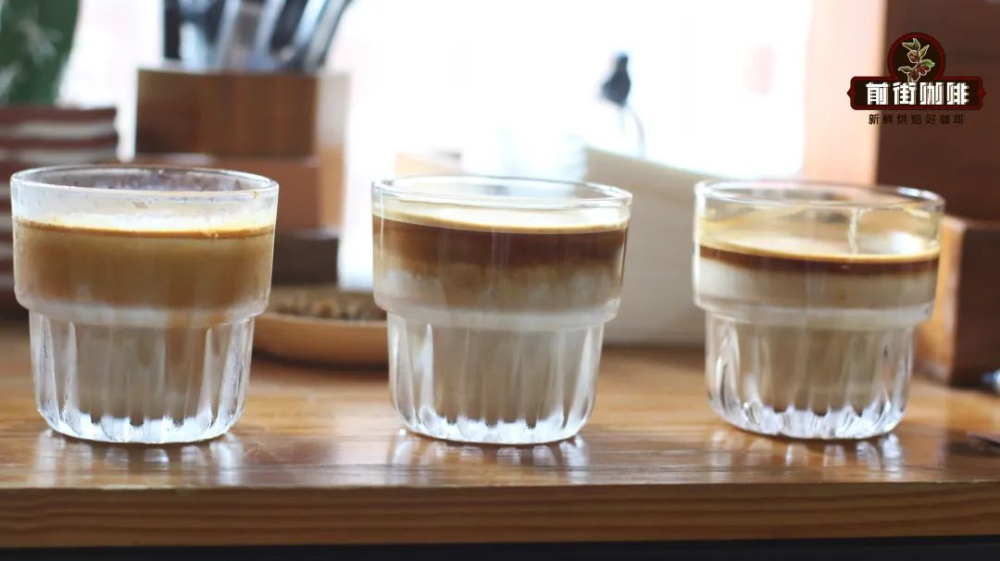
Based on both experimental findings and historical background, if you want to make a Dirty coffee that is both photogenic and rich in layered texture, it is recommended to chill both the glass and the milk together in advance. This helps preserve the chill of the milk while achieving better visual results. If you're more focused on the performance of the espresso and the crema, it's best to enjoy the drink within three minutes of preparation to get the optimal flavor and layering experience.
The above content is compiled by CoffeeHunters, a coffee news website.


