








Introduction:When faced with two renowned Red Label Geishas—the one from Panama’s Hacienda La Esmeralda and the other from Ethiopia’s Gesha Village—many coffee enthusiasts often wonder which to choose. This article provides an in-depth comparison of the two in terms of origin environment, grading system, variety origin, and processing methods, helping you understand their uniqueness and make a more suitable choice based on your personal taste.
Although both carry the name “Red Label Geisha,” the products from Panama’s Hacienda La Esmeralda and Ethiopia’s Gesha Village actually differ significantly in flavor profile, origin background, and processing methods. Starting from a customer’s question at a coffee shop, this article delves into the differences between these two specialty coffees in terms of terroir, grading logic, variety origin, and natural sun-drying techniques, giving you clearer direction when selecting or brewing.

Origin Environment: Volcanic Slopes vs. Pristine Jungles
Hacienda La Esmeralda is located in the Boquete region of Chiriquí Province, Panama, adjacent to the active Barú Volcano. The altitude and surrounding microclimate here create ideal conditions for coffee cultivation: year-round mist, abundant rainfall, and mineral-rich volcanic soil provide an excellent growing environment for the Geisha variety.
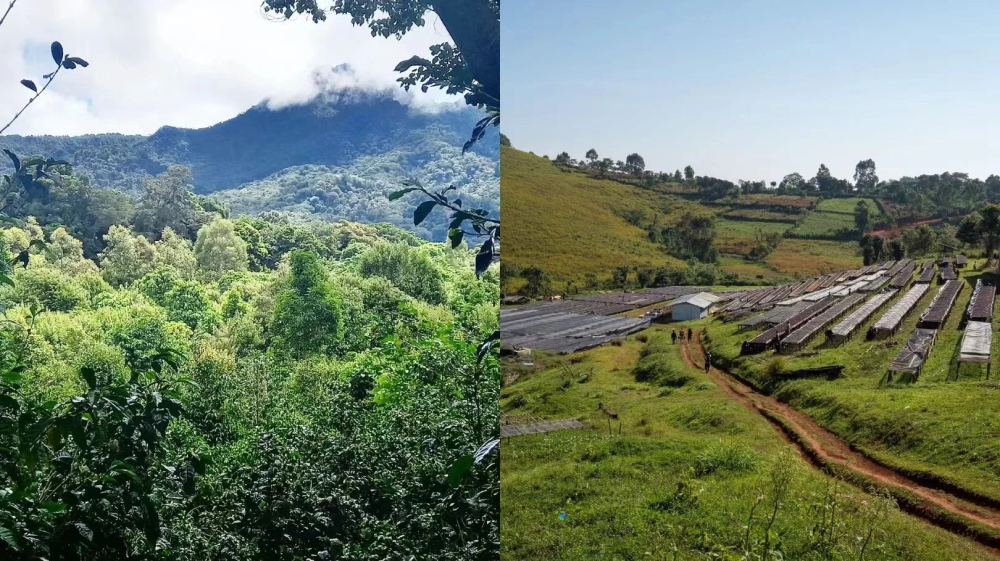
In contrast, Gesha Village Coffee Estate is situated in Ethiopia’s far-western Bench Maji region, nestled deep within wild jungles. The area generally exceeds an altitude of 1900 meters, representing a typical high-altitude coffee-growing zone. The surroundings of Gesha Village still retain pristine forest landscapes with extremely high biodiversity, offering a unique backdrop for the preservation and development of coffee varieties.
Grading System: Differences in Commercial Models and Regional Characteristics
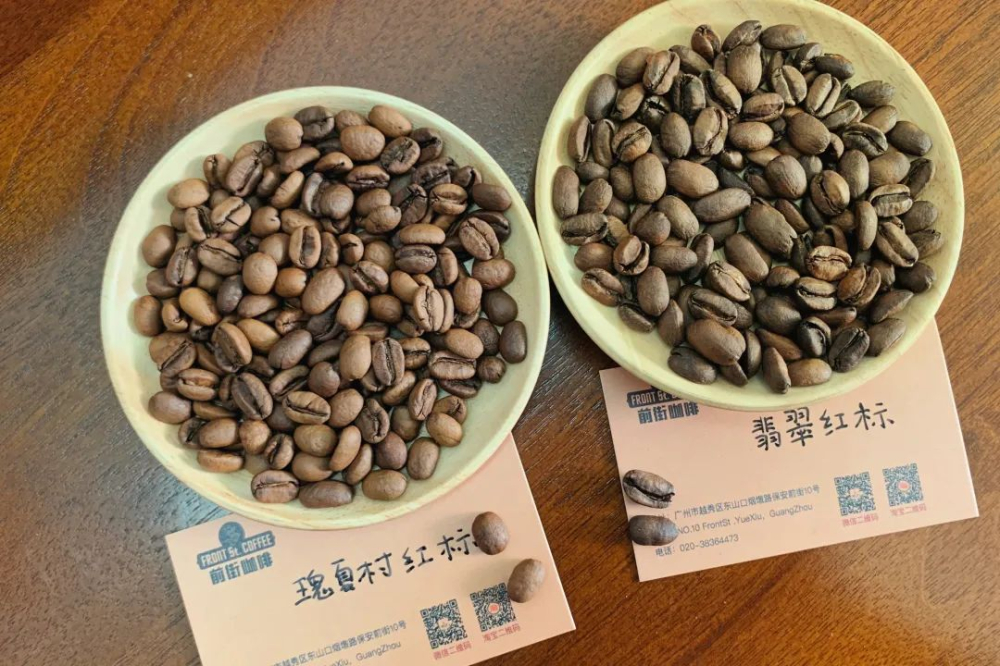
Although both beans are marketed as “Red Label,” the grading logic behind them is actually quite different. Hacienda La Esmeralda was one of the first to systematically grade Geisha, categorizing it into three main grades based on cupping results, altitude, and planting plots to precisely distinguish quality differences.
Gesha Village’s grading, while referencing Hacienda La Esmeralda’s model, has developed a five-tier system tailored to its own regional characteristics: Auction, Gold Label, Red Label (Growers Reserve), Green Label, and Chaka. Among these, the Red Label (Growers Reserve) accounts for about 15% of total production and must meet the strict SCA cupping score of 88 or above. It’s worth noting that this is not Gesha Village’s top tier, but it still represents a certain standard of quality.
Variety Origin: The Intersection of Geisha Orthodoxy and Local Variants
The Geisha variety was first discovered in the 1930s in Ethiopia’s Gesha Forest in the southern region, later brought to CATIE in Costa Rica and cataloged as geisha T2722. However, due to the lack of genetic matching technology at the time, Gesha Village’s variety selection was primarily based on plant morphology and flavor characteristics. Led by Willem Boot, seeds resembling the appearance of Panamanian Geisha were selected from the Gesha Forest, though these varieties have not been fully verified as the original T2722.
Not long ago, a customer walked into a coffee shop and specifically asked for a Red Label Geisha. When the staff informed them that both the Hacienda La Esmeralda and Gesha Village Red Labels were available, the customer asked, “Which one tastes better?” This seemingly simple question actually involves fundamental differences between the two coffees in multiple aspects. Next, we’ll break down the differences between these two Red Label Geishas, from origin and grading to variety and processing.
Sun-Drying Process: Collision of Traditional Methods and Natural Drying
In terms of processing, Hacienda La Esmeralda’s Red Label Geisha mainly uses a combination of traditional patio drying and electric Guardiola dryers. The Guardiola provides a stable, constant-temperature airflow, ensuring even drying of the coffee cherries, which helps preserve the clear floral and fruity aromas and consistent flavor expression.
Gesha Village takes advantage of the dry season from December to March each year, predominantly using natural sun-drying beds. With low rainfall and moderate temperatures during this period, sun-drying can more fully present a clean, bright acidity and rich fruity notes. Especially in the sun-dried Gori Geisha batch purchased by a certain coffee shop, alongside jasmine floral notes and berry and apricot fruit tones, there is also the distinctive high acidity and silky mouthfeel of African beans, with a caramel-like toffee sweetness lingering in the aftertaste.
Conclusion: Which Red Label Geisha Tastes Better?
Overall, the Hacienda La Esmeralda Red Label Geisha is known for its refined batch management and consistent floral-fruit profile, while Gesha Village showcases a more native, layered flavor expression through diverse varieties and natural drying methods. As for which one tastes better, it ultimately depends on personal taste preference. If you prefer fresh floral and fruity notes with a consistent flavor profile, you might lean toward Hacienda La Esmeralda; if you favor rich fruit tones and bright acidity, the Red Label from Gesha Village might be more to your liking.
The above content is compiled by CoffeeHunters, a coffee news website.


