







Introduction:It’s common in coffee shops to see customers occupying seats without ordering drinks—especially in outlets located in public areas, which are more prone to this challenge. This article delves into the root causes of seat-hogging, examines the legality of setting minimum spending requirements, and compiles tested communication tips and management strategies from netizens to help independent café owners maintain operational efficiency and space utilization within legal boundaries.
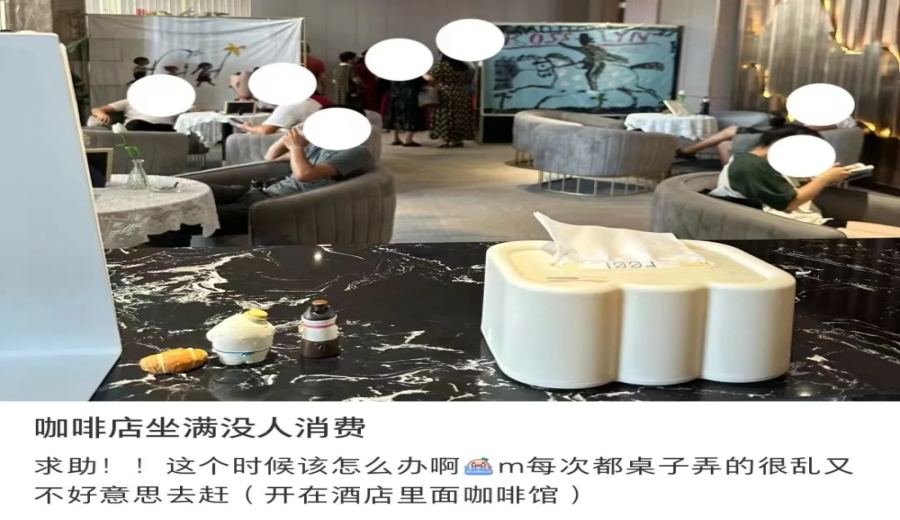
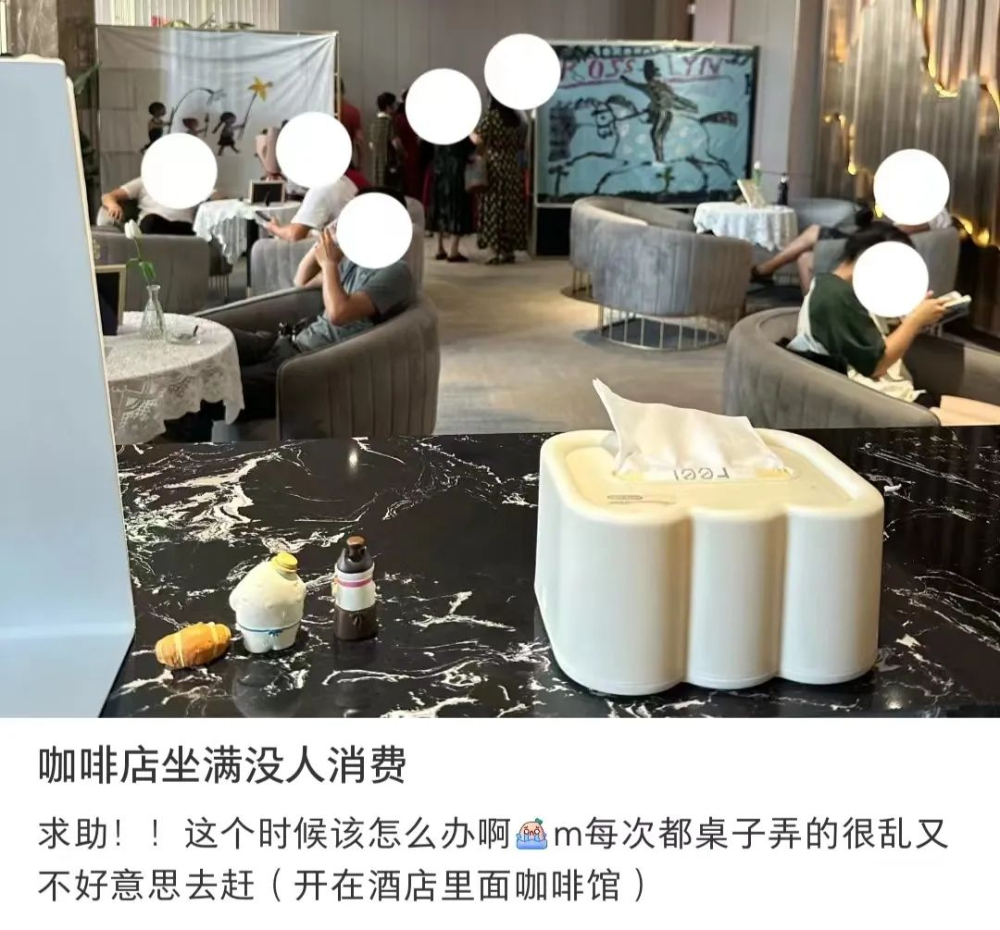
In the coffee business, the ambiance of the space is often a key attraction for customers. However, when seats are full but no one is spending, it becomes a headache for the operator. Recently, a post seeking help from a coffee shop located in a hotel lobby sparked heated discussion on social media. Despite the café having installed screens and displaying signs that read “consumption required for seating,” it still couldn’t stop customers from occupying seats without ordering, resonating with many in the industry.
Such situations are not isolated. The discussion around #cafeseatoccupationwithoutpurchase# has been ongoing for years, with the core debate centering on the balance between consumers’ right to use the space and the operational costs borne by the business. For independent cafés, the practical pressures of rent, utilities, and labor costs make spatial efficiency a crucial issue, and learning how to properly handle seat occupation has become essential knowledge for operators.
In response to this issue, many netizens suggest implementing a minimum spend policy. However, according to the “Administrative Measures for the Operation and Management of the Catering Industry,” it is clearly stipulated: “Catering service providers shall not set minimum consumption amounts. Violators will be ordered to rectify the situation by market supervision authorities at or above the county level and will be fined between 1,000 and 5,000 yuan.” This regulatory restriction forces many businesses to seek alternative solutions.
In practice, operators can manage seat occupation issues effectively through the following strategies: first, proactively inform customers of consumption requirements upon seating to avoid disputes later; second, gently explain to those who have not ordered yet that they may need to vacate their seats during peak hours; third, when seats are in high demand, coordinate with customers amicably—for example, asking if they would be willing to give up their seat to someone who has ordered but has nowhere to sit.
In addition, operators can also optimize seating layouts, set clear signage for consumption areas, or provide guidance on reasonable time limits for short rests to balance customer needs with operational effectiveness. The key lies in maintaining professional and polite communication, ensuring both store order and brand image are preserved.
In summary, addressing seat occupation requires integrating legal constraints with practical experience. Through preventive communication, flexible management, and spatial planning, a balance between customer experience and operational efficiency can be found. These practical strategies are not only applicable to hotel lobby cafés but also serve as valuable references for all types of independent coffee shops.
The above content is compiled by CoffeeHunters, a coffee news website.


