








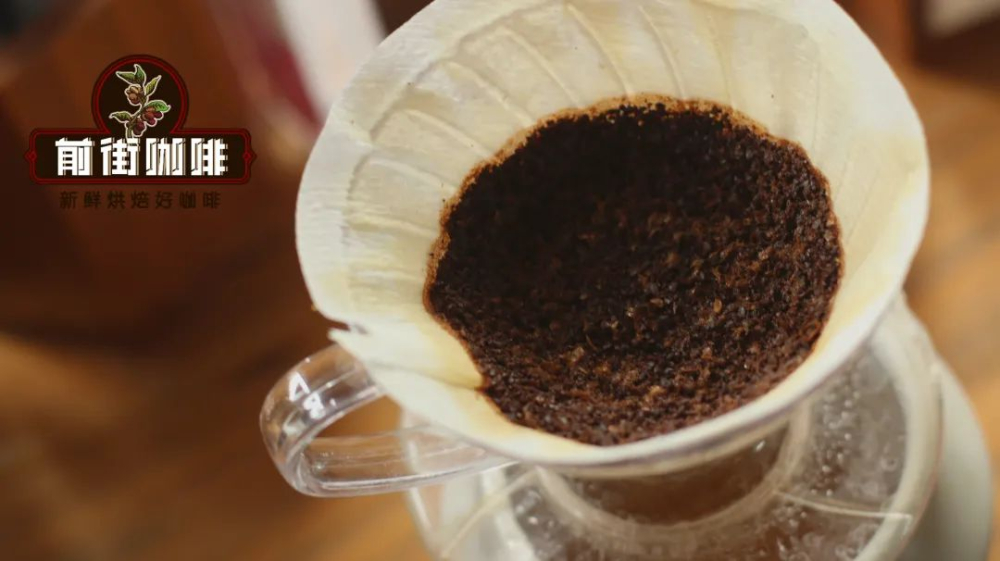
Introduction:During the pour over process, the coffee grounds left at the bottom of the filter—both the indentation (often called the "powder pit") and the surrounding walls of coffee grounds—are not just outward manifestations of the extraction result, but also contain key information about water flow control and flavor development. Understanding the causes behind the thickness of the coffee grounds wall and mastering pouring techniques can help you adjust your method more precisely to extract a balanced and layered cup of coffee. This article delves into the reasons behind the formation of the coffee grounds wall, how different pouring methods affect flavor, and offers practical operational advice.
After each pour over session, many coffee enthusiasts habitually observe the shape of the powder pit at the bottom of the filter as a reference to judge whether their pouring and extraction were appropriate. In fact, the thickness of the coffee grounds wall and the depth of the powder pit are not formed by chance—they are closely related to factors such as pouring speed, swirling technique, and even the roast level of the coffee beans. This article will explore these perspectives, breaking down how the coffee grounds wall influences flavor expression, and through various pouring experiments, guide you in finding the best operational approach for different types of coffee beans.

Many people, after brewing a pour over, inspect the remaining coffee grounds in the filter to assess whether their pouring technique needs improvement. Sometimes you might find that the coffee tastes dull, with a thick layer of coffee grounds left at the bottom of the filter forming a solid coffee grounds wall. At this point, you might wonder: does the thickness of the coffee grounds wall also affect the final coffee flavor?
So, what factors determine the thickness of the coffee grounds wall? First, water flow rate is one of the key elements. When the water flow is small during pouring, there isn’t enough force to agitate the coffee bed, making it difficult to lift the coffee grounds adequately, which leads to a thicker coffee grounds wall. The powder pit often takes on a slightly curved, “bowl-like” shape. Conversely, using a larger water flow and swirling with an appropriate range increases the water’s ability to lift the coffee bed, resulting in a relatively thinner coffee grounds wall.
Additionally, the range of your swirling motion greatly affects the formation of the coffee grounds wall. If you’re accustomed to pouring in large circles near the edge of the filter while controlling the force to avoid disrupting the coffee grounds wall, you’ll usually achieve a deeper powder pit and a thinner coffee grounds wall. However, if you pour within a small area—such as around the size of a coin—the coffee grounds tend to concentrate at the bottom, leading to a thicker coffee grounds wall. Moreover, dark roasted coffee beans, due to their looser structure, expand noticeably after absorbing water and have strong degassing, making them more likely to cling to the edges of the filter and form deep, thick powder pits.

So, does the thickness of the coffee grounds wall really change the flavor expression of the coffee? The answer is yes. Starting with water flow rate, smaller water flow results in a slower descent of water, lengthening the overall extraction time, which can easily lead to over-extraction, bringing out off-flavors or astringency. Therefore, it’s recommended to adjust the extraction rhythm through time control.
Next, regarding the swirling range, actual tests have found that the temperature of hot water poured in the center or within a small range is about 0.5°C higher than when poured in a large swirling range. This is because, during large-circle pouring, the hot water loses more heat energy as it moves, resulting in a slightly lower actual extraction temperature. Some operators have conducted experiments using the V60 filter, whose spiral channel design effectively guides the flow of coffee liquid and helps avoid channeling. The experimental results showed that large-circle pouring brings out livelier, lighter, and softer flavors, while small-circle pouring tends to present richer, heavier, and more concentrated taste profiles.
Since the thickness of the coffee grounds wall is influenced by multiple factors, how should we respond to improve the stability and flavor performance of our pour overs? Rather than simply pursuing a thinner or thicker coffee grounds wall, a more practical approach is to adjust pouring strategies according to the roast level of different coffee beans, optimizing extraction results through stable water flow control.
For example, when brewing medium to light roasted beans (such as Yirgacheffe or Geisha), to highlight their bright fruity acidity and aroma, it’s recommended to start the first pour after the bloom by swirling from the center of the filter outward. This evenly lifts the coffee grounds on the liquid surface and maintains consistent foam color. Subsequently, you can gradually reduce the swirling range, and for the final pour, it’s advised to use a concentric circle about two-thirds the width of the liquid surface. This approach helps release the acidity more clearly while maintaining overall flavor balance.
As for medium to dark roasted beans (such as Blue Mountain or Mandheling), the goal is usually to extract a rich and full-bodied taste. In this case, it’s recommended to choose a filter like the KONO, which has a slower water descent speed, and adopt a small-circle pouring method. After the bloom, start slowly swirling outward from the center, moving to about halfway out in radius, and continue until the pouring is complete. Since dark roasted beans have strong degassing, even with small-circle pouring, foam will still visibly emerge and cover the liquid surface, helping to concentrate and release the flavors.
In summary, the shape of the coffee grounds wall and powder pit is a direct result of the interaction between water flow and coffee grounds during the pour over process. Understanding the reasons behind their formation helps you adjust your pouring method more scientifically, thereby gaining better control over extraction flavors. Whether you prefer a bright and lively taste or a rich and full-bodied one, stable and appropriate water flow control is the key to achieving ideal extraction.
The above content is compiled by CoffeeHunters, a coffee news website.


