







Introduction:Starbucks recently launched a discounted annual card priced at 12.8 RMB, bringing the price of a medium-sized drink down to as low as 25 RMB, sparking discussions about a potential coffee price war. However, such promotions have actually existed in various forms since 2021, including a flat rate of 25.9 RMB and 20% discounts. What strategic considerations lie behind these deals? How much are you actually paying for a medium Starbucks coffee? This article will break down Starbucks' pricing logic and market strategy.
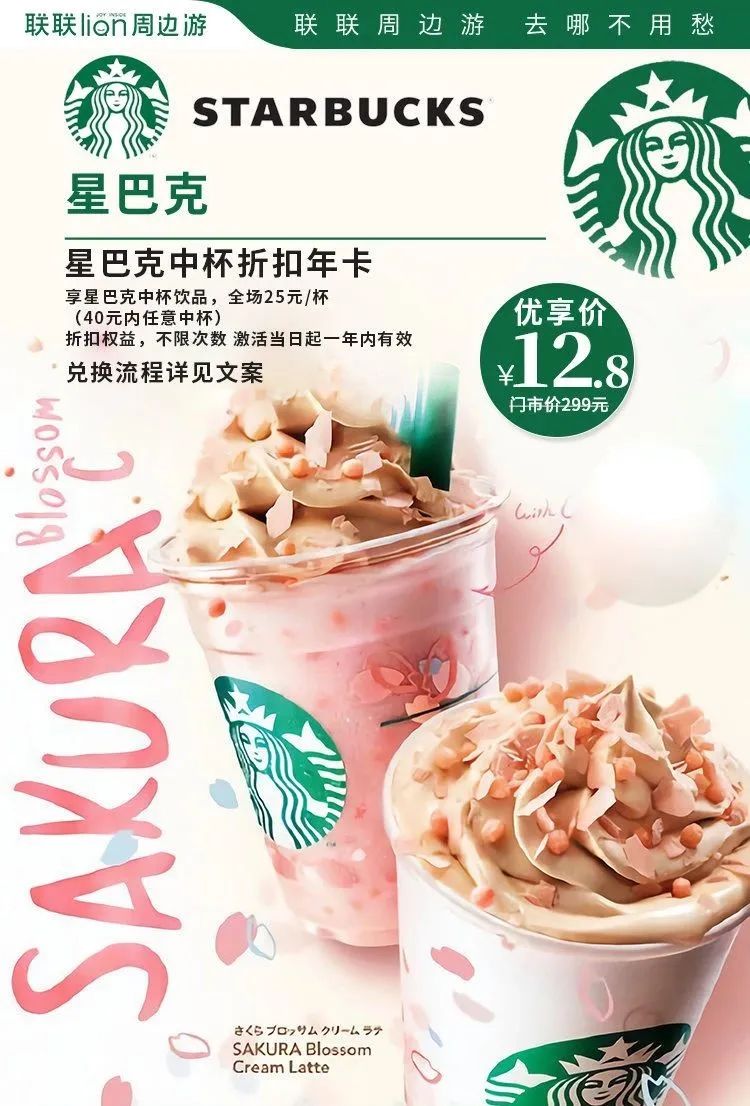
Starbucks has recently introduced a discounted annual card available for just 12.8 RMB, allowing customers to enjoy a medium-sized drink for as little as 25 RMB. Many are left wondering: is Starbucks entering the price war? These promotions raise the question—how much does a medium Starbucks coffee really cost? In fact, this is not the first time Starbucks has offered low-cost options. Since 2021, it has gradually rolled out various types of discounted annual cards on multiple lifestyle service platforms.
These annual card promotions vary widely. Some offer a 9.9 RMB sign-up fee with an 20% discount or more on all medium drinks throughout the year; others charge the same 9.9 RMB sign-up fee but fix the price of medium drinks at 25.9 RMB year-round; there are also options that provide a minimum 30% discount on all drinks, or combine a flat 25.9 RMB price with an additional 20% off for online orders. Although the details of each promotion differ slightly, overall they allow customers to enjoy Starbucks drinks at more affordable prices.
It's worth noting that these promotions are usually not long-term or fixed, but are introduced in cycles based on platform activities. Once one platform’s promotion ends, another often quickly takes its place. Strategically speaking, Starbucks is not implementing across-the-board price cuts, but instead participating in market competition through subtle, rotating methods. This approach attracts customers to grab the deals while avoiding damage to its premium brand image.
Beyond annual card promotions, Starbucks has also quietly started distributing various coupons via platform livestreams. This method not only increases interaction with consumers, but also encourages those who initially had no intention of buying to make a purchase after seeing limited-time offers during a livestream. So why does Starbucks choose to distribute coupons rather than directly lowering product prices?
The answer lies in:Direct price cuts can easily lead to consumer expectations and may impact the brand’s high-end positioning.In contrast, methods such as annual cards or livestream coupons not only stimulate consumption during specific periods, but also attract different customer segments—especially those who are price-sensitive yet still want to experience the Starbucks ambiance. More importantly, this strategy helps Starbucks lower the consumption barrier and increase brand exposure when expanding into lower-tier markets.
Although these promotions may appear to be short-term sales tactics, they carry long-term strategic significance. By rotating promotions across various platforms, Starbucks can maintain continuous market buzz while avoiding the dilution of brand value caused by prolonged price reductions. Furthermore, this approach attracts new customers seeking value without affecting the existing core customer base, thereby further solidifying market share.
Even in the face of an increasing number of domestic coffee chains that focus on affordability and delivery, Starbucks continues to retain a loyal customer base thanks to its unique social spaces and brand identity. For many, Starbucks is not just about buying a cup of coffee, but about enjoying a moment of leisure, getting work done, or catching up with friends. Especially as most budget brands currently focus on delivery, the physical space Starbucks provides becomes even more valuable.
Overall, Starbucks’ 12.8 RMB annual card and 25 RMB medium drink promotion reflect a nuanced market strategy. On one hand, it attracts new customers through low prices; on the other, it maintains the brand’s established sophistication, making consumers feel they’re “getting a good deal without compromising on quality.” This balancing act is one of the key reasons Starbucks continues to lead the market amid fierce competition.
The next time you see Starbucks launch an annual card or limited-time promotion, take a moment to consider: what is the actual cost of that cup of coffee? What added value are you really purchasing beyond the drink itself?
The above content is compiled by CoffeeHunters, a coffee news website.


