








Introduction:Blue Mountain coffee has long been hailed as the king of the coffee world, yet its actual flavor often leaves people puzzled — is it really worth the price? This article delves into how the Jamaica Coffee Industry Board (CIB) ensures the quality of Blue Mountain coffee through strict grading systems and cupping standards, uncovering the science and history behind its high cost, as well as why it’s revered as the “standard coffee flavor.”
When it comes to Blue Mountain coffee, almost no one is unaware of it — even in the era before specialty coffee became popular, it was already synonymous with top-tier coffee. However, many people, after tasting it themselves, find its flavor not as astonishing as the rumors suggest, merely smooth and pleasant without any particularly mind-blowing qualities. So, what makes Blue Mountain coffee so expensive? Does its flavor truly match its lofty price tag? The answer lies in the establishment and operations of the Jamaica Coffee Industry Board (CIB).
Long before the concept of specialty coffee took shape, the CIB had already established a rigorous set of regulations. Through scientific grading and cupping systems, it propelled Blue Mountain coffee onto the international stage, earning its reputation as the “king of coffee.” This article will take you through the definition of the Blue Mountain coffee growing region, the logic behind green bean grading, cupping standards, and how its classic balanced flavor is formed.
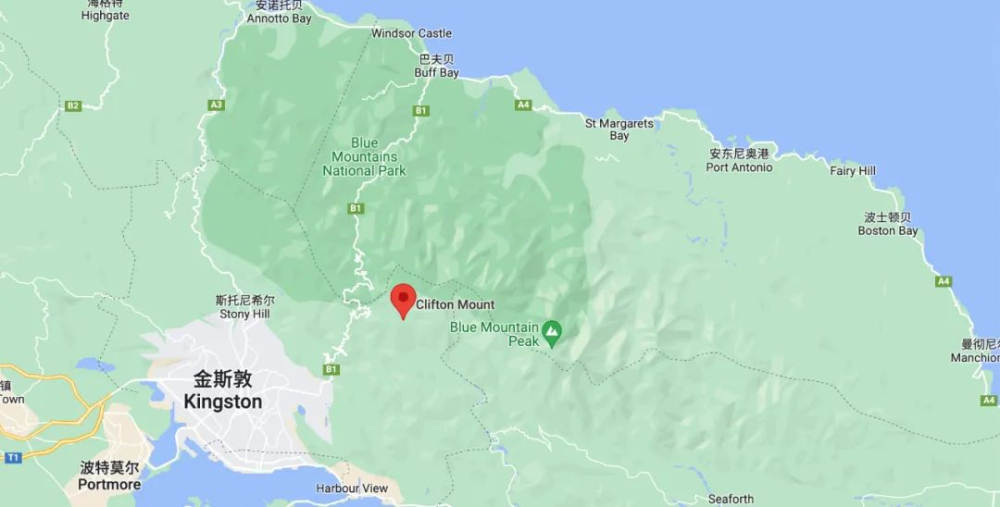
Jamaica has a total land area of only about 11,000 square kilometers, and the Blue Mountain coffee growing region is located in the Blue Mountains in the eastern part of the country. Coffee was introduced and planted here as early as 1728, but it wasn’t until the mid-20th century that Blue Mountain coffee truly stood out. In 1952, the former Jamaica Coffee Industry Management Authority was upgraded to the Jamaica Coffee Industry Board (CIB), tasked with setting management standards and strictly monitoring the quality of coffee production.
Since the areas in Jamaica suitable for coffee cultivation are extremely limited, developing a premiumization strategy became the only option. The CIB then conducted detailed grading of Blue Mountain green beans, evaluating factors such as bean size, color, uniformity, defect ratio, moisture content, and most importantly — cupping scores.
Through cupping, the CIB discovered that coffee beans produced in certain areas of the Blue Mountains not only had better flavors, but also exhibited an excellent balance among acidity, sweetness, and bitterness. These coffees were rich and clean on the palate, with moderate acidity and sweetness rather than just bitterness. As a result, the CIB decided to designate a legal growing region within the Blue Mountains, allowing only coffee produced in this specific zone to be labeled as “Blue Mountain coffee.” Coffee produced in other areas could only be called High Mountain coffee or Jamaica Select coffee. (In 1985, the CIB further registered trademarks for both Blue Mountain and High Mountain coffees.)
Blue Mountain coffee is subdivided into four grades based on green bean size and defect rate: No.1, No.2, No.3, and PB. Among these, the most common and highly regarded is No.1 (Blue Mountain No.1), which requires bean size between 17 and 18 mesh, and a defect rate below 3%. Such stringent selection ensures that every Blue Mountain No.1 bean starts at an exceptionally high quality level.
The CIB’s evaluation and grading system actually aligns with the “Specialty Coffee” concept proposed by Erna Knutsen in 1974. In fact, even before the formal introduction of the specialty coffee concept, the CIB was already operating based on similar principles, making it a pioneer of specialty coffee.
Even more indicative is that the CIB was the world’s first institution to introduce cupping score sheets in coffee evaluation. The scoring criteria covered dry fragrance, wet aroma, acidity, flavor, body, and cleanliness — predating the later standards of SCAA and COE by over twenty years, showcasing its foresight in quality control.
In terms of cultivation and processing, Jamaica has consistently used the Typica variety and employed the washed processing method. At the time, washed processing was considered an advanced technique, effectively reducing defect rates and improving overall flavor consistency — it is also one of the key factors contributing to the stable, high quality of Blue Mountain coffee.
Looking at the big picture, the reason Blue Mountain coffee is so expensive is not just due to its limited growing region or high production costs, but because every step — from planting, harvesting, grading to cupping — is subject to extremely strict scrutiny. Given the technology and standards of the time, it truly earned the title of “king of coffee.” Even today, as coffee quality has generally improved worldwide, Blue Mountain coffee still stands out with its balanced acidity, sweetness, and bitterness, and its classic “standard coffee flavor,” remaining a reference benchmark for many coffee enthusiasts.
As more and more coffees pursue unique fruity and floral notes, Blue Mountain coffee maintains a rich, mellow, and clean drinking experience. That balanced flavor profile is precisely what gives it its enduring charm.
The above content is compiled by CoffeeHunters, a coffee news website.


