







Introduction:A unique café in Tokyo, Japan, themed around "yandere maids" (obsessively affectionate female characters), has sparked strong condemnation from the medical community after introducing a specialty drink containing human blood. This article delves into this shocking extreme case that has rocked society, explores the ethical boundaries of operating special theme cafés, and reminds readers to pay attention to food safety and the prevention of blood-borne diseases.
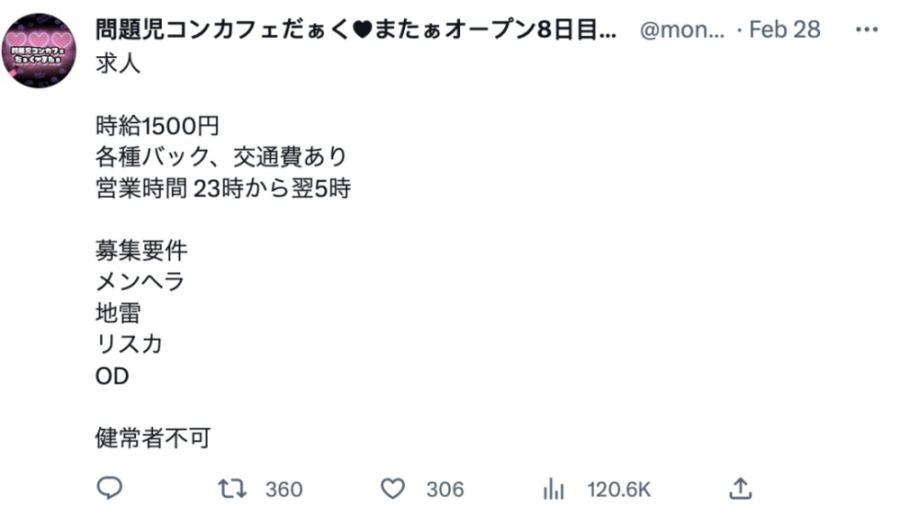
In Japan, where anime culture is deeply rooted, maid cafés have long been a common leisure destination. However, a particular establishment named "Problem Children" has recently become the focus of public debate due to its unconventional practices. This Tokyo-based shop recruits what it calls "atypical female staff," openly advertising that it only accepts applicants who claim to have psychological or behavioral issues, including those with self-harming tendencies and mental illnesses.
According to local media reports, the job ad clearly stated an hourly wage of 1,500 yen but specifically noted, "Healthy individuals need not apply." This unusual screening criterion sparked heated online discussions. Surprisingly, however, the café indeed formed its staff team as described in the ad and even required the maids to share their episodes of mental breakdowns on social media platforms.
Within less than three weeks of operation, this highly controversial café made an even more astonishing revelation. A customer asked the staff if they could try a cocktail mixed with human blood, and reportedly, the on-duty manager agreed and even personally provided their own blood to create the drink. Eyewitnesses said the special beverage had an unnatural reddish-brown color and gave off a rusty, metallic smell.
Medical experts have issued serious warnings:Drinking another person’s blood directly carries the risk of contracting various blood-borne diseases such as HIV, Hepatitis B, and Hepatitis C.Pathogens in blood may not be completely deactivated even at low temperatures, and the human digestive system cannot effectively neutralize all viruses.
Officials from Japan’s Ministry of Health, Labour and Welfare pointed out that any form of consuming raw blood is a high-risk behavior, especially when it is not screened or processed according to standardized procedures. Professional baristas remind that traditional coffee cocktails must strictly adhere to food safety regulations, using certified ingredients and maintaining hygienic preparation processes.
After the incident came to light, although the involved manager was dismissed, the café remained open and continued to attract a large number of curious visitors. Sociologists analyze that this phenomenon reflects a certain group’s morbid pursuit of "morbid aesthetics," materializing character traits from virtual worlds while ignoring real-life ethics and health concerns.
Professional coffee practitioners advise that when choosing specialty coffee beverages, consumers should prioritize hygiene conditions and the origin of ingredients, and maintain reasonable skepticism toward unconventional recipes.The ideal pour over coffee should use freshly roasted single-origin beans, with a grind size controlled to medium-fine, and water temperature maintained between 90-93°C.These basic parameters are the key to ensuring the quality and safety of the beverage.
The above content is compiled by CoffeeHunters, a coffee news website.


