








Introduction:Many customers who place orders at Luckin Coffee have requested additional ice cubes only to be refused by staff. The company’s official response stated that ice cubes are considered “semi-finished products” and are only to be used in drink preparation. This policy has sparked widespread online discussion, with some netizens deeming the rule overly strict, while others pointed out the underlying food safety concerns. Why do major chains like Starbucks and McDonald’s also adopt similar practices? This article takes an in-depth look at ice cube management policies and their practical implementation details.
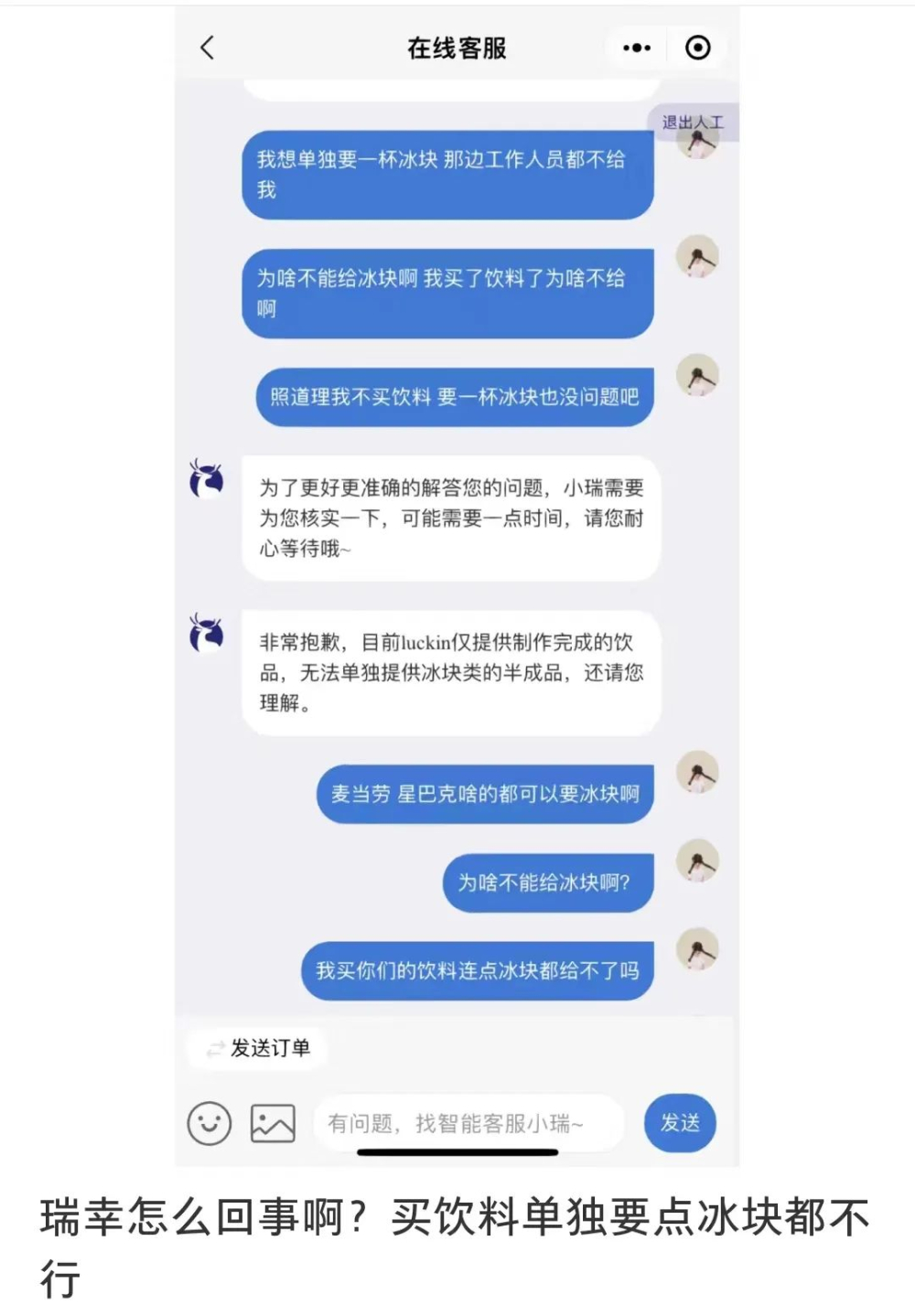
Recently, a customer who purchased a drink from Luckin Coffee asked for extra ice cubes because they found their beverage not cold enough, but was turned down by the staff. When the customer further inquired with Luckin’s online customer service, the reply received was: “Ice cubes are classified as semi-finished products and can only be used in making drinks. According to company policy, they cannot be provided or given away separately.” This explanation quickly stirred up discussions on social media platforms, with many expressing disbelief and calling the policy “outrageous.”
In fact, this policy is not unique to Luckin. Many well-known chains, such as Starbucks and McDonald’s, also restrict the separate provision of ice cubes. Based on shared experiences from netizens, such policies are primarily designed to reduce food safety risks and prevent potential disputes arising from excessive microbial levels in ice cubes.
Some netizens further noted that media outlets or civil organizations have conducted sampling tests on ice cubes provided by chain restaurants, finding that some samples contained excessive levels of E. coli or other microbes. To prevent similar incidents, many companies choose to manage ice cubes at the source, not allowing them to leave the preparation process, thereby reducing legal and brand risks.
In response to this incident, although Luckin has explicitly stated that it does not provide ice cubes separately, experienced customers suggest that if one really needs ice cubes, they can ask the staff for ice water and then manually strain out the ice cubes for use. While this method is not officially recommended, it is nonetheless a practical workaround in real situations.
It is worth noting that this is not the first time Luckin has drawn attention for “not providing ice cubes.” As early as 2021, many users raised similar questions on community platforms like Xiaohongshu, such as “Why can’t Luckin just give ice, instead of ice water?” At that time, Luckin employees had already explained that this was company policy and that individual ice cubes could not be provided.
According to media reports, Luckin’s human customer service responded by stating that ice cubes are categorized as “semi-finished products” in stores and are only to be used in drink preparation; they are neither sold nor ordered separately. Customer feedback has been recorded, and the service team promised to forward it to the relevant departments for further handling.
From a food safety management perspective, the control of ice cubes by chain beverage shops is necessary. Semi-finished products like ice cubes, if not produced and stored under strictly controlled environments, can be easily contaminated by external factors, which in turn affects the overall hygiene and safety of the beverages. Therefore, many brands choose to limit the use of ice cubes to the production process, avoiding increased management complexity and potential risks due to individual customer demands.
In summary, although Luckin’s policy of not providing ice cubes separately may cause inconvenience to some customers, it reflects an overall consideration of food safety management. When facing similar situations, consumers might consider alternative methods—such as requesting ice water—to meet their needs, while also understanding that staff are simply following company regulations and should not be unduly blamed.
The above content is compiled by CoffeeHunters, a coffee news website.


