







Introduction:Oatly, a well-known oat milk brand, recently released its 2022 financial report, showing that its full-year net loss expanded to nearly $400 million. Despite a 32% increase in sales volume in the Asian market, Q4 revenue declined due to the impact of the pandemic. As an oat milk product that entered the market as a “new coffee companion,” is it gradually losing steam due to its relatively high price and limited acceptance? This article will analyze the challenges Oatly is facing and its transformation strategies.
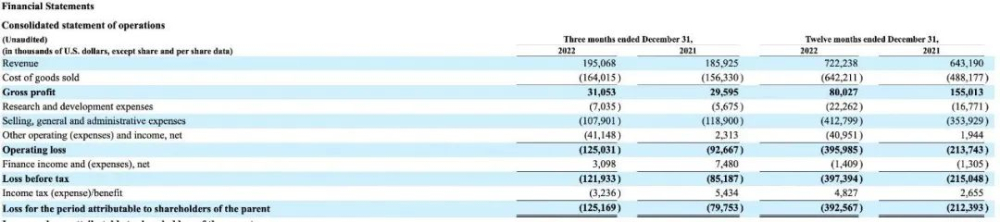
Oatly, a pioneer brand in the oat milk market, recently disclosed its financial performance for the full year and fourth quarter of 2022. The data shows that the brand recorded a full-year net loss of nearly $400 million, with the loss widening further compared to 2021. Although sales volume in the Asian market increased by 32% year-on-year, demonstrating certain growth potential, Q4 revenue in Asia still decreased by $800,000 due to the pandemic.
Notably, the Chinese market, as Oatly’s core market in Asia, accounts for 93% of the region’s business, meaning China’s performance directly influences the overall results in Asia. Although Oatly achieved full-year operating revenue of $722.2 million in 2022, up 12.3% year-on-year, the loss widened from $212 million in 2021 to $396 million last year, which is not an optimistic situation.
In terms of regional performance, sales volume in the Asian market increased for the full year, reaching operating revenue of $152.8 million. Oatly emphasized in its financial report that the Asian market, with China as the main focus, remains a key area for future development. At the same time, on the same day as the report’s release, the brand also announced a $425 million financing commitment, planned to be used for further expanding its market presence in China.
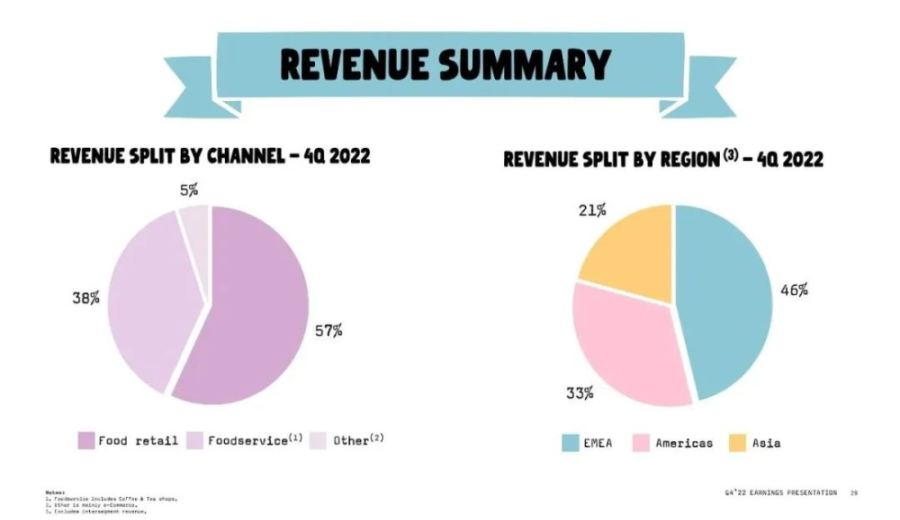
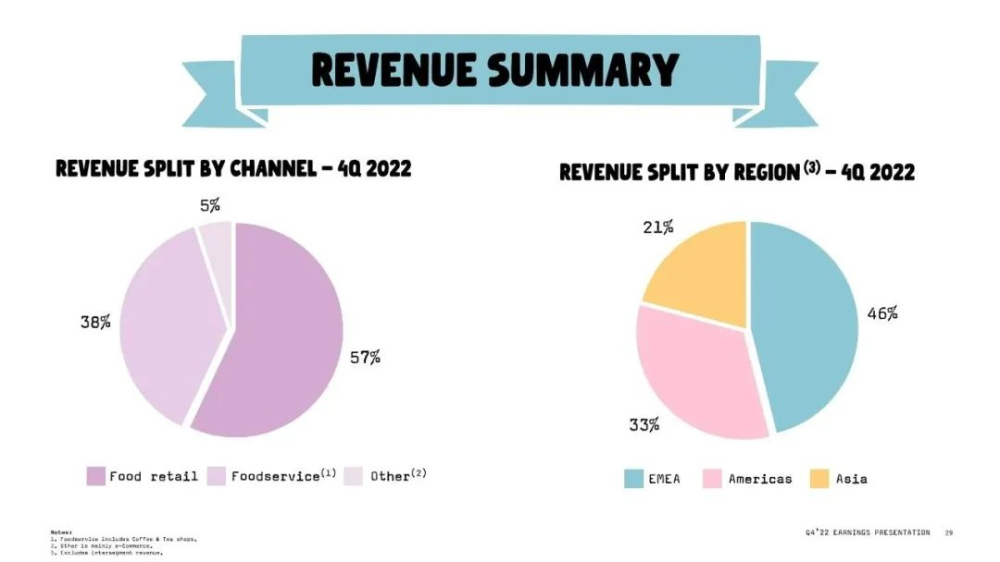
According to detailed financial data, about 69% of Oatly’s revenue in the Asian market comes from the foodservice channel, with the rest from e-commerce and retail. Among these, the foodservice channel—mainly coffee shops—was Oatly’s primary breakthrough when it first entered the Chinese market. Through partnerships with well-known chain coffee brands such as Starbucks, COSTA, Tim Hortons, and Manner, Oatly successfully established the image of oat milk as a “new coffee companion.”
Oatly’s “Barista Edition” oat milk is one of its most representative products. Since its launch in collaboration with Starbucks for oat milk lattes in 2018, it quickly gained popularity and became a staple on the menus of many coffee shops. This wave of the “oat milk coffee” trend enabled Oatly to swiftly capture market share and rise to the international stage within just a few years, eventually achieving a successful IPO.
However, as the hype around plant-based milk gradually fades, consumer acceptance of oat milk remains lower than that of traditional milk, and its relatively high price exposes Oatly to the risk of being replaced by other competitors or conventional dairy products. In particular, many emerging oat milk brands in China in recent years—such as Xiaomai Ouye, Plant Label, and Wild Plants—have intensified market competition.
To break the current situation, Oatly is actively expanding its product line beyond the coffee market. The brand has launched “Tea Master Oat Milk” targeting the tea beverage market, as well as new products such as plant-based ice cream, in an attempt to attract non-coffee consumer groups. Additionally, Oatly plans to collaborate with Lanyifang, a brand under Xiang Piaopiao, to launch ready-to-drink oat milk tea, and is considering introducing different packaging sizes to further broaden its consumer reach.
Overall, although Oatly once held a first-mover advantage in the oat milk and coffee pairing market, as the market matures and consumer trends shift, the brand must seek more innovation and market segmentation to maintain its footing in the highly competitive environment and continue to attract consumer interest.
The above content is compiled by CoffeeHunters, a coffee news website.


