







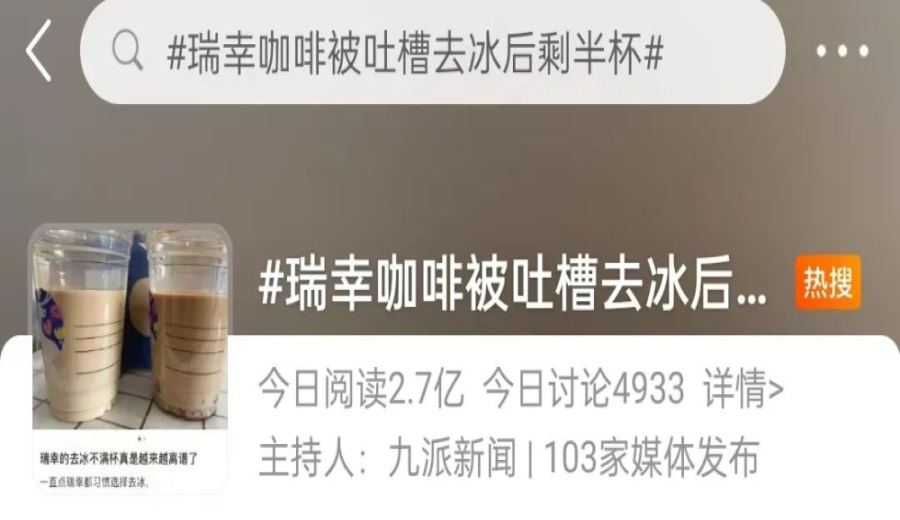
Introduction:Recently, Luckin Coffee made headlines on social media after customers noticed that their drinks became noticeably less full when ordered without ice, sparking widespread discussion about the excessive use of ice in chain beverages. This article delves into the background of the incident, compiles real-world comparisons shared by netizens and official brand responses, and offers practical advice on how to ensure you’re getting a full serving when purchasing drinks—helping readers avoid the awkward situation of “drinking more ice than beverage.”
Lately, the well-known coffee chain Luckin has come under fire on social platforms for serving drinks with such a high proportion of ice that choosing the “no ice” option results in a significantly reduced drink volume. The issue gained traction particularly on Weibo’s trending topics, where the phrase “Luckin Coffee slammed for serving half a cup when ordered no ice” quickly shot to the top, becoming a focal point of consumer concern.
The controversy began when a user on Xiaohongshu (Little Red Book) shared a photo complaining that their “no ice” Luckin drink was almost half empty, resonating strongly with many other customers. Numerous users posted side-by-side comparisons of their iced and no-ice beverages, with some discovering that the no-ice version contained less than half the liquid of the original, jokingly saying they had to “search for their latte in the ice,” while others described drinking a coconut latte as “trying to dig out coffee buried under ice.”
Based on real-world tests by netizens, many choose the no-ice option hoping to get the same volume of coffee or tea as the standard iced version, but the reality often falls short. One user manually removed the ice from their iced milk coffee and compared it to the store’s “no ice” version, finding the latter to be noticeably smaller—sometimes by more than 50%. This discrepancy left many customers disappointed, feeling they had paid the same price but received far less actual drink.
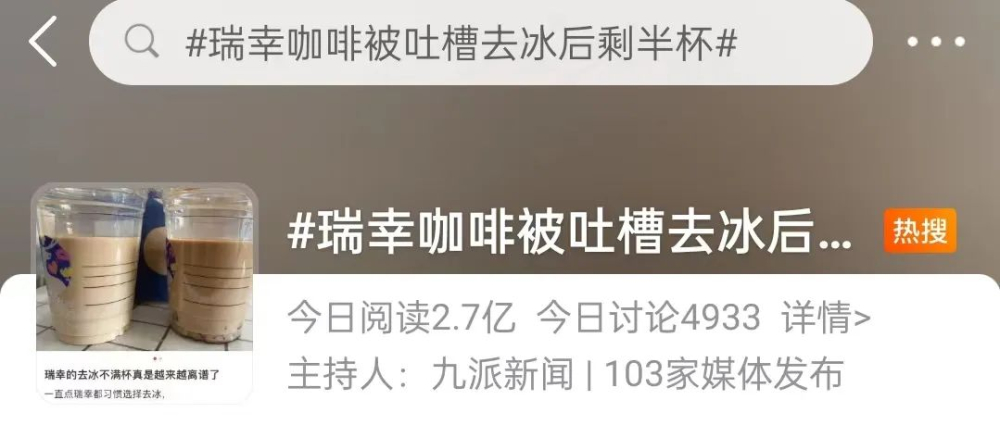
Luckin is not alone in facing such criticism; several other major chains, including Starbucks, have also been called out by users for similar practices. Many consumers report that when they opt for “no ice” or “less ice,” the actual drinkable portion is significantly reduced, with some even noting that “there’s more ice than liquid in the milk tea” or “only hot drinks come in a full cup.” Such experiences have led customers to think twice when ordering cold beverages, often wondering how to ensure they’re actually getting a proper amount of the drink itself.
In response to the backlash, Luckin initially replied on Xiaohongshu’s comment section, stating that they would “immediately look into the specific situation.” They later proactively contacted the customers who raised the issue, acknowledging that “the coffee cup volume is indeed on the low side.” Through customer service channels, the brand further explained that all store beverages are prepared according to unified recipes and standardized procedures, with each drink having a fixed total volume, and the proportion of ice is adjusted based on that standard.
Luckin’s customer service emphasized that if customers have any concerns about their orders, they can contact support using the phone number used to place the order, and the brand will assist in resolving any related issues. Additionally, the company revealed plans to strengthen training and management for store staff, aiming to better meet customer expectations regarding drink content and ice levels.
In fact, debates over the proportion of ice in iced drinks are nothing new on social media. Over the past two years, numerous customers have shared their experiences of receiving Luckin iced drinks that were almost entirely filled with ice. Some quipped, “Now I understand why Luckin managed to turn a profit this fiscal year,” sarcastically referencing the low cost of ice taking up so much cup space. Others complained that “the ice is blocking the straw” or “Did I just pay for a cup of ice?” reflecting widespread frustration and helplessness among consumers.
For consumers looking to avoid ending up “drinking more ice than beverage,” here are a few practical tips. First, if you prefer a drink with more actual liquid, consider opting for hot beverages, which typically contain no ice and ensure the cup is mostly filled with the drink itself. Second, if you still want an iced drink, you can explicitly ask for “less ice” or “as little ice as possible”—sometimes baristas will adjust accordingly. Another option is to request “no ice but with the same volume,” though not all stores may fully accommodate this, clearly expressing your preference can help improve satisfaction.
Overall, the discussion sparked by Luckin Coffee’s no-ice drinks being half full not only highlights the standardized processes chain beverage brands use for ice, but also serves as a reminder for customers to pay closer attention to what they’re actually getting in their drinks. Moving forward, finding a balance between product taste, visual appeal, and meeting consumers’ practical needs will be an ongoing challenge for beverage brands to refine.
The above content is compiled by CoffeeHunters, a coffee news website.


