







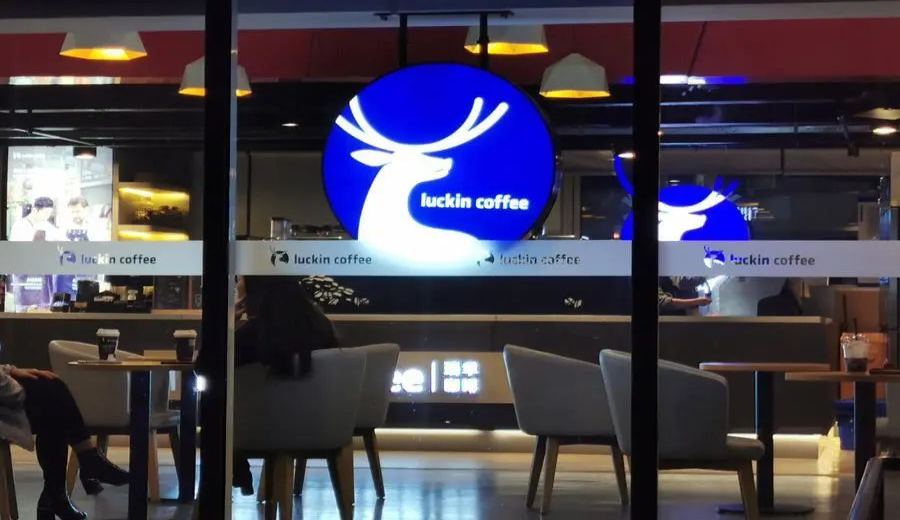
Introduction:In 2023, Luckin Coffee reignited its new retail franchise program, extending its reach to 80 cities across 15 provinces, with a particular focus on the market potential of fourth- and fifth-tier cities. This article provides an in-depth analysis of the background of its franchise policies, the consumption characteristics and competitive environment of third-, fourth-, and fifth-tier markets, and details the setup conditions and operational model of the ‘Luckin Go’ unmanned coffee machine, helping potential partners and industry players stay abreast of the latest market trends.
In 2023, Luckin Coffee once again launched a recruitment initiative for new retail partners, covering 80 cities across 15 provinces including Anhui, Jilin, Liaoning, Heilongjiang, Inner Mongolia, Shandong, Henan, Guangxi, Sichuan, Yunnan, Shanxi, Hunan, Hubei, Guizhou, and others, clearly focusing on the development potential of fourth- and fifth-tier cities. As of the end of September 2022, Luckin had a total of 7,846 stores nationwide, of which 2,473 were partner-operated stores. However, most of these stores are concentrated in first-tier and new first-tier cities, with relatively insufficient penetration into third-, fourth-, and fifth-tier cities.
Notably, although many of the 80 cities covered in this recruitment already have franchised stores, their distribution density is generally low, with the number of stores per city typically not exceeding 10. This move indicates that Luckin is actively adjusting its strategy to accelerate expansion into previously underdeveloped lower-tier markets in search of new growth opportunities.
In recent years, as the coffee markets in first- and second-tier cities have gradually become saturated and homogenized competition has intensified — with brands engaging in fierce “involution” — many chain brands have begun to shift their focus to third-, fourth-, and fifth-tier cities, which boast huge consumption potential. On one hand, residents in these areas generally have a slower pace of life and higher expectations for the space and comfort experience offered by coffee shops; on the other hand, with the return of urban populations to their hometowns driving changes in consumption habits, even if coffee has not yet become a daily necessity, a stable group of repeat customers has gradually emerged.
Additionally, some county-level cities have already seen the emergence of independent coffee shops with local characteristics, and ‘county-level city coffee’ has become a hot topic on social media platforms, indicating that the acceptance of coffee culture in these markets is gradually increasing. Therefore, whether it’s international chains, domestic major chains, or new-style tea beverage brands, all view the lower-tier market as the next battleground.
However, entering these markets is not without challenges. Compared to consumers in first- and second-tier cities who prioritize convenience and speed, customers in lower-tier markets place greater emphasis on cost-effectiveness and the overall consumption experience. Although Luckin is known for its high cost-performance ratio, most of its stores are primarily take-away oriented and are relatively weaker in providing comfortable dine-in spaces. Nevertheless, an increasing number of Luckin stores in various regions have gradually added dine-in areas, showing the brand’s efforts to meet consumers’ demand for a “scene.”
In addition to expanding physical stores, Luckin continues to develop its ‘Luckin Go’ unmanned coffee machine business. This device was officially launched by Luckin at a strategic press conference as early as January 2020, featuring 24-hour operation and capable of producing a variety of master-level coffees including Americano, Latte, and Cappuccino, as well as some non-coffee beverages. All coffee produced by ‘Luckin Go’ machines comes in a standardized 16-ounce (approximately 473 ml) large cup size, with flavors consistent in standard with those of store-bought products.
Currently, ‘Luckin Go’ has gradually entered high-traffic locations in first- and second-tier cities such as shopping malls, hospitals, office building lobbies, and subway stations, providing convenient coffee services all year round without interruption. This equipment not only compensates for the limitations of traditional stores in terms of location and operating hours but also further expands Luckin’s brand reach and service coverage.
Overall, Luckin’s relaunch of its franchise program and deeper deployment of the ‘Luckin Go’ unmanned coffee machines signal its determination to extend coffee services to ‘limitless scenarios.’ By advancing both physical stores and smart devices in parallel, the brand is gradually building a higher-density national coffee service network, also heralding a new stage in the competition within China’s coffee market.
The above content is compiled by CoffeeHunters, a coffee news website.


