







Introduction:Mandheling coffee is renowned for its distinctive layers of spice, herbal notes, and caramel-chocolate complexity, yet it is also often criticized for carrying off-flavors such as herbal, earthy, or woody undertones. This article delves into the environmental conditions of Sumatra’s growing regions, the evolution of coffee varieties, and the impact of the wet-hulling processing method to analyze why Mandheling’s herbal aromas have gradually diminished. It also explores why Golden Mandheling can deliver a cleaner and more full-bodied taste. Additionally, common issues and improvement tips for off-flavors when brewing Mandheling using pour over methods are provided, helping you better unlock the potential of this classic bean.
Mandheling coffee has long been polarizing among coffee enthusiasts: some are deeply captivated by its bold spicy notes, unique herbal aromas, and the rich, sweet flavor profile that intertwines caramel and cocoa; however, many others shy away from its pronounced bitterness and accompanying herbal, earthy, or even woody undertones. To understand this unique flavor profile of Mandheling, we must examine the island of Sumatra’s growing environment, the evolution of its coffee varieties, and its processing methods—clarifying where its signature herbal notes come from, explaining why these flavors have become less prominent in recent years, and why the commonly seen Golden Mandheling often exhibits a purer and fuller expression. Moreover, if you encounter unpleasant off-flavors when brewing Mandheling using pour over, this article will guide you in identifying possible causes across multiple aspects.
Mandheling is a coffee bean with highly polarized reviews. Those who love it are often enchanted by its bold, passionate spice tones, fresh herbal aromas, and the sweet, intense flavor that emerges from the interplay of caramel and cocoa; conversely, those who prefer other styles often find its noticeable bitterness and potential herbal, soil-like, or woody aftertastes off-putting.
To deeply understand the origins of Mandheling’s distinctive flavor, we need to approach it from three key aspects: first, Sumatra’s growing environment; second, the local coffee varieties commonly cultivated; and third, the iconic “wet-hulling processing method.”
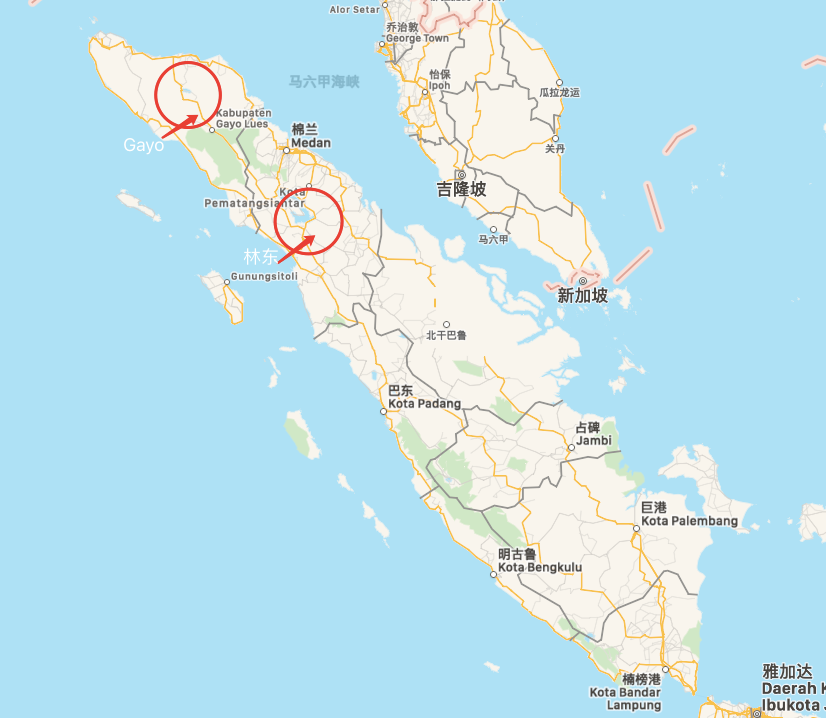
The term Mandheling refers to Arabica coffee grown on the Indonesian island of Sumatra. The main producing areas are concentrated around Lake Toba and Lake Tawar, with the Lintong region near Lake Toba and the Gayo Highlands near Lake Tawar being the most renowned. These regions generally sit at altitudes between 1,100 and 1,600 meters, within the ideal range for cultivating high-quality coffee. In fact, Indonesia’s coffee cultivation history dates back to the early 18th century, when Dutch colonists introduced coffee farming to Sumatra, making the island one of the earliest hubs for coffee cultivation.

When discussing Mandheling’s flavor characteristics, it’s essential to mention the coffee varieties commonly grown in the region. As early as the 18th century, the varieties introduced by the Dutch to Indonesia were mainly Typica and Bourbon. However, in 1876, a major outbreak of coffee leaf rust disease in Indonesia forced local producers to import more disease-resistant varieties from around the world to stabilize coffee supplies. Since then, Indonesia has gradually become a “melting pot” of diverse coffee genetics.
Common varieties found in the Sumatra region today include Ateng (a local Catimor strain), TimTim (a local Timor strain), traditional Typica, Catuai, and a small amount of Robusta. Notably, the Ateng and TimTim varieties frequently used in Mandheling both have Robusta lineage, which makes them prone to exhibiting certain grassy or earthy tones.
However, the most commonly cited explanation for Mandheling’s herbal notes is the region’s unique “wet-hulling processing method.” Sumatra’s climate is humid year-round, with unpredictable rainfall, and using traditional sun-drying or washed processing methods often risks slow drying and mold growth. To effectively shorten drying time while preserving bean quality, the locals developed this special technique known as wet hulling.
The general process of wet hulling is as follows: first, the outer skin and pulp of the coffee cherry are removed using a pulper, followed by washing. Under ideal climatic conditions, the mucilage-covered beans are simply sun-dried for about three to four days until their moisture content drops to 30–40%, at which point the beans are semi-soft. Then, a hulling machine is used to remove the still-damp parchment layer (i.e., the inner skin), and the beans are further dried until their moisture content reaches 12–13%. In contrast, traditional sun-drying methods may take as long as three weeks in total.
So why has the herbal character of Mandheling seemed to become less pronounced in recent years? Especially among various Mandheling offerings, those under the “Golden Mandheling” label often no longer exhibit noticeable herbal or earthy off-flavors, but instead present a cleaner, fuller, and brighter taste profile.
Golden Mandheling is a trademarked product registered by the Indonesian green bean trading company Pawani, with the trademark officially registered as early as 2003. Pawani itself does not engage directly in cultivation but instead carefully selects the highest-quality beans by visiting various producing regions across Indonesia. Currently, the most commonly available Golden Mandheling originates from the Gayo Highlands in Aceh Province, and its variety remains Ateng, which also has Robusta ancestry. However, unlike typical Ateng, this bean shows almost no noticeable earthy smell in cupping. Some industry experts speculate that it may be due to the Ateng variety gradually adapting to the local terroir through long-term cultivation, while others suggest it might be a backcross descendant of Catimor and Typica, thereby reducing the proportion of Robusta genetics further.
In terms of processing, although it is also called “wet hulling,” the actual operational details can make a significant difference. For instance, does hulling the beans (i.e., removing the parchment) at different moisture content stages alter the final flavor? Or, during drying, if the beans are carefully elevated off the ground, frequently turned to ensure even drying, could that further reduce earthy or herbal off-notes? Although such details are usually not disclosed publicly, variations in the performance of imported green beans can still reveal how processing steps significantly affect flavor.
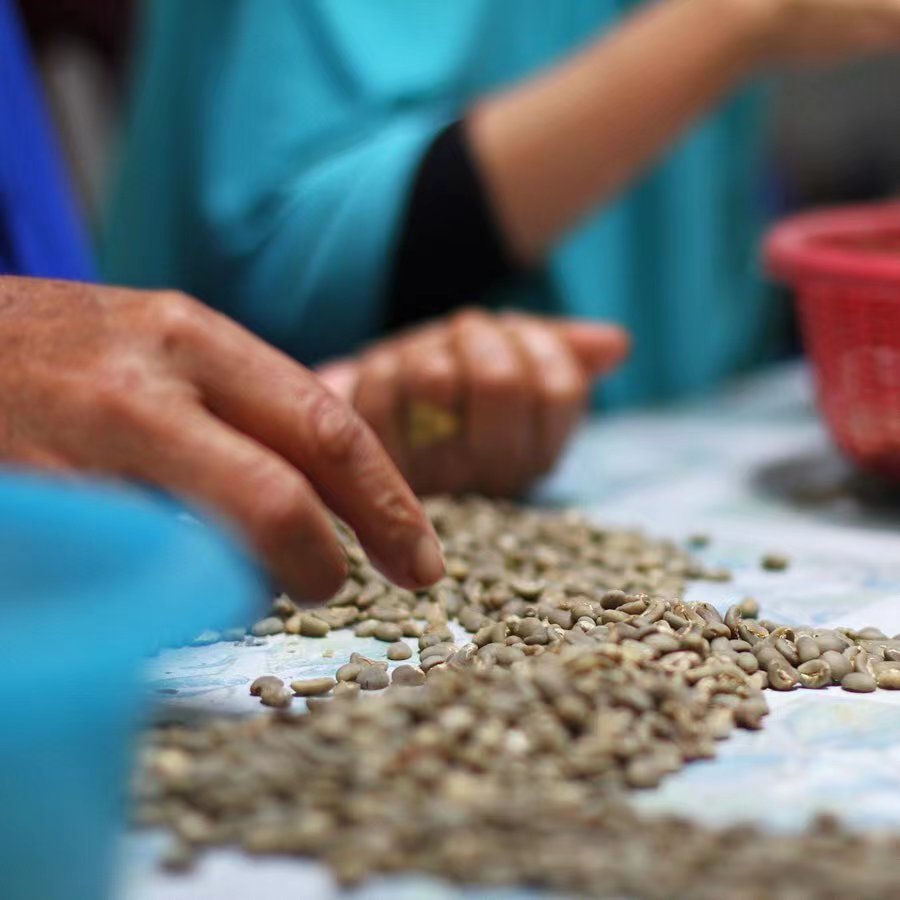
It’s worth noting that Golden Mandheling generally commands a higher market price than regular Mandheling, which is related to its stricter selection process. According to sources, after acquiring green beans, Pawani conducts three rounds of manual sorting to remove defective beans, undersized ones, or those with irregular shapes, ensuring that the final product consists solely of plump, intact, and nearly flawless premium beans. This meticulous selection process not only enhances the overall cleanliness of the coffee but also helps reduce the risk of unwanted off-flavors during pour over brewing.
The above content is compiled by CoffeeHunters, a coffee news website.


