







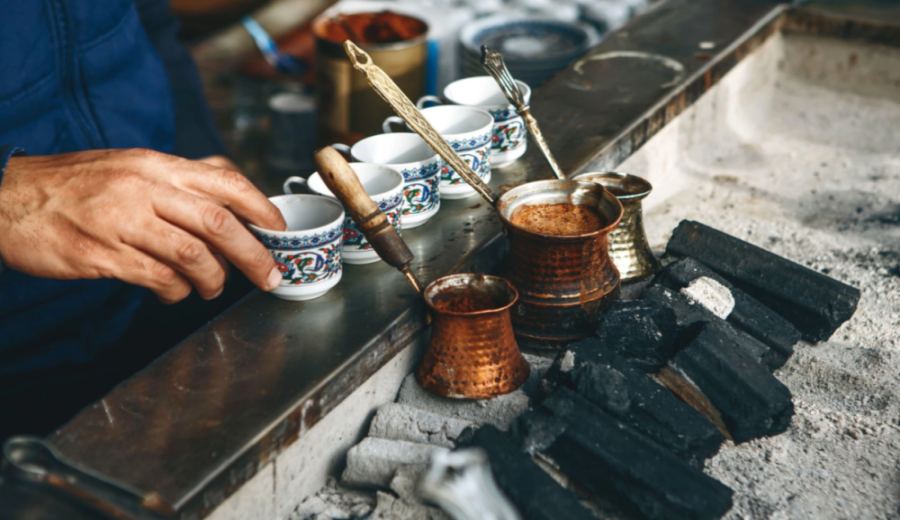
Introduction:Turkish coffee is famous for its unique brewing method and mysterious fortune-telling culture, but did you ever wonder how
In recent years, the trend of gathering around a stove to boil tea has surged in popularity, sparking interest among many coffee enthusiasts in Turkish coffee—especially captivated by the seemingly magical sight of coffee endlessly pouring from that tiny pot. When you first watch a video of Turkish coffee being brewed, were you also amazed? Why is it that after each pour, simply placing the pot back on the heat source causes it to boil up to the brim again? Could this pot possess some kind of magic?
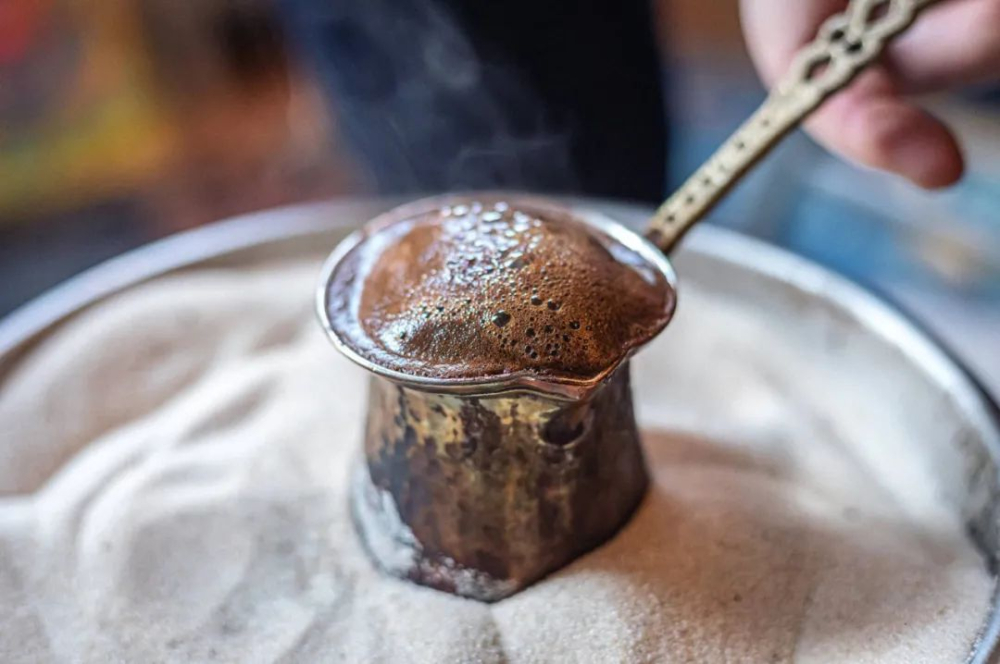
The answer isn’t mysterious—the key lies in the hot sand. Traditionally, Turkish coffee is heated in hot sand, taking advantage of the excellent heat conductivity between the sand and the metal pot to ensure even heating at the base and all around. As the water at the bottom is heated and evaporated, the finely ground coffee is pushed upward by the boiling, forming a dense foam. Due to the even distribution of heat, even after pouring out some coffee, the remaining grounds can quickly come to a boil again, causing the liquid level to rise back up.
However, if you’re not using hot sand and instead place the pot directly on an electric or gas stove, heating it solely from the bottom, it becomes difficult to maintain stable and even heat. This method not only takes longer but also accelerates water evaporation, resulting in only large bubbles forming during the second heating and failing to recreate the visual effect of a full pot. Therefore, to recreate that magical “refill” spectacle, heating with hot sand is an indispensable step.
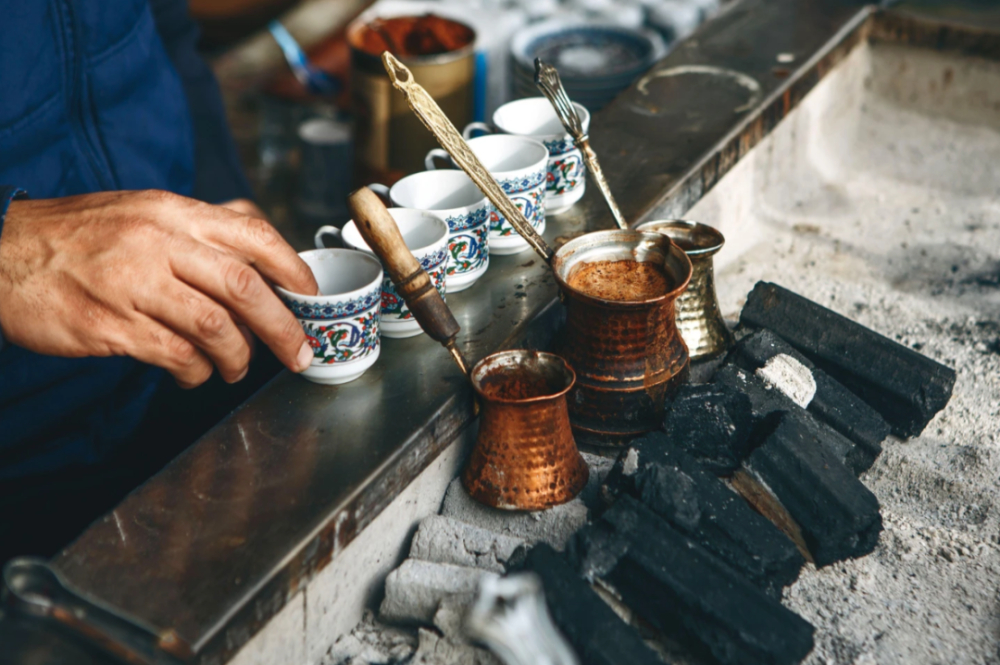
Beyond its dramatic brewing process, Turkish coffee also gains an air of mystery through its divination culture. This tradition dates back to the European aristocratic era, when people would use the shapes of coffee grounds during their leisure time to predict fate or hint at others’ futures—similar customs even appear in Harry Potter, where tea leaf readings are used to glimpse one’s fortune.
When performing Turkish coffee divination, after finishing the coffee, the cup is placed upside down on the saucer and left to sit for a moment, allowing the grounds to naturally trickle down. Then, the person may silently make a wish and gently rotate the cup three times before flipping it over and letting it rest, letting the grounds form various patterns on the inner walls. The shapes and distributions of these patterns are said to reveal future fortunes or hidden desires, making it a fun experience many enjoy trying.
But can Turkish coffee divination really accurately predict the future? In truth, it’s more a blend of cultural custom and psychological suggestion. The results often depend on the reader’s experience and imagination rather than any scientific basis. Nevertheless, this tradition remains widely popular and has become an essential ceremonial aspect of the coffee experience.
The flavor profile of Turkish coffee is another highlight. Due to the extremely fine grind and the absence of paper or metal filters, the coffee’s oils and delicate aromas are fully preserved. This brewing method typically results in a rich, layered cup with deep roast notes and a unique spicy aftertaste, offering a memorable taste experience for those who enjoy bold flavors.
When brewing Turkish coffee, it’s recommended to use light to medium-roasted beans ground to a powder-like fineness, with a water-to-coffee ratio of around 1:10. Heat the mixture in stages until it reaches a gentle boil, repeating the process about two to three times to help release flavors and stabilize the foam. Additionally, care should be taken to avoid over-boiling, which can lead to bitterness—removing the heat source at the right time and letting the coffee settle briefly before drinking allows you to better appreciate its subtle flavors.
In summary, the reason Turkish coffee in a cezve can magically refill itself lies in the physical principle of even heat distribution from the hot sand—not any illusionary trick. And while the accompanying divination ritual may not be scientific, it is rich in cultural charm and entertainment. If you’re eager to try a different coffee experience, why not give it a go yourself and feel the allure of this ancient Eastern coffee tradition?
The above content is compiled by CoffeeHunters, a coffee news website.


