







Introduction:As Arabica and Robusta face climate crises and threats from pests and diseases, a once overlooked coffee variety—Liberica (also known as the large-fruited coffee)—which was dismissed for its poor flavor, is regaining attention from the scientific community. Among its natural variants, Excelsa stands out for its disease resistance, drought tolerance, and flavor profile that closely resembles Arabica, winning favor among growers in places like Uganda. This article delves into the characteristics, advantages, and challenges of this promising variety, exploring its potential role in the future coffee supply chain.
With the global coffee supply dominated almost entirely by Arabica and Robusta, a historically significant yet long-neglected variety—Liberica (Coffea Liberica)—is re-entering researchers’ focus under the pressure of climate change. In particular, its natural variant Excelsa, which combines disease resistance, drought tolerance, and a flavor profile close to that of Arabica, has become a new choice for coffee farmers in certain regions adapting to climate shifts.
Looking back at recent years, global coffee inventories shrank drastically between 2021 and 2022 due to extreme drought, causing market prices to surge sharply, with Arabica prices even doubling in a short period. Climate anomalies not only impact yields but also limit the plantable regions for traditional coffee varieties. To address potential future supply shortages, academia has proposed three strategies: relocating cultivation areas, adjusting farming techniques, and re-evaluating previously overlooked coffee species, such as Liberica.
Liberica originates from the low-altitude virgin forests along the coastal regions of Liberia in West Africa, hence its name. The variety was only discovered and introduced to cultivation in the 19th century, but due to its tall stature and difficult harvesting process, it has never been widely adopted on a large scale. In the late 19th century, when Arabica varieties in Sri Lanka and Southeast Asia were nearly wiped out by leaf rust disease, Liberica was once considered a substitute. It not only had strong disease resistance but could also thrive in high temperatures and dry conditions, becoming an important planting option in certain areas.
However, Liberica’s flavor profile was not as delicate as Arabica’s, often perceived as bland, and combined with its challenging cultivation and harvesting, it gradually faded from the market. Entering the 20th century, with the rise of Robusta and the expansion of Arabica cultivation, Liberica nearly disappeared from the mainstream market.
Until recently, researchers discovered that farmers in some parts of Africa have started cultivating a coffee variety called Excelsa. This variety was first recorded in 1903 and confirmed as a natural variant of Liberica in 1940, thus also classified under the large-fruited coffee category. Though its fruit size is slightly larger than that of typical Arabica, its flavor exhibits remarkable refinement, with lower acidity and bitterness, and offers soft fruity notes and sweetness, resembling the layered complexity found in Ethiopian heirloom varieties.
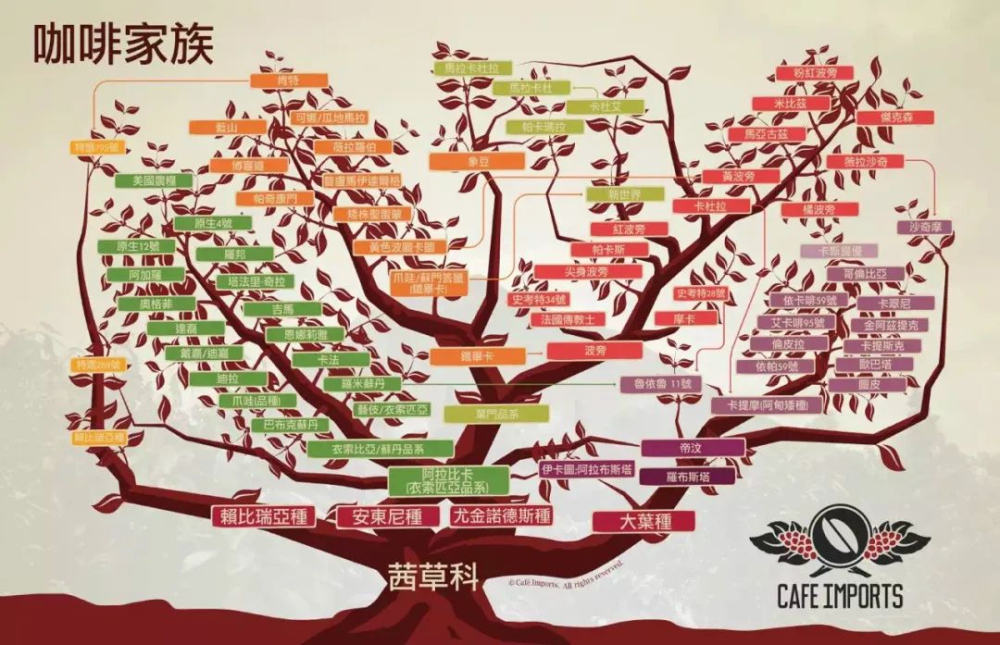
The flavor profile of Excelsa typically includes mild fruity acidity, subtle cocoa notes, nutty undertones, and a hint of maple-like sweetness. Its overall character is close to that of Arabica, yet it boasts higher climate adaptability. More importantly, it inherits Liberica’s excellent disease resistance, demonstrating strong resilience against common ailments such as leaf rust and coffee berry disease, while also tolerating low temperatures and light frost, as well as showing better drought resistance than Arabica.
According to experiences from local growers in Uganda, Excelsa yields are quite impressive, with a single coffee tree producing 30 to 60 kilograms of coffee cherries per year, translating to about 4.3 to 8.6 kilograms of coffee beans—far exceeding the per-tree yield of many traditional varieties, and providing farmers with a more stable and substantial income source.
Additionally, Excelsa thrives at relatively lower altitudes, generally between 600 and 1,200 meters, enabling it to survive in areas where Arabica would not typically grow, while also reducing dependence on high-altitude microclimates. Researchers believe this characteristic makes it a promising alternative variety in the face of climate change, especially in regions with strict altitude limitations or rising temperatures.
Although large-fruited Liberica and its variant Excelsa currently make up a very small portion of the global coffee market, the resilience and potential they demonstrate have drawn increasing attention from academic institutions and local farmers. For coffee-growing regions facing climate pressures and pest threats, Excelsa may well be a viable path for future transformation.
The above content is compiled by CoffeeHunters, a coffee news website.


