







Introduction:Global arabica coffee futures prices have plunged nearly 40% from their February peak, hitting a 17-month low, yet consumers have yet to feel any tangible price drops. What factors are preventing this price decline from trickling down to retail? This article delves into the reasons behind the volatility in the futures market and breaks down the cost structure of coffee shops to explain why specialty coffee remains out of reach for many.
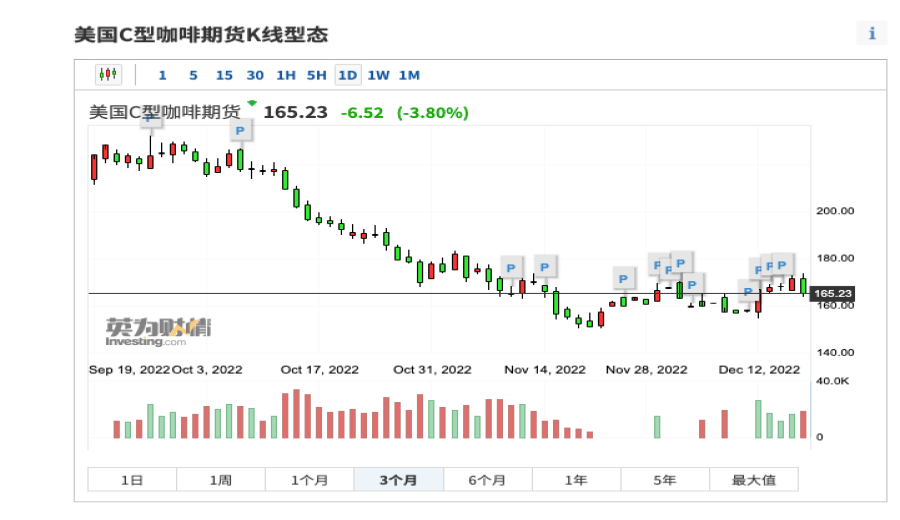
Recently, the international arabica coffee market has undergone a dramatic shift—this mainstream variety, accounting for about 70% of global production, has not seen prices rise due to expectations of reduced supply. Instead, influenced by global inflationary pressures, futures prices have plummeted nearly 40% from their February highs, sliding to their lowest level in 17 months.
According to data from the Intercontinental Exchange (ICE) in the United States, on November 18, the closing price of arabica beans was just 151.3 cents per pound, a sharp drop of 38% from 258.35 cents at the beginning of February. This downward trend accelerated in October, and on November 21, prices even briefly touched 150.45 cents per pound, marking the lowest level since July 2021—a stark contrast to previous price surges driven by factors such as the pandemic and weather.
Weak demand in the European market has been a key driver. With inflation intensifying, the Eurozone’s consumer price index rose by 10% year-on-year in November, maintaining a double-digit increase for two consecutive months, severely impacting non-essential consumption like coffee. Statistics show that the EU accounts for 26% of global coffee consumption, and the decline in demand has directly led to a buildup in inventory.
At the main storage facility in Antwerp, Belgium, inventory levels as of December 2 surged by 70%, accumulating approximately 550,000 bags (each weighing 60 kilograms). Notably, the amount of certified arabica beans awaiting certification reached 430,000 bags, more than four times the volume at the end of October, indicating a severe oversupply in the market. Industry insiders estimate that if the trend continues, certified inventory could soon surpass the one-million-bag mark.
This inventory pressure has also spread to other producing regions. The Indian market is also facing a sharp drop in spot prices; in early October, a bag of arabica coffee (50 kilograms) was still selling for 16,000 rupees, but has now fallen to 13,000 rupees; the price of fresh cherries has also halved from 91–94 rupees per kilogram to 64–67 rupees, leading many farmers to prefer stockpiling temporarily and waiting.
But consumers shouldn’t expect coffee shops to follow suit with price cuts just yet. In reality, final retail prices are influenced by multiple factors. Take commercial-grade coffee beans, for example: their pricing is tied to the futures market (mainly referencing prices from Brazil and Yunnan commodity beans), but specialty coffee involves premium factors such as origin, processing methods, and roasting techniques, resulting in relatively stable price fluctuations.
More crucially, coffee beans make up only a small portion of a coffee shop’s operating costs. For example, in a 30-yuan cup of latte, the cost of coffee beans may be less than 3 yuan, with the rest covering items like milk, labor, rent, and equipment depreciation. Chains like Starbucks have previously explained past price adjustments as decisions made after comprehensively evaluating factors such as rent, logistics, and labor costs.
For roasters, if they had stockpiled large inventories during the high-price period, they are now facing financial pressure. Moreover, the actual price consumers pay more reflects overall operating costs rather than just raw material expenses. Unless futures prices continue to hit new lows and inventory issues are resolved, it may still take some time before we see lower coffee prices.
The above content is compiled by CoffeeHunters, a coffee news website.


