








Introduction:Have you ever been puzzled by flavor descriptions on coffee packaging—like “citrus” or “berries”—only to find them absent when you taste the coffee yourself? This article starts with the first edition of the SCAA Coffee Taster’s Flavor Wheel released in 1995, and combines research on coffee aroma chemistry to delve into the scientific basis and sensory thresholds behind these flavor notes. It helps you understand why the same cup of coffee can yield vastly different experiences based on how it's described, and also provides practical tips for evaluating pour over coffee.
Many beginners in the world of pour over coffee often wonder: why can’t I taste the “citrus,” “berries,” or “caramel” flavors marked on the coffee bag? Are these flavor descriptions just marketing gimmicks, or is there some truth to them? In fact, the answers can be found in the first edition of the Coffee Taster’s Flavor Wheel introduced by the Specialty Coffee Association of America (SCAA) in 1995, as well as in recent studies on sensory science.
Flavor descriptions of coffee are not products of imagination, but a common language gradually established based on actual aromatic compounds present in coffee, aligned with human sensory thresholds. For example, the compound “d-limonene,” found in many fruits such as citrus, also appears in certain coffees. This is the scientific reason why we can perceive similar fruity aromas in coffee. Understanding these basic principles allows you to have a clearer direction when trying to capture those subtle flavors in your pour over brews.

The reason specialty coffee is considered “special” is not only due to more meticulous roasting and brewing techniques, but also because it transcends the mere function of “boosting alertness” and is further imbued with the meanings of taste experience and lifestyle aesthetics. When you choose a single-origin pour over coffee, you’re actually pursuing a personalized flavor experience, and flavor descriptions are an essential tool to help you explore that.
However, many newcomers, upon first encountering this rich vocabulary of flavors, often feel disappointed—why can’t they taste the “raspberry” or “tropical fruit” noted on the label? Have they been misled? In reality, these descriptions aren’t made up out of thin air. Scientific research shows that volatile compounds released during coffee roasting significantly overlap with components found in common fruits, nuts, and flowers. For instance, “d-limonene,” abundant in citrus peels and responsible for producing a fresh orange aroma, is also detectable in some coffee varieties.
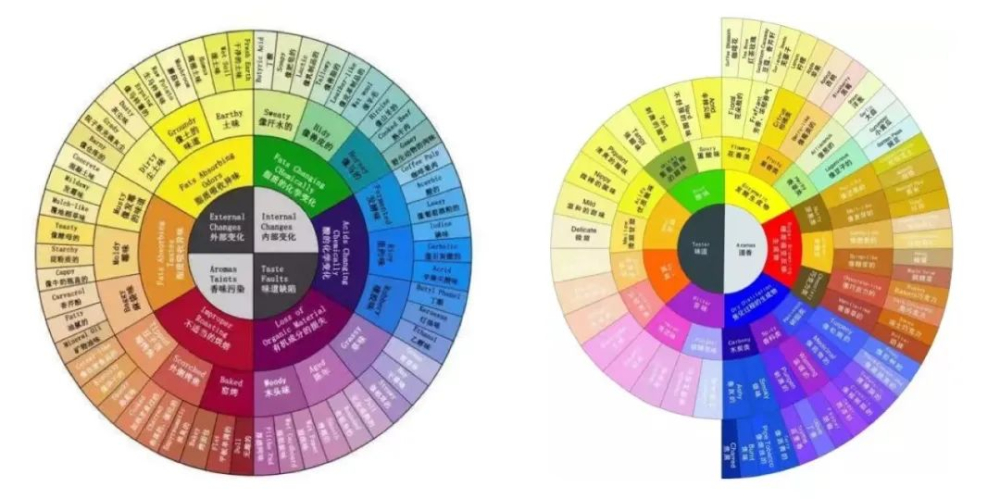
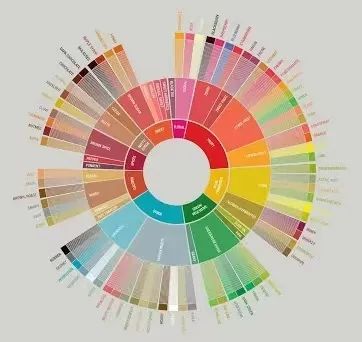
In 1995, SCAA launched the first edition of the “Coffee Taster’s Flavor Wheel,” specifically designed for coffee cuppers, aiming to establish a shared language that would enable accurate description and communication of coffee flavor characteristics. The original version was divided into “positive flavors” and “negative flavors.” However, due to its complexity and difficulty to understand, an updated version was released in 2016, which greatly simplified the structure and enhanced the detailing of positive flavors, making it easier for general consumers to understand and reference.
The establishment of this flavor wheel not only provided coffee professionals with a common reference standard during cupping, but also indirectly shaped the cultural vocabulary of specialty coffee. When you see a coffee described as having “raspberry” or “blueberry” notes, even if you weren’t particularly sensitive to those flavors before, you might perceive the unique qualities of that coffee through associations with past taste memories.

Some believe that flavor descriptions are a form of “psychological suggestion”—meaning that when you’re given a flavor hint, you’re more likely to “imagine” corresponding tastes. While this isn’t entirely wrong, it’s not completely accurate either. Scientific studies indicate that although our olfactory and gustatory senses can perceive many compounds, clear identification often requires those compounds to reach a certain concentration (i.e., the sensory threshold). Moreover, the ability to identify flavors mostly comes from acquired training and accumulation, rather than being innate.
Therefore, flavor descriptions on coffee packaging actually serve as a “flavor guide,” helping you form initial expectations and taste associations for that particular coffee. For example, when you see words like “apple,” “plum,” or “berries,” even before tasting, you might already guess that it’s a light roast coffee with bright acidity and rich fruitiness, thereby influencing your focus and taste memory during drinking.
Interestingly, flavor descriptions are also a form of “linguistic art.” The same flavor characteristics can evoke completely different feelings depending on how they are described. For instance, if a coffee is described as having “a rich fermented fruit wine aroma paired with the sweet scent of jackfruit, and a warm caramel finish,” you might feel a sense of exotic richness and layered complexity. But if it’s described as “overripe rotten fruit with a hint of fermented bean curd, ending with some caramelized sweetness,” even if it’s the same coffee, you might instantly lose interest in trying it.
This reminds us that when tasting pour over coffee, we should not only rely on our taste and smell, but also learn to approach those flavor-related words with an open mind, understanding the intent and context behind them. Through continuous tasting, recording, and comparing, you’ll gradually build your own flavor database and gain more confidence in facing various flavor descriptions, ultimately discovering the coffee beans that truly suit your palate.
In summary, coffee flavor descriptions are not baseless; they are practical tools grounded in scientific analysis and sensory research. From the evolution of the SCAA Flavor Wheel to the actual detection of coffee aroma compounds, we can understand the logic behind these terms. For pour over coffee enthusiasts, learning to read and interpret these descriptions will help you delve deeper into the diverse flavors of coffee and uncover your own flavor story with each brew.
The above content is compiled by CoffeeHunters, a coffee news website.


