







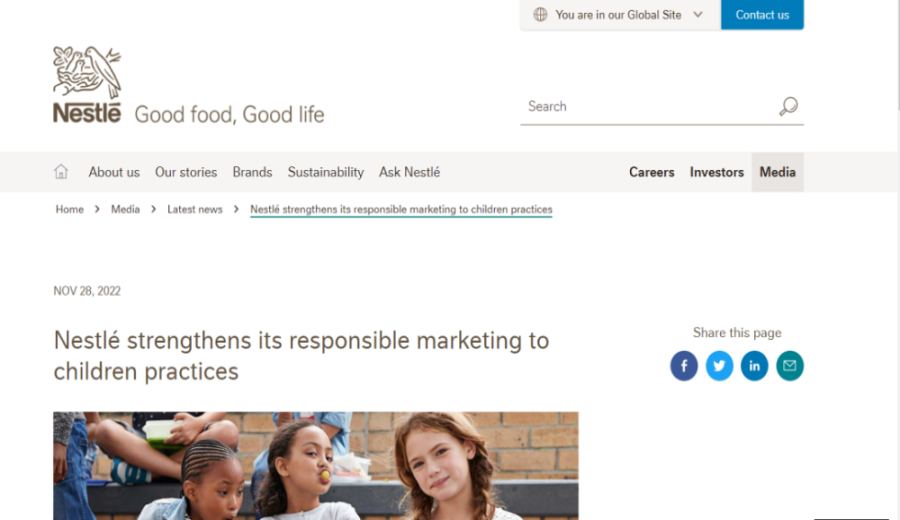
Introduction:Nestlé, a global food giant, has completely banned the promotion of sugary products such as sugary drinks, candies, and ice cream to children under the age of 16 starting from July 1, 2023, demonstrating the brand's commitment to a "sugar-reduction" transformation. At the same time, Nestlé has also set financial targets for 2025 and launched several new low-sugar, low-fat coffee products to attract younger consumers. This article provides an in-depth analysis of the market strategy behind Nestlé's policy, health trends, as well as the low-sugar coffee initiatives of competitors such as T97 and Nongfu Spring, helping readers stay on top of the latest developments in the global coffee and sweet drink markets.
As coffee drinking habits become more widespread, consumers' demands for health and quality are also increasing. The global food leader Nestlé announced in 2023 that starting from July 1, it would cease promoting its high-sugar products—including candies, ice cream, and sugary drinks—to children under the age of 16 globally. This new policy applies to all television, online, social media, and gaming platforms, with an estimated 25% of the audience belonging to the under-16 age group.
Nestlé further pledged not to collect personal data from minors and to collaborate only with social media influencers aged 18 and above, ensuring that marketing content does not directly target the underage demographic. This move is seen as an important step in Nestlé’s accelerated shift towards "reduced sugar," as well as in reshaping its healthy brand image.
In fact, Nestlé began adjusting its product portfolio as early as 2018 by selling off its U.S. confectionery business and successively launching a variety of healthier options including low-sugar, zero-sugar, and zero-calorie products such as low-sugar drinks, sugar-free chocolates, and low-sugar coffee. Statistics show that between 2016 and 2020, Nestlé successfully reduced the average sugar content of its global products by 5.1%, reflecting its proactive response to health trends.
From a market strategy perspective, Nestlé's gradual phase-out of high-sugar, high-calorie product lines and shift toward more natural, low-burden foods helps enhance the brand's image among modern consumers. Although this may impact the sales performance of candies and sugary drinks in the short term, it is beneficial in the long run for establishing a sustainable and competitive brand positioning.
In terms of financial goals, Nestlé recently announced its 2025 vision, expecting the basic operating profit margin to rebound to between 17.5% and 18.5% in 2025, after being pressured by cost increases in 2021 and 2022. Additionally, Nestlé has set a target for earnings per share growth of 6% to 10% annually in constant currency terms for the period from 2022 to 2025, and aims to achieve a free cash flow to sales ratio of 12% and a return on invested capital of 15%.
In terms of product innovation, Nestlé has launched a lightly sweetened black coffee product called "Black Coffee," which features a low-sugar and zero-fat formula, catering to younger consumers’ needs for versatile, multi-scene consumption. In addition to Nestlé, many brands are actively expanding into the healthy coffee market. For example, the domestic emerging coffee brand T97, established in 2022, quickly gained attention by entering the market with a focus on "low-calorie coffee." Moreover, Nongfu Spring, which expanded from bottled water into the coffee segment, has also continuously introduced a range of low-sugar, low-calorie ready-to-drink coffees, including black coffee, low-sugar lattes, and sugar-free lattes. It has even launched a premium pure black coffee series called "Yirgacheffe," intensifying market competition.
The Nestlé coffee brand has a history of 83 years. Amid the trend of consumption upgrading and younger demographics becoming the main consumer group, the brand is accelerating its development towards youthfulness, healthiness, and premiumization. In terms of marketing strategy, Nestlé has previously attracted younger audiences through pop-up stores and interactive events; in terms of products, it has introduced special fruit-infused series, premium pour over coffee, and an ever-evolving line of ready-to-drink coffee products. Through low-sugar formulas, affordable pricing, and innovative flavors, it is further capturing the younger market.
The above content is compiled by CoffeeHunters, a coffee news website.


