







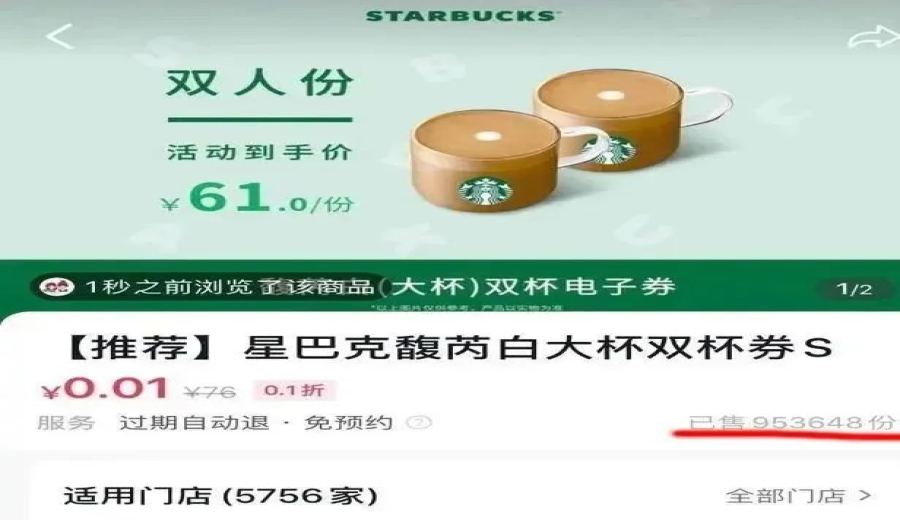
Introduction:Starbucks China once launched a promotion offering "two Flat Whites for 0.01 yuan," but a failure in coupon distribution led to automatic refunds, sparking widespread dissatisfaction among consumers. The Shanghai Consumer Council stepped in to investigate. Starbucks denied the accusations of “order cancellation” and “zero-cost user acquisition,” emphasizing that it had fulfilled over ten thousand orders. However, legal experts pointed out that a contract is formed the moment a consumer makes a payment, and Starbucks unilaterally canceling orders could constitute a breach of contract. This article provides a detailed account of the incident and the associated legal perspectives.
Starbucks China’s recent promotion offering “two Flat Whites for 0.01 yuan” caused strong consumer dissatisfaction and a wave of complaints due to system failures in coupon distribution, leading to mass automatic refunds. The Shanghai Consumer Council has stepped in to look into the matter, while Starbucks responded by stating that the allegations were unfounded.
It is understood that prior to being taken down, the promotional link sold approximately nine hundred thousand orders. Currently, on Starbucks’ official Douyin account, the price for a “Flat White Double Cup Redemption Voucher” has been adjusted to 61 yuan. Many consumers who successfully completed their payments received system notifications about failed coupon distribution and automatic refunds, prompting public backlash with comments such as “if you can’t afford it, don’t run the promo.” The topic even briefly trended in the top five on social media.
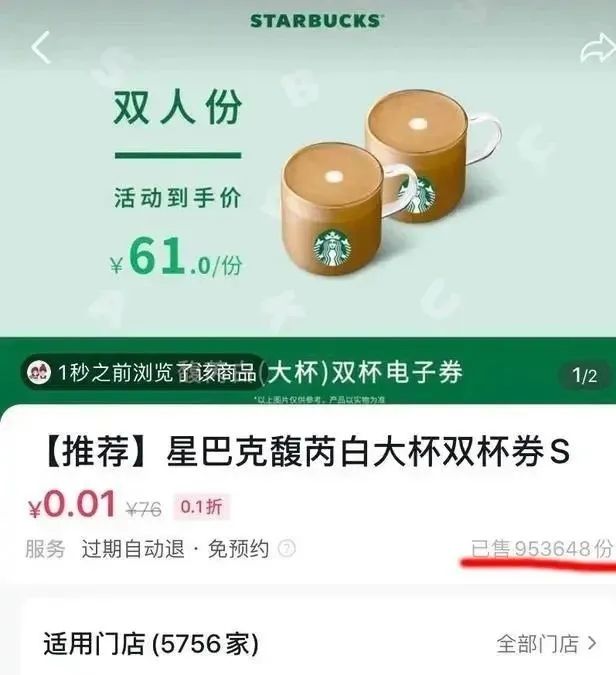
On the evening of the incident, Starbucks China issued a statement explaining that the issue was caused by mistakenly activating an internal testing link earlier that morning. The company claimed it had fixed the system settings, processed automatic refunds, and sent SMS apologies. However, this explanation failed to quell the controversy, with many consumers arguing that internal issues should not be the customers' burden—especially since some early buyers successfully redeemed their vouchers, while later customers were refunded solely due to system errors, which seemed unfair.
Subsequently, the discussion shifted to the “discrepancy in treatment between those who redeemed and those who didn’t,” and numerous consumers filed complaints through the 12315 platform questioning Starbucks’ actions.
On November 28, the Shanghai Consumer Council communicated with Starbucks China to clarify the disputes surrounding the “one-cent-for-two-coffees promotion” and the “zero-cost user acquisition” controversy.
Starbucks China explained to the Consumer Council that the term “order cancellation” was inaccurate. On November 23, a misoperation by the Douyin operator led to the launch of the “Buy Two Flat Whites for 0.01 Yuan” campaign. Of these, over ten thousand successfully completed transactions were all honored by Starbucks, with customers able to redeem their orders at stores using the provided codes. Meanwhile, over nine hundred thousand orders did not complete the transaction, so there was no instance of “order cancellation.” Additionally, Starbucks emphasized that the campaign did not require following their Douyin account or joining a membership program, and therefore there was no issue of “zero-cost user acquisition.”
However, many netizens rebutted, stating that successful payment meant the transaction was complete, yet they received automatic refund messages citing “code issuance failure,” finding it difficult to accept the claim that no transaction had occurred.
Regarding this controversy, legal experts pointed out that once a consumer pays 0.01 yuan to purchase a coffee redemption voucher, a valid contractual relationship is formed with Starbucks. According to the basic principles of contract law, once payment is made, Starbucks is obligated to provide the corresponding service as agreed. Regardless of the internal reasons, unilaterally canceling orders may constitute a breach of contract.
As of now, the Shanghai Consumer Council has not released a final investigation result, and the incident continues to unfold.
The above content is compiled by CoffeeHunters, a coffee news website.


