







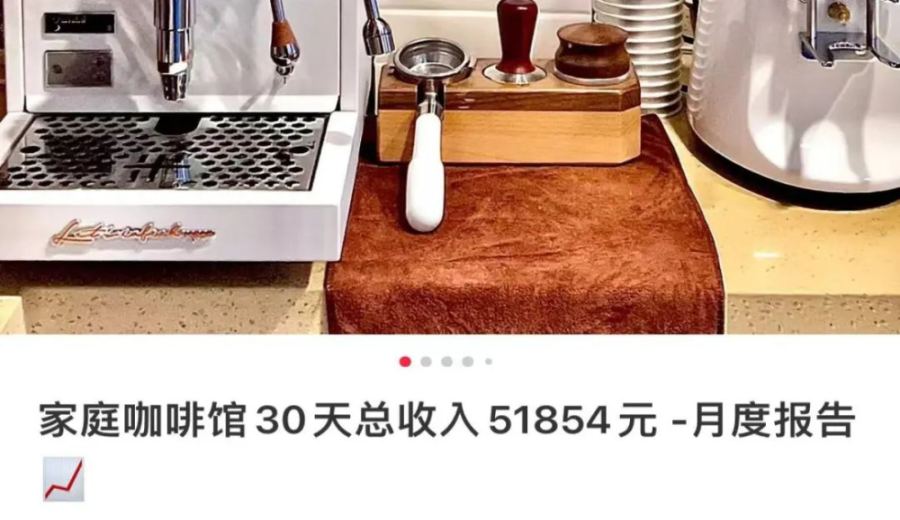
Introduction:In recent years, home-based coffee shops have become a popular entrepreneurial venture, with many cases claiming monthly revenues of up to fifty thousand yuan, attracting numerous coffee enthusiasts eager to give it a try. However, this business model faces multiple challenges in terms of legality, cost control, and market positioning. This article delves into the actual operational conditions of home-style coffee shops, explores the risks and real-world difficulties behind their profit models, and provides practical references to help you rationally assess the feasibility of getting involved.
Home coffee shops have recently become a hot topic, with many residential areas gradually seeing the emergence of micro coffee businesses targeting neighbors as well as nearby shops and offices. Some operators share their operational results through social media platforms—some report monthly revenues of just a few thousand yuan, while others claim to earn over fifty thousand yuan, drawing considerable attention.
According to one case where the shop achieved a monthly revenue of fifty thousand yuan, the business initially collaborated with traffic creators on platforms such as Douyin, while also promoting on WeChat and Xiaohongshu. It also offered coffee-making courses, attracting students from other regions to emulate its business model. Daily operations were assisted by the owner’s relatives and friends, covering production and delivery, which helped save on some labor costs.
Half a month after opening, the shop averaged 60 to 80 cups sold per day, with peak hours exceeding 100 cups. Overall monthly sales included 1,289 drinks, 57 packs of coffee beans, 113 rechargeable members, and 2 students, ultimately achieving a profit of over fifty thousand yuan.
Such success stories are certainly appealing, but the actual operation of home coffee shops is far more complex than it appears, especially when it comes to a series of legal and practical issues.
First and foremost, regardingbusiness licenses and health permits, it is often difficult for such home-based operations to obtain legal certifications. According to relevant regulations, any establishment selling food or beverages must possess the appropriate qualifications. Operating without a license while selling paid beverages constitutes unlicensed business activity. In the event of a food safety dispute, not only is it difficult to seek redress, but legal liability may also be incurred.
Secondly, observing the case of fifty thousand yuan in monthly income, its revenue does not come solely from coffee sales. Due to the limited total number of cups sold, milk and other materials are mostly purchased at near-retail prices or slightly lower, meaning the average selling price per drink needs to be around twenty yuan to sustain overall revenue. Compared to chain brands, the price lacks a clear competitive edge, naturally reducing consumer willingness to choose.
Moreover, many people mistakenly believe that home coffee shops, by avoiding rent, significantly reduce costs. However,actual operating costsstill include utilities (though not commercial-grade, they still need to be accounted for), equipment depreciation, ingredient loss, and even fuel and time costs associated with deliveries by relatives and friends. All these should be factored into the overall assessment. Even with rent saved, overall expenses remain non-negligible.
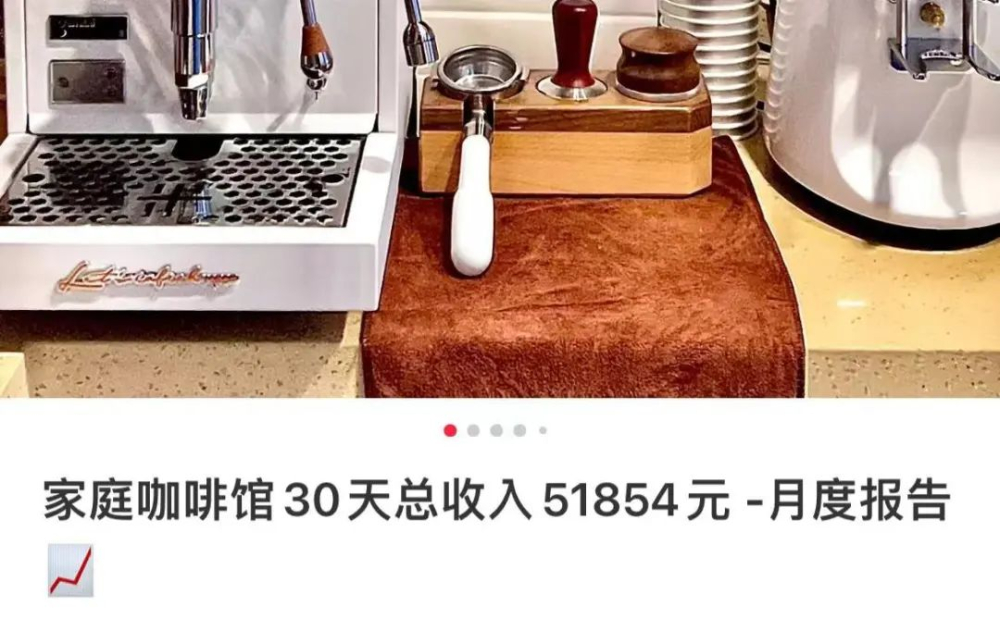
Taking all factors into account, even if monthly revenue reaches fifty thousand yuan, after deducting marketing expenses, ingredient costs, labor, and hidden expenditures, the actual profit may be lower than expected, or even result in negative returns. Therefore, running a home coffee shop is not something that can be stably profitable based solely on passion and interest—it requires meticulous planning and a full understanding of market realities.
Additionally, observing home coffee shop shares on social media platforms, it’s not hard to notice that most cases use coffee equipment from a concentrated set of brands, commonly seen among two or three well-known market brands. This reflects a convergence in equipment choices and also suggests that there is still a certain standard for entry barriers and initial investment.
In summary, while home-style coffee shops may achieve considerable profits under specific conditions, their business model faces multiple challenges including legal risks, cost control, and market competition. Those interested in getting involved are advised to thoroughly understand relevant regulations, carefully calculate all costs, and prudently evaluate their own resources and market positioning, to avoid overlooking the complexities of actual operations due to temporary trends.
The above content is compiled by CoffeeHunters, a coffee news website.


