







Introduction:In recent years, it has become a growing trend for coffee brands to venture into the alcohol business. From Starbucks to Luckin Coffee, and even emerging brands such as Seesaw and M Stand, many have experimented with the "coffee by day, drinks by night" model. Luckin Coffee has even established a new company in Xiamen, officially stepping into the alcohol business. This article will delve into Luckin’s trademark strategy and latest moves, take stock of cross-industry attempts by major brands, and analyze the broader transformation trends in the beverage market—offering insight into the opportunities and challenges behind this wave of cross-sector enthusiasm.
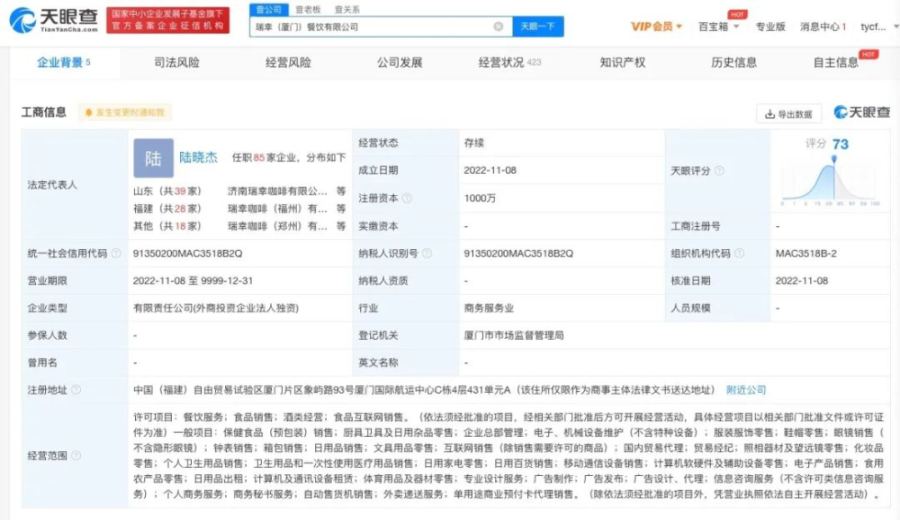
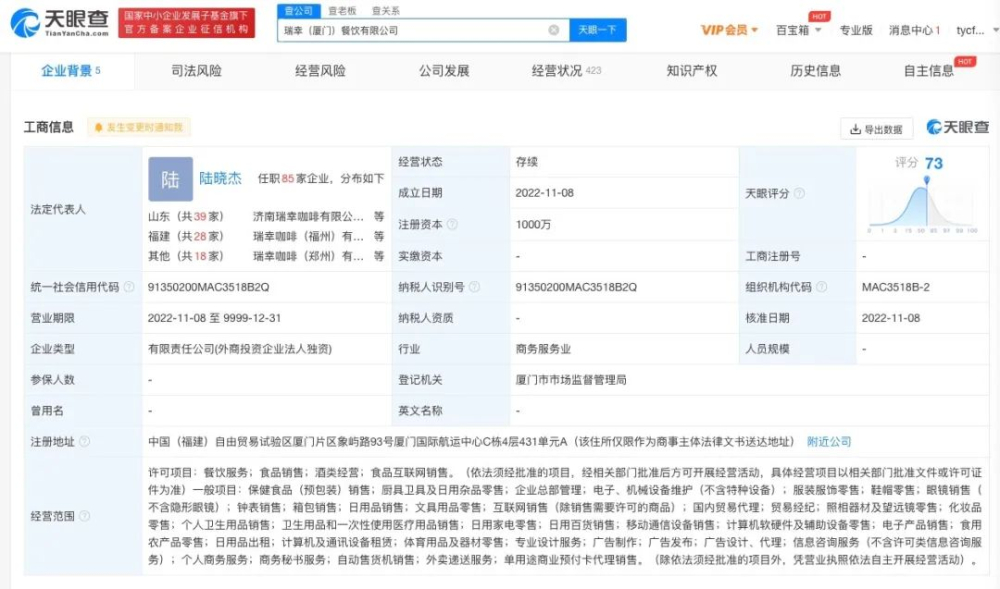
The move of coffee brands into the alcohol market has gradually shifted from being an isolated phenomenon to an industry-wide trend. Recently, Luckin Coffee registered a new company in Xiamen — Luckin (Xiamen) Catering Co., Ltd. — with a registered capital of 10 million RMB. Its business scope explicitly includes “alcohol sales,” a move that quickly caught the attention of the industry. The new company is wholly owned by Luckin Coffee (China) Co., Ltd., signaling the brand's emphasis on and long-term planning for this new venture.
In fact, Luckin’s interest in the alcohol market had shown early signs. As far back as April 11, 2023, Luckin Coffee (China) Co., Ltd. applied to register several trademarks under the name “Luckin O Qi” (瑞幸歐氣), covering categories such as beer beverages, convenience foods, and general food products. These trademarks have since been successfully registered. Notably, the term “O Qi” (歐氣) originates from internet slang, often used to describe good luck or fortune, reflecting the brand’s intent to align its naming with the language and culture of younger consumers.
Luckin is not alone—numerous well-known coffee brands have already launched “coffee by day, drinks by night” business models. In 2019, Starbucks introduced its first coffee-and-drinks concept store in China, the “Starbucks Reserve Bar Mixato,” which offered wines, craft beers, aperitifs, and classic cocktails, successfully pioneering a new hybrid café-and-bar format. To date, this model has expanded to major cities such as Beijing, Shanghai, Chengdu, and Wuhan, demonstrating consistent market acceptance.
Meanwhile, domestic brands are also actively seeking breakthroughs. Seesaw launched its first “Good Idea Hub” coffee-and-drinks experience store in Shanghai, attracting evening foot traffic through a diverse mix of spaces and beverages. M Stand has set up five themed stores in Shanghai, Shenzhen, and Ningbo, all focusing on a dual-operation model of daytime coffee and nighttime drinks to meet consumers’ all-day social and leisure needs.
Even Luckin’s former chairman, Lu Zhengyao, who founded Kuaizi Coffee, has planned an all-day operation strategy—from morning coffee and light meals, to afternoon snacks, and evening alcoholic drinks—forming a complete consumer timeline that reflects the brand’s deep consideration of market segmentation and consumption scenarios.
Notably, this wave of cross-industry expansion is not limited to coffee brands. In 2021, international beverage giant Coca-Cola officially announced its entry into China’s alcoholic beverage market, launching a series of alcoholic drinks as a significant step in its strategic transformation. Similarly, Genki Forest has indirectly entered the alcohol market by investing in Guanyun Baijiu-related enterprises, showing emerging beverage brands’ strong interest in the growth potential of the alcohol sector.
Market data further confirms the momentum of this trend. According to statistics from Tianyancha, as of October 2022, the number of newly alcohol-related businesses nationwide had surpassed 1.1 million, with the annual total expected to exceed previous years and reach a historical high. Looking at a longer timeline, between 2012 and 2021, a total of 6.22 million new businesses with “alcohol” in their name or business scope were established—an average of more than 620,000 per year, or nearly 1,700 per day.
However, venturing into the alcohol market is no easy feat. For brands originally focused on coffee, they must not only contend with consumers’ preconceived notions about their brand image, but also make adjustments in product development, supply chain management, operational models, and even regulatory compliance. Especially in areas such as alcohol licensing, professional beverage mixing expertise, and safety during nighttime operations, numerous challenges remain. Whether a brand can successfully transition will depend on its keen market insight and precise execution of operational details.
The above content is compiled by CoffeeHunters, a coffee news website.


