







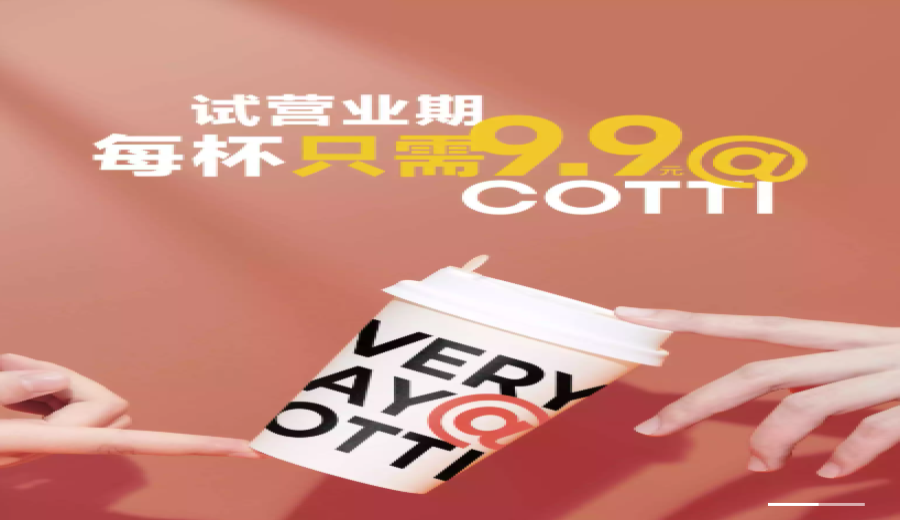
Introduction:Luckin’s first store trial opened at Fuzhou IFC International Finance Centre, featuring a promotion where all drinks are priced at 9.9 RMB, continuing Lu Zhengyao’s familiar low-price expansion strategy. Facing competition from Luckin, Starbucks, and cross-industry brands, how can Luckin Coffee leverage its 40+ product offerings and past success to challenge its goal of opening 10,000 stores within three years? This article analyzes its market layout, product structure, and competitive advantages and disadvantages.
As coffee consumption gradually extends from first- and second-tier cities to third-, fourth-, and fifth-tier markets, the price of freshly brewed coffee remains a key consideration for many office workers. To capture the lower-tier market, Lu Zhengyao led the new brand “Luckin Coffee” in opening its first store at Fuzhou IFC International Finance Centre, offering all drinks at the surprising promotional price of 9.9 RMB during the trial period. This move is identical to the low-price strategy he used when building Luckin Coffee in the past.
According to mini-program information, Luckin Coffee offers over forty products including coffee, tea drinks, smoothies, and sundaes. Popular items such as “Pineapple Cold Brew Latte” and “Cheese Latte” are all available. These products originally ranged in price from 18 to 32 RMB, but during the trial period, they have all been uniformly reduced to 9.9 RMB, significantly lowering the consumption barrier.
This opening promotion tactic is reminiscent of Luckin Coffee’s early market offensive — including a free first drink, 50% off coupons, and even entering the market through low-priced light meals. Although Luckin has not introduced any completely new tactics this time, it clearly continues with a proven and effective market strategy, quickly capturing consumer attention.
However, the current competitive landscape of the coffee market is vastly different from when Luckin first made its mark. Not only are Luckin and Starbucks two dominant brands firmly holding the market lead, but cross-industry players like KFC and Mixue Ice Cream & Tea are also actively expanding. For example, KFC launched its independent coffee store KFC TO GO in Shanghai, promoting “bringing SOE into the 9 RMB era,” with high-quality espresso made from single-origin (SOE) coffee beans still offered at an affordable price.
Similarly adopting a low-price strategy, Mixue’s sub-brand “Xingyun Ka” has directly pushed coffee prices down into the single digits — Americano for 5 RMB per cup, Latte for 6 RMB, and specialty drinks for just 10 RMB. This significantly lowers the entry barrier for freshly brewed coffee, further intensifying overall market competition.
Although Luckin Coffee aims to achieve its expansion goal of “10,000 stores in three years” through high cost-performance and rapid store openings, in a market where cost-performance has become a primary consumer consideration, if it fails to effectively differentiate its brand positioning and relies solely on low prices or replicating past models, it may struggle to replicate Luckin’s glorious record of opening 2,073 stores in its first year.
It is worth noting that Luckin’s product lineup covers a variety of popular choices, from the classic Pineapple Cold Brew Latte to the innovatively flavored Cheese Latte, all designed to align with current consumer taste trends. In addition, although the trial period prices are short-term promotions, if Luckin can continue to offer high cost-performance options in the future while strengthening its supply chain and quality control, it may find a foothold in this fiercely competitive market.
In summary, Luckin Coffee’s debut with a breakthrough price of 9.9 RMB is not only a market test but also a crucial step for Lu Zhengyao’s team to once again challenge the coffee industry. Whether it can successfully break new ground amid strong competitors like Luckin, Starbucks, KFC, and Mixue Ice Cream & Tea is worth continued observation.
The above content is compiled by CoffeeHunters, a coffee news website.


