







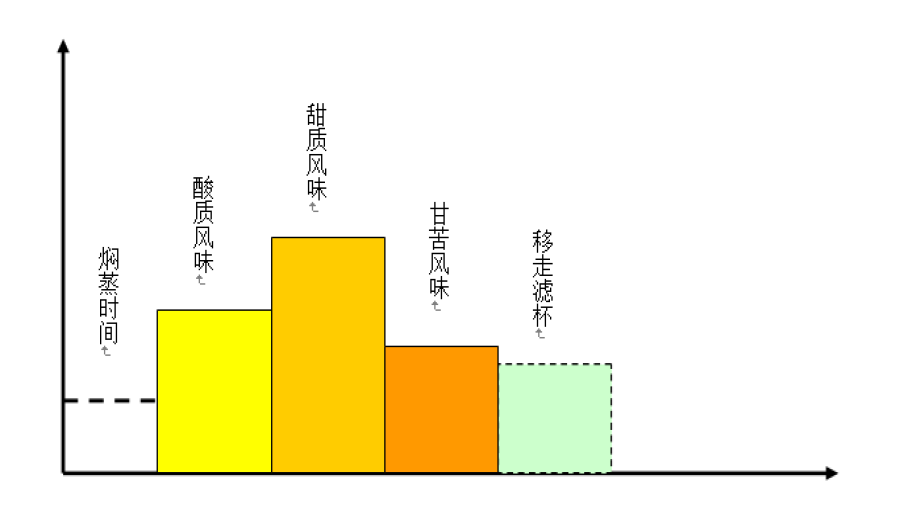
Introduction:Mastering the segmented brewing technique for pour over coffee allows for precise control over the balance of acidity, sweetness, and bitterness, especially helping to bring out a memorable sweetness. This article compares practical three-stage and four-stage pouring methods, guiding you through the flavor development in different stages of brewed coffee, analyzing how various extraction parameters influence sweetness release, and offering practical tips to improve extraction efficiency.
During the pour over process, how to manage flavors through segmented pouring is a key focus for many coffee enthusiasts. Since acidity, sweetness, and bitterness are released at different rates, hot water extracts them in sequence. Using Papua Paradise bird coffee beans roasted to a medium level as an example—under standard conditions of 15g coffee grounds, 225ml total water, and a water temperature of 89°C—we employed both three-stage and four-stage pouring techniques. By closely observing the flavor transitions in the early, middle, and late stages of the brew, we help identify the extraction stage where sweetness is most pronounced, while analyzing how different segmentation approaches affect extraction yield, time, and flavor performance.
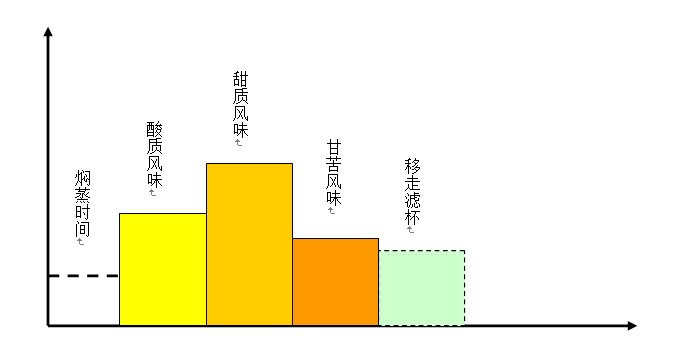
The core of segmented extraction lies in adjusting the flavor structure by utilizing the differences in substances released at various stages. Generally, hot water first extracts acidic compounds, followed by sweet components, and lastly bitterness. When you increase the number of segments—for instance, from three to four—the volume per pour decreases, while the frequency of disturbing the coffee bed increases. This helps enhance overall extraction yield and refines flavor layers, but it also extends total brewing time and raises the risk of over-extraction.
Taking the three-stage pouring method as an example, using 15g of coffee grounds with the EK43 grinder set to 10.5 (approximately 75% passing through a #20 sieve), maintaining a water temperature of 89°C, and a total water volume of 225ml. The first stage begins with a 30ml bloom pour for about 30 seconds. At this point, the early-stage brew exhibits intense hazelnut, dark cocoa, and caramel aromas, with clear acidity and salinity, a relatively high concentration, and the most vibrant flavor profile.The primary goal of this stage is to wet the coffee bed, release carbon dioxide, so the single pour volume is the smallest, yet the flavors perceived are the most vivid.

The second stage uses 95ml, poured in a circular motion from the center outward while slightly lifting the coffee bed, starting to drip after about 30 seconds. The mid-stage brew showcases flavors of sugarcane, nuts, citrus, and a subtle tea note, with a more balanced acidity and sweetness. The overall concentration is slightly lower, but the flavor is fresher. As the temperature gradually drops, sweetness and fruit acidity become more pronounced—this is a crucial stage for experiencing the transition in coffee flavor layers.
Finally, the third stage involves pouring 100ml with smaller circles, concentrating the water flow toward the bottom of the coffee bed, bringing the total brew time to 2 minutes and 16 seconds. At this point, the late-stage brew trends toward a lighter flavor, featuring the clean sweetness of almonds and white tea, with a relatively dry mouthfeel but lower overall concentration, marking the conclusion of the flavor profile. This stage mainly extracts body-enhancing compounds, impacting the stability of the overall taste and the aftertaste.
If adopting a four-stage pouring method under the same conditions, the total 225ml water is divided into four pours: 30ml, 65ml, 65ml, and 65ml, with a total brew time of 2 minutes and 31 seconds. Practical testing found that the early-stage brew in the four-segment method still features high concentrations of acidity and salinity, similar to the three-segment approach; the second stage presents a more concentrated sweetness, showcasing the natural sweetness of roasted hazelnuts and sugarcane, with significantly reduced acidity; the third stage continues with nut and sugarcane notes, paired with a tea-like sweetness on the finish, though overall intensity is slightly diminished; by the fourth stage, the flavors have become rather muted, leaving only trace amounts of tea aroma, almond bitterness, and woody tones.

When the four stages of brew are combined for tasting, the overall profile reveals a balanced sweetness of roasted hazelnuts and sugarcane, along with gentle citrus acidity and distinct layers. However, some drinkers may perceive a slight over-extracted bitterness in the aftertaste, which results from the excessive release of larger molecular compounds in the later stages. This shows that while increasing segmentation helps refine extraction, too many segments can lead to flavor imbalance and heightened risk of over-extraction.
Based on comprehensive test results, whether using a three-stage or four-stage method, the coffee’s sweetness is mainly concentrated in the mid-to-late stages, particularly the latter often exhibiting sweet traits of caramel, nuts, and tea. These sweet flavors primarily come from the natural sugars—around 6–9%—found in coffee beans. To effectively extract these flavors, it is recommended to moderately increase extraction yield while avoiding over-extraction, such as by fine-tuning water temperature, reducing grind size, or extending total brew time.
Mastering these details of segmented brewing not only improves the consistency of pour over coffee but also helps you adjust to the unique characteristics of different beans, tailoring the optimal flavor profile to ensure each cup showcases the best possible sweetness and layered complexity.
The above content is compiled by CoffeeHunters, a coffee news website.


