







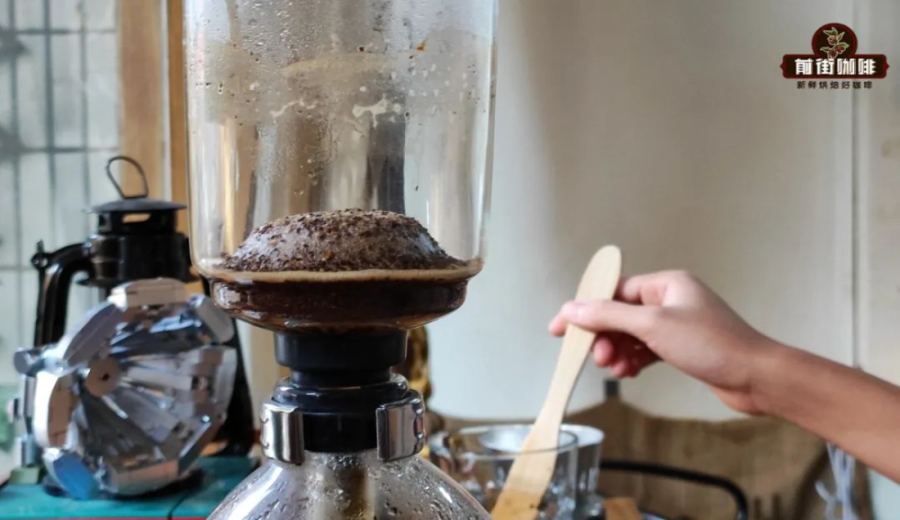
Introduction:When brewing siphon coffee, after turning off the heat and stirring the coffee grounds in the upper chamber, it is common to see a rounded “little hill” left behind as the coffee flows back down. Although this visual is quite appealing, it is often mistakenly regarded as a key to a successful brew. This article delves into the science behind the formation of the little hill, explores how stirring techniques, coffee dosage, and stirring force affect the hill’s height, and clarifies the misconception that “the higher the hill, the better the coffee,” helping you master the finishing technique of siphon brewing more scientifically.
During the siphon coffee brewing process, after turning off the heat, it is a familiar step for many coffee enthusiasts to gently stir the coffee grounds in the upper chamber in one direction using a stirring rod. As the water is heated in the lower chamber and rises to fully interact with the coffee grounds for extraction, when the heat is turned off, the coffee liquid begins to flow back into the lower chamber. If stirred appropriately at this moment, the coffee grounds in the upper chamber often pile up into a smooth, rounded hill-like shape. Although this phenomenon is often seen as a classic sight in siphon coffee brewing, it is actually just one of many brewing methods and not an absolute determinant of coffee flavor.
Many people learning to brew siphon coffee imitate this “finishing move,” believing that as long as a noticeable little hill appears after stirring, it means the coffee has been brewed successfully and will have a better flavor. There’s even a saying that “the higher the hill, the better the coffee.” However, such notions are actually based on several misunderstandings. In reality, the formation of the little hill has no direct causal relationship with the final flavor of the coffee. Understanding the principles behind it is more important than blindly chasing after appearances.
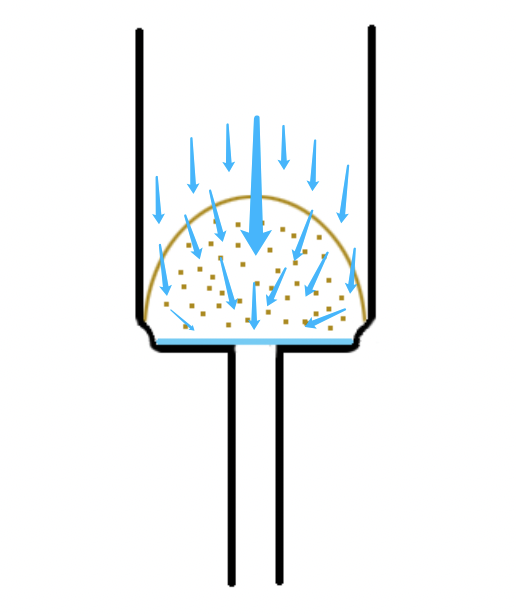
So, why stir in one direction after turning off the heat? This can mainly be attributed to two reasons. First, many early users of siphon coffee believed that the bitter and astringent impurities in coffee are mostly released toward the end of the extraction process. By agitating the coffee grounds, these impurities can be encouraged to rise to the surface, thereby reducing their likelihood of entering the lower chamber. Second, the hill-shaped coffee ground layer formed after stirring helps the coffee liquid pass through the grounds more evenly during the backflow. Observing the structure of the siphon pot, you’ll notice that the area where the filter screen is installed in the upper chamber usually features a ring-shaped stepped convergence zone, yet the actual passage for the coffee liquid to flow down is only a single thin tube in the center. If the coffee grounds lie flat, the surrounding liquid has to penetrate a thicker layer of grounds to descend, while the central part relatively easier. In contrast, when the grounds are stirred into a hill shape, the difference in penetration resistance between the center and the periphery is reduced, which helps extract a more balanced flavor.
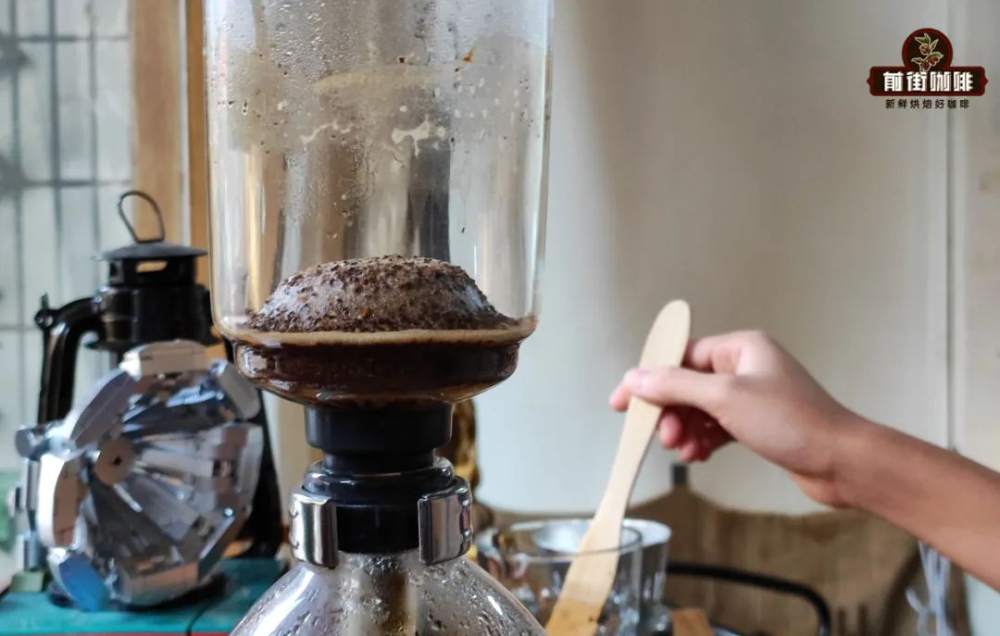
However, it is important to emphasize that even if a tall little hill is successfully formed during the finishing stage, it does not guarantee that the coffee will taste delicious. The little hill is just one of many options in siphon brewing methods, and there are also many methods that skip this step entirely, leaving the grounds flat, yet still producing coffee with excellent flavor. Therefore, whether or not a hill forms should not be used as a criterion for judging the quality of siphon coffee.
In practice, creating a little hill is not difficult. Generally, after turning off the heat, use a stirring rod to gently stir in one direction about 3 to 5 times in the upper chamber. Once the coffee liquid flows back into the lower chamber, the center of the coffee grounds will naturally rise to form a smooth, rounded little hill. It’s worth noting that the final height of the little hill is influenced by several factors, including the amount of coffee grounds, the depth of stirring, and the force applied.
Under the same siphon pot conditions, the more coffee grounds used in the upper chamber (i.e., the larger the volume of the grounds layer), the easier it is to form a taller hill after stirring. Additionally, the depth of stirring is also key: if only the surface layer is lightly stirred, the resulting hill height is usually limited. Conversely, inserting the stirring rod deeper to engage the middle and lower layers of coffee grounds can help build a fuller hill. Finally, the force applied during stirring also affects the prominence of the hill—the greater the force, the more pronounced the hill’s rise tends to be.
In summary, although the little hill that appears at the end of siphon coffee brewing is a common and visually appealing phenomenon, it is not an absolute indicator of coffee quality. Understanding the principles and influencing factors behind its formation can help you approach various brewing methods more rationally, avoid falling into the trap of a single technique, and adjust your brewing strategy according to the actual situation, thereby enjoying the diverse flavor expressions of siphon coffee.
The above content is compiled by CoffeeHunters, a coffee news website.


