








Introduction:The flavor performance of pour over coffee largely depends on the control of water flow during pouring. Many coffee enthusiasts, even after mastering basic parameters, still struggle to brew consistently rich and layered coffee — often because their pouring technique isn’t precise enough. This article will provide a detailed breakdown of how to develop stable and controllable pouring skills by choosing the right pour over kettle, adjusting the correct pouring posture, and following step-by-step training from beginner to advanced levels. Even beginners can noticeably improve their pour over quality in a short period of time.
The success of pour over coffee often doesn’t hinge on complex theories, but rather on the most fundamental pouring and flow control techniques. Even if you already understand parameters like coffee-to-water ratio, water temperature, and grind size, without stable water flow control, the resulting coffee may still perform mediocrely or even exhibit flavor confusion. In fact, pouring is not just about “pouring water in” — it’s a skill that requires selecting the right tools, adjusting your posture, and mastering through continuous practice.
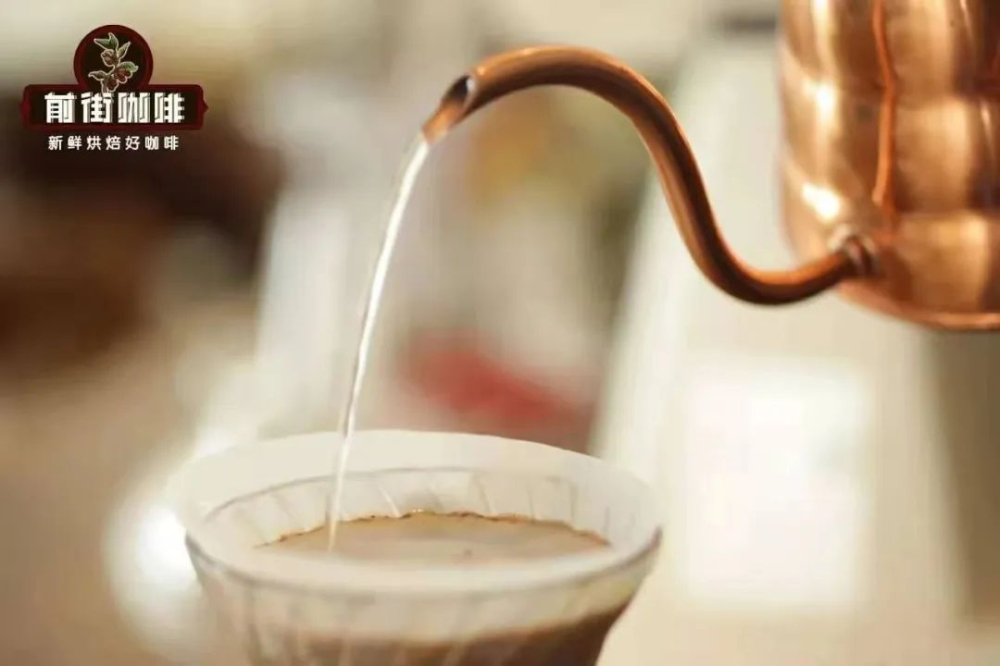
To achieve stable pouring, start with the choice of your pour over kettle. The design of the spout and the weight of the kettle directly affect the ease of practice and potential for advancement. Generally, it is recommended to choose a gooseneck spout design. This curved shape allows for more precise control over the direction and landing point of the water flow.

The diameter of the spout is also critically important. A narrower spout may be easier to handle initially, with relatively stable water flow, but it offers limited potential for improving control over the long term, as minimal skill is required to achieve stability and it’s harder to practice larger water flows. Conversely, a wider spout may be harder to control at first, but once mastered, provides a more comprehensive grasp of various water flows and greater ease when switching between different kettles in the future.
Additionally, the weight of the water in the kettle also affects operational stability. It’s recommended to choose an appropriately sized kettle based on your strength: generally, women or beginners can start with a small kettle of 0.6 to 0.8 liters, while men or those with better physical strength can opt for a larger kettle of 1.0 to 1.2 liters. Regardless of size, the key is that you can hold the kettle steadily for at least one and a half minutes without shaking, otherwise it will directly impact the stability of your pouring.
Beyond the kettle, the pouring posture is equally important. Many beginners overlook the relative positioning of their body and the filter cone, leading to overextended arms, stiff shoulders, and ultimately shaky hands or unstable water flow. Ideally, your body should maintain about 20 centimeters of distance from the filter cone, allowing your arms to hang naturally without excessive lifting. The pouring height should be slightly below chest level, which helps reduce hand strain and improves the endurance of water control.
Some people habitually place the filter cone too far forward or stand too close to the table while pouring, preventing their arms from moving naturally. This not only leads to fatigue but also hinders performing circular pouring motions. Maintaining the proper distance and angle is a foundational aspect of stable pouring.
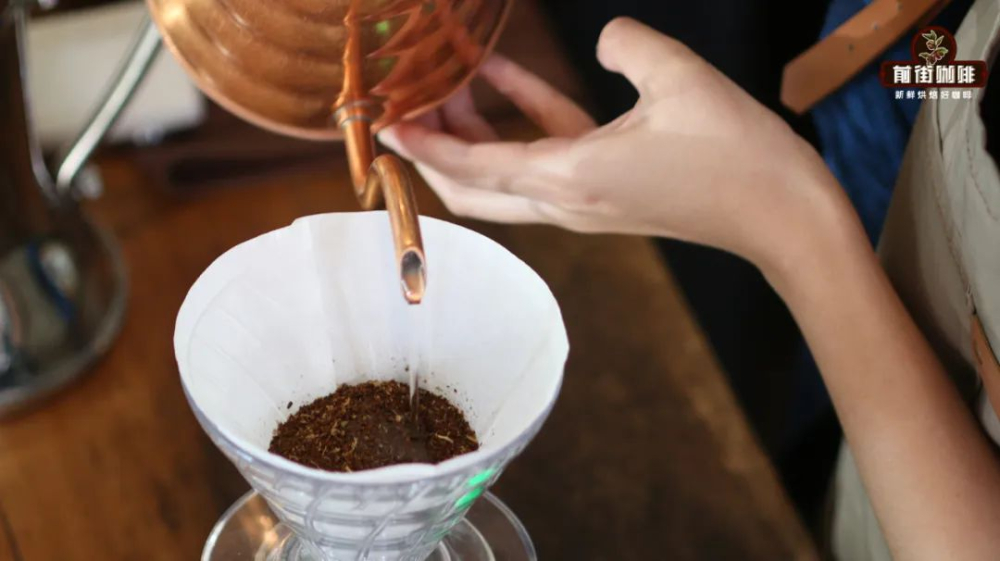
When starting formal pouring training, you can begin with simple water flow control. Beginners are advised to use the two-handed pouring method: hold the kettle handle with your right hand and lightly support the kettle lid or body with your left hand. This increases stability, especially when water control skills are not yet refined.
During practice, start with a small water flow, keeping it vertical and steady as it’s poured directly into the center of the coffee bed. The goal is to have the water column fall in a straight line without wobbling or interruption. The focus of this stage is to let your hand muscles memorize the feeling of “stability.” Then proceed to medium water flow, and finally challenge yourself with large water flow. Each type of flow needs repeated practice until you can control it smoothly.
Once you can steadily control different water flows, the next step is circular pouring training. It is recommended to move the kettle by using your arm rather than relying solely on your wrist — this helps maintain greater stability. While circling, keep the water vertical, starting with a small circle in the center, gradually expanding to a larger circle, and then returning to a small one. The key is to maintain consistent speed and a stable water column.
Beginners can start by circling slowly, then gradually increasing speed as they become more familiar. For advanced practice, try circling with small, medium, and large water flows separately to get accustomed to control techniques under different flows. This training helps you adjust the water flow and circling speed flexibly during actual extraction based on the coffee grounds’ response, further enhancing extraction uniformity and flavor expression.
The above content is compiled by CoffeeHunters, a coffee news website.


