







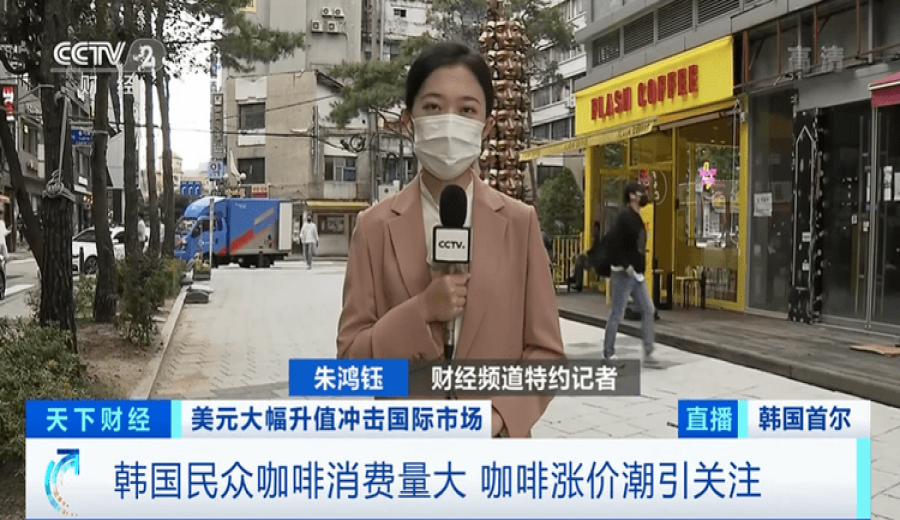
Introduction:South Korea’s per capita annual coffee consumption has reached 352 cups, nearly three times the global average, yet the country relies entirely on imported coffee beans. Under the pressure of a continuously depreciating Korean won and rising costs in raw materials, labor, and rent, the South Korean coffee industry is bracing for a new wave of price hikes. This article delves into the three key factors behind the price increases and explores how the Korean coffee market seeks breakthroughs amid fierce competition and high inflation.
South Koreans consume an average of 352 cups of coffee per year, a figure that is almost three times the global average. However, all coffee beans must be imported from abroad. Caught between a continuously weakening Korean won and the simultaneous rise in the costs of coffee beans, labor, and store rents, local coffee businesses are facing immense operational pressure, with a new round of price adjustments looming.
In the first half of this year, several chain brands, including Starbucks, had already raised the prices of some beverages by around 10%. As this marks the second price hike within the year, it has naturally drawn significant attention from consumers. In fact, as early as the beginning of this year, international coffee bean prices soared to their highest level in nearly a decade, forcing even Starbucks Korea — which had not adjusted its prices for years — to join the trend, driving up overall market prices.
Behind this wave of price increases are three main drivers. First, major producing regions such as Brazil have seen reduced coffee yields due to natural disasters like droughts and frosts, leading to a global supply shortage. Second, global supply chain costs have risen under inflationary pressures. Coupled with continuously increasing labor and store rental expenses, coffee businesses’ profit margins have been significantly squeezed.
Particularly noteworthy is the ongoing weakening of the Korean won against the US dollar, which is currently hovering around 1,430 KRW per 1 USD. Industry estimates suggest that if the exchange rate further depreciates to 1,500 KRW per 1 USD, costs could increase by approximately 10%, which would undoubtedly deal another heavy blow to South Korea’s import-dependent coffee market.
Since the pandemic, the number of coffee shops in South Korea has grown explosively. As of June this year, the total has exceeded 90,000, a 16% increase compared to the same period last year. This figure is nearly double the total number of convenience stores nationwide, with Seoul alone hosting over 25,000 coffee beverage outlets. However, due to relatively low barriers to entry, market competition is extremely intense, and the store closure rate remains high.
According to a Seoul city survey, the closure rate of coffee beverage shops in the second quarter of this year was even higher than that of the overall foodservice industry, with less than 40% of stores managing to survive beyond five years. In such an environment, both chain brands and independent coffee shops face enormous challenges, especially as convenience stores roll out highly cost-effective coffees priced around CNY 5, further eroding the survival space of traditional coffee shops.
Faced with such a harsh business climate, raising prices seems to be an inevitable choice for operators. However, whether consumers will continue to pay up in this era of high prices remains uncertain. Striking a balance between cost pressures and market competition, and establishing unique business models, will be the key to the future sustainability of South Korea’s coffee industry.
The above content is compiled by CoffeeHunters, a coffee news website.


