







Introduction:Oatly, an oat milk brand, publicly criticized the World Barista Championship (WBC) for its outdated rule allowing only dairy milk, calling for the adoption of more sustainable oat milk instead. This move sparked heated online discussion and backlash. This article delves into the motivations and controversies behind the incident, analyzes the practical differences between oat milk and dairy milk in coffee applications, and through public feedback and industry perspectives, explains why dairy milk remains the mainstream choice in competitions and cafés to this day.
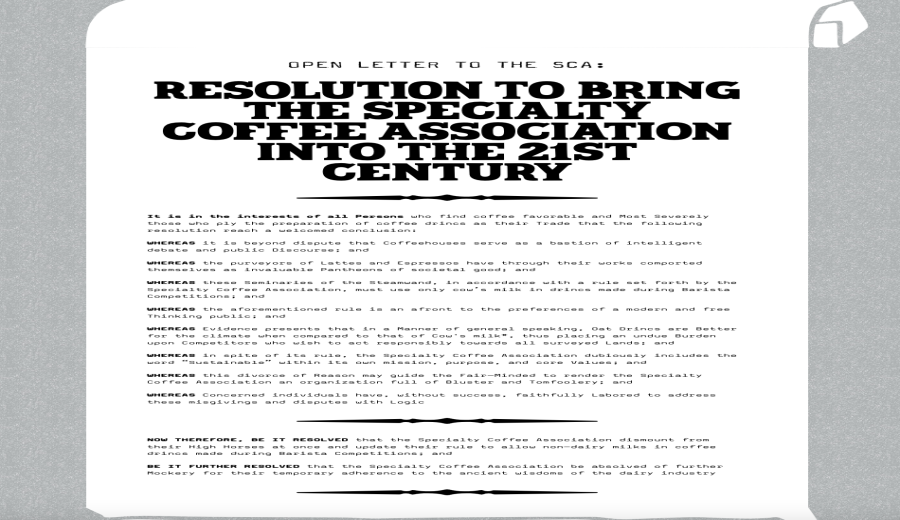
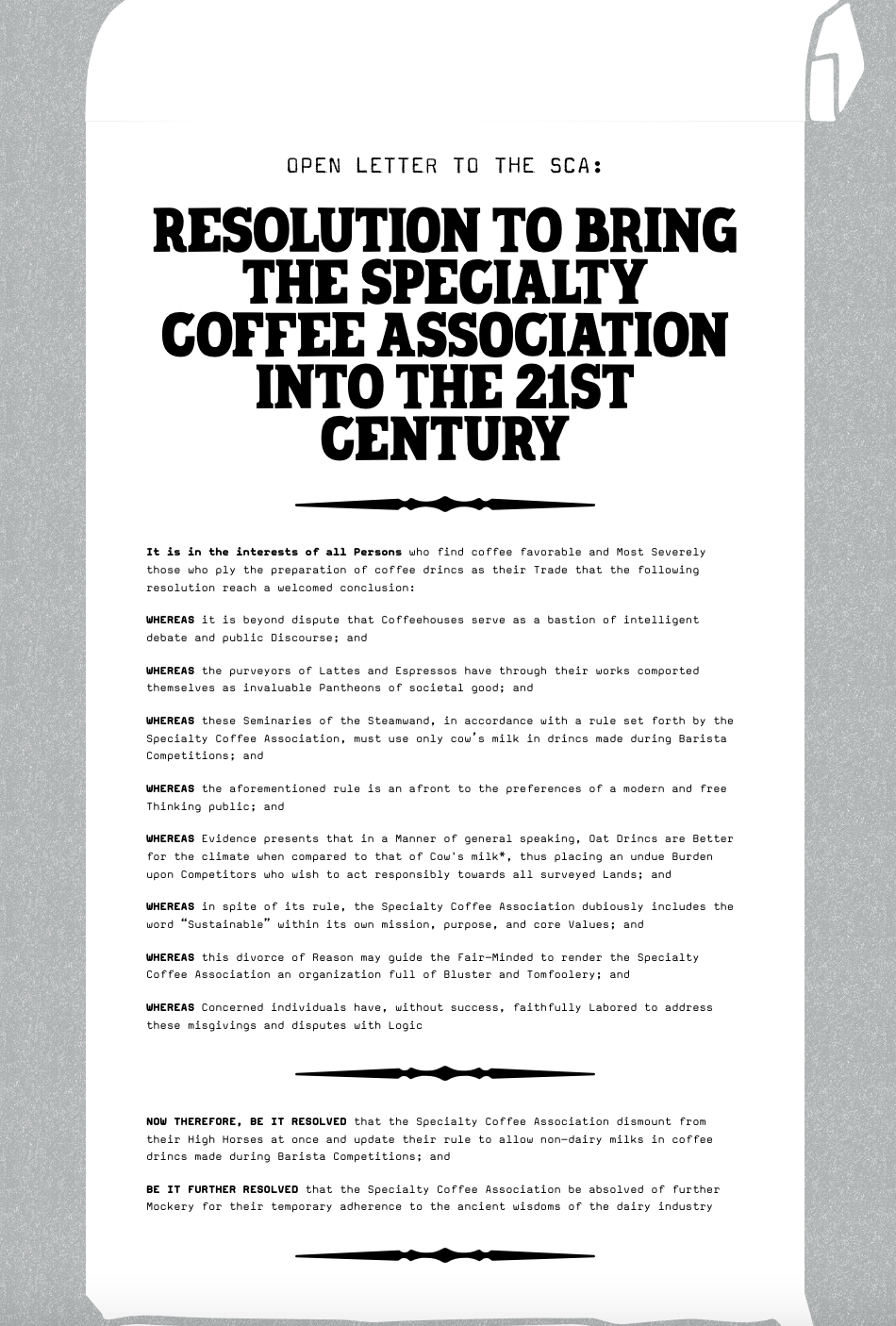
Oatly has once again challenged the international specialty coffee community—this time targeting the rules of the World Barista Championship (WBC). In an open letter published on its official website, Oatly claimed that the current regulation, which permits only dairy milk for competitors, is out of step with the times and urged the Specialty Coffee Association (SCA) to amend the rules promptly to allow oat milk as a legitimate option in the competition.
The reasons put forward by Oatly include: oat milk has gained immense popularity in the consumer market in recent years, with many cafés already offering related products. Research also shows that oat milk performs better environmentally than traditional dairy milk, aligning more closely with the SCA’s own core value of sustainability. Therefore, Oatly believes that if the WBC insists on using only dairy milk, it not only disconnects from current market trends but also contradicts the association’s sustainability ideals.
To garner support, Oatly launched a social media campaign on Twitter under the hashtag “#OutdatedCoffeeRules,” attempting to pressure the SCA through online discourse. They pointed out that the WBC, as the world’s premier stage for barista competitions, restricts participants to dairy milk only—a rule that feels out of place for the tens of thousands of consumers who prefer plant-based milk, making the competition appear outdated and less inclusive.
However, Oatly’s campaign did not achieve the desired effect—in fact, it triggered a wave of criticism online. Many users commented that oat milk still lags behind dairy milk in terms of stability, flavor delivery, and cost—especially regarding the fineness and longevity of coffee foam, where oat milk often struggles to froth properly or the foam dissipates quickly. Some also noted that allowing oat milk could compromise fairness in the competition, as different types of milk vary significantly in extraction and latte art performance, affecting scoring consistency.
In fact, this is not the first time Oatly has asked the SCA to relax the milk restrictions in the WBC, but this marks the brand’s most high-profile public statement yet. Previously, there had been internal discussions within the SCA on this issue, but most industry players favored maintaining the dairy-only rule primarily to uphold competition standards and scoring fairness. One barista who has competed noted that opening the door to plant-based milks could lead to adjustments in many more scoring criteria, significantly increasing the complexity and operational difficulty of organizing the event.
It is worth noting that although oat milk is increasingly popular among general coffee consumers—especially among vegans and those who are lactose intolerant—its application in professional coffee competitions still faces multiple challenges. For example, when creating latte art, the fat and protein structure of dairy milk provides better stability and finer detailing, while oat milk often falls short in achieving the same visual and textural results due to its differing composition.
Taking all opinions into account, although plant-based milks do align with modern consumption trends and environmental concerns, within the framework of professional competition and high-standard coffee quality control, dairy milk remains the mainstream choice for now. Whether oat milk or other plant milks will be allowed in the future depends on the evolution of technical standards, scoring systems, and overall industry consensus. This debate between oat milk and dairy milk is not just a product dispute—it also touches on the core values and future direction of professional coffee culture.
The above content is compiled by CoffeeHunters, a coffee news website.


