







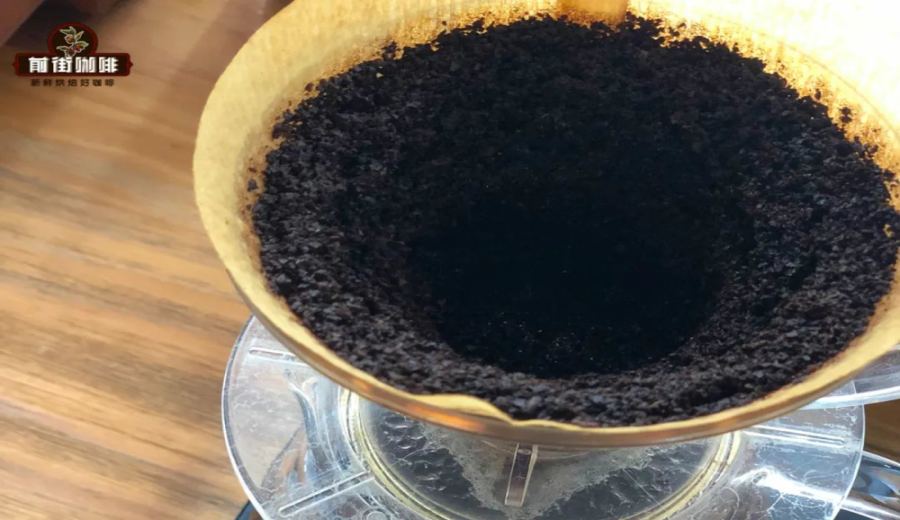
Introduction:Many pour-over beginners mistakenly believe that a deep crater in the coffee bed indicates successful extraction. In reality, the formation of such a pit is closely related to the roast level of the coffee beans, the pouring technique, and the amount of coffee grounds used. This article delves into three key factors, helping you understand the science behind the crater and teaching you how to optimize extraction parameters by observing the state of the coffee bed—thereby truly enhancing the flavor profile of your coffee.
In the world of pour-over coffee, many novices misunderstand the phenomenon of a deep crater in the coffee bed, believing that creating a noticeable indentation is a sign of skilled technique. This notion needs to be corrected—the formation of a crater primarily depends on three core elements: the roast level of the coffee beans, the circular pouring method, and the amount of coffee grounds used. Among these, the roast level has the most significant impact.
Dark roasted coffee beans, due to their longer roasting time, have a looser internal structure and relatively lower density. During the brewing process, these beans absorb water and expand more noticeably, causing more coffee particles to suspend above the liquid surface. This results in a thinner coffee bed deposited at the bottom of the filter, thereby forming a visually deeper crater. In contrast, light roasted beans have higher density and limited expansion, resulting in a denser overall coffee bed that is less likely to produce a pronounced indentation.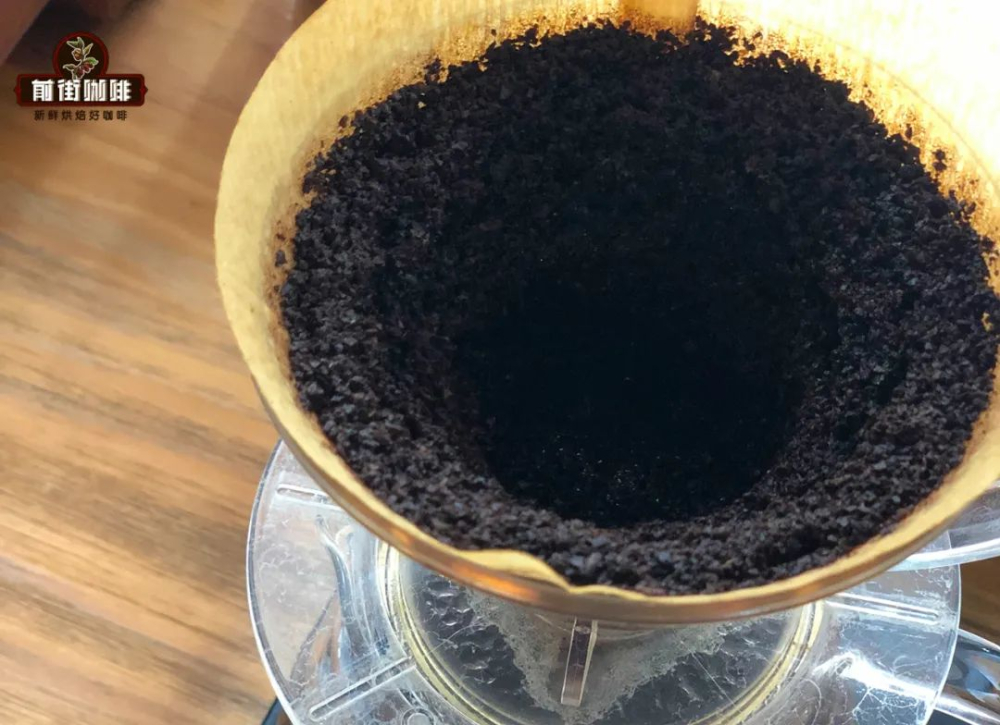
Pouring technique also affects the shape of the coffee bed crater. When using a small circular pouring motion focused on the center, the water flow concentrates on the central area of the filter, preserving the surrounding coffee “walls,” naturally forming a bowl-like structure with a low center and high edges. If you switch to a wide circular pour, the water will continuously wash the edges of the coffee bed walls, causing the particles that support the bed to be pulled down into the center, filling in the indentation and significantly reducing the depth of the crater.
The structural design of the filter cone also plays an important role. The standard conical filter cone, which is wider at the top and narrower at the bottom, means that maintaining a significant crater depth requires sufficiently thick coffee walls for support. Practical test data shows that when using 15 grams of coffee in a smaller-capacity filter cone, the insufficient thickness of the coffee bed makes it difficult to form a noticeable indentation; it is recommended to use at least 18 grams or more to achieve the desired crater effect.
It is worth noting that the appearance of a deep crater is by no means a guarantee of quality. The real value of observing the coffee bed lies in diagnosing issues during the extraction process: if you notice an asymmetrical crater edge, it may reflect uneven pouring paths; if parts of the coffee walls collapse locally, it suggests that overly strong water flow in certain areas has damaged the coffee bed structure. These details can help you adjust your pouring technique, rather than simply pursuing a visual effect.
Professional baristas suggest that instead of obsessing over the depth of the crater, focus on fundamental extraction parameters: maintain the water temperature between 90–96°C, keep the coffee-to-water ratio within 1:15 to 1:17, and ensure a pouring speed of about 1–2 milliliters per second. By stabilizing these core variables and observing changes in the coffee bed, you can truly enhance the balance and complexity of the coffee’s flavor.
In summary, a deep crater is just one of the surface indicators of the extraction process. Once you understand its formation mechanism, you should shift your focus to optimizing more critical extraction parameters, including grind size selection (recommend medium-fine grind, similar to the texture of white sugar), water volume control during the bloom phase (about twice the amount of coffee grounds), and the pacing of multiple pours. Only by comprehensively considering these factors can you brew high-quality pour-over coffee with rich and stable flavors.
The above content is compiled by CoffeeHunters, a coffee news website.


