







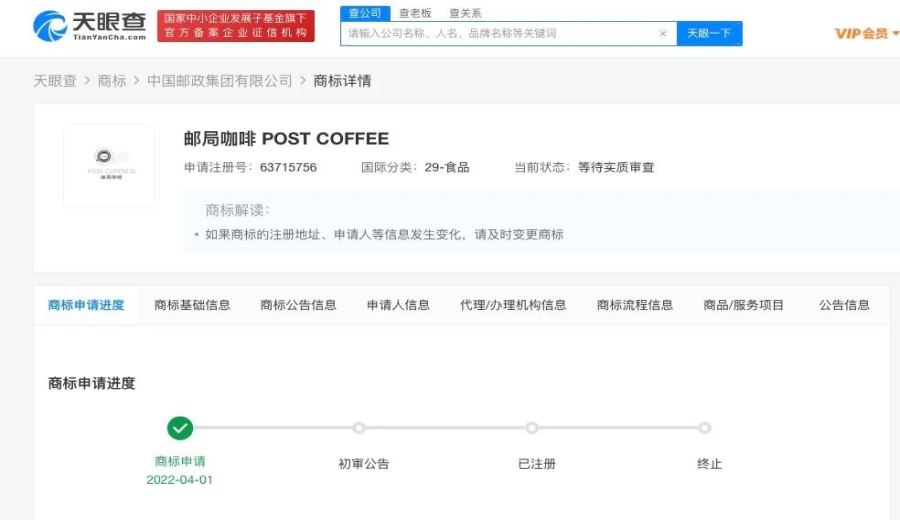
Introduction:China Post’s application to register the “Postal Café POST COFFEE” trademark has been rejected, drawing public attention to its cross-industry expansion. Since opening its first store in Xiamen in 2022, Postal Café has rapidly expanded by blending postal heritage with cultural creativity. However, the trademark registration setback presents a major challenge. This article delves into the development journey, product highlights, and trademark disputes of Postal Café, while also exploring the current status and prospects of major industry players such as Li-Ning and Tongrentang entering the coffee market.
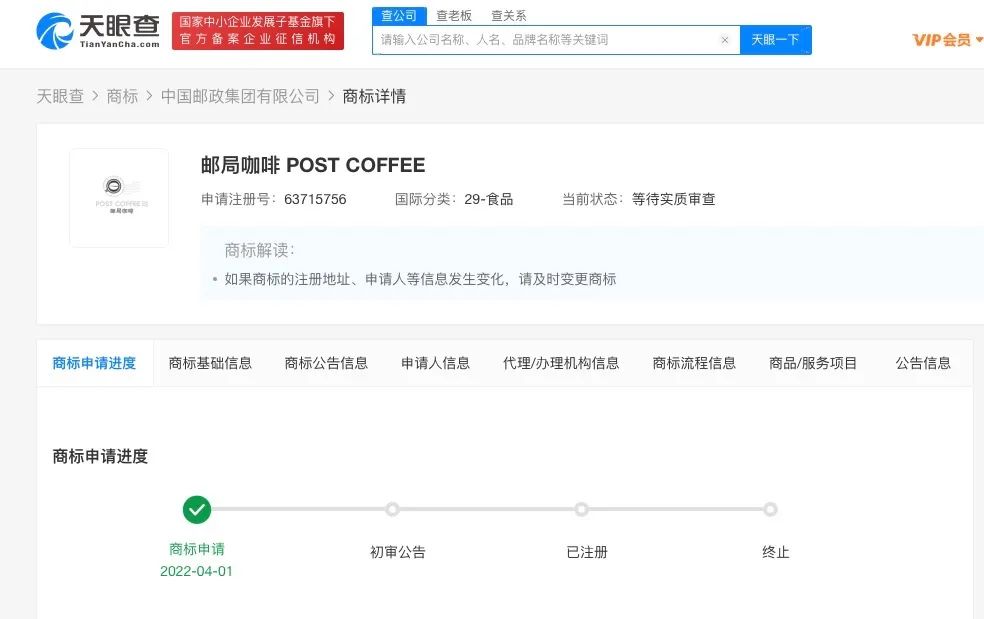
According to data from the Tianyancha App, multiple “Postal Café POST COFFEE” trademarks applied for earlier by China Post Group Co., Ltd. have now had their registration processes updated to “rejection notice issued.” These applications, filed on April 1, 2022, cover international classifications including convenience foods, catering and accommodation, as well as alcoholic beverages, demonstrating the brand’s ambition to expand across multiple sectors.
As a crucial asset for brand recognition, trademark registration is often a time-consuming and complex process. Once an application is rejected, it can impact brand promotion and market strategy. Postal Café is currently facing such a challenge, despite having already garnered considerable market attention.
Looking back at the development of Postal Café, its first store officially opened in February 2022 at Guomao Building in Xiamen, Fujian, marking China Post’s official entry into the coffee market. Subsequently, the brand successively entered Xiamen, Nanjing, Quanzhou, and by the end of July of the same year, expanded to Beijing. Within six months, it had opened six stores across four cities nationwide. Among them, the Beijing store was the brand’s first standalone outlet independent of a traditional post office, and also a significant milestone as its first appearance in a first-tier city.
In terms of product design, Postal Café offers classic coffee options such as Americano and latte, as well as several specialty drinks, with prices ranging from 12.8 RMB to 28.8 RMB per cup, positioning itself as affordable. The store features a dedicated cultural creativity area displaying Chinese Post postcards, envelopes, specialty cups, and other merchandise, along with teas and a variety of cakes and desserts, attracting many customers to stop and browse. The semi-open space design incorporates numerous postal elements, such as vintage postman bicycles and green mailboxes. Paired with a steaming cup of Postal Café coffee, it successfully creates a unique atmosphere where postal culture and coffee blend seamlessly.
Li Wenyao, branch manager of China Post’s Wangjing Post Office in Chaoyang District, once stated: “Traditional industries need to be infused with fresh vitality. We hope to combine postal culture with modern consumption scenarios through Postal Café, attracting more young people’s attention.” This sentiment-driven strategy, coupled with the special place the postal service holds in the hearts of the Chinese public, has quickly turned some stores into popular online check-in spots, showcasing its market potential.
However, the brand’s original plan to expand to 100 stores by the end of 2022 has faced significant challenges due to the trademark registration hurdles. Dong Kexin, co-founder and CMO of Postal Café, revealed to the media that the brand is currently focusing on expanding its presence in three types of locations: CBD business districts, tourist attractions, and university campuses, with plans to continuously accelerate its store rollout pace.
Nevertheless, netizens have had mixed reactions to the aggressive marketing despite the trademark not yet being approved. Comments such as “Why was it rejected?”, “It would’ve been great to cover all services,” and “I don’t understand how postal and coffee are connected” reflect the brand’s challenges in market communication and strategic execution.
In fact, the trend of cross-industry ventures into coffee is not limited to the postal sector. Recently, brands from various fields such as Li-Ning, Xtep, Tongrentang, East Buy, and He Fu Noodles have all been reported to have applied for coffee-related trademarks, with most of these applications currently awaiting substantive examination. This wave of cross-industry interest shows that the coffee market continues to heat up, attracting major players from all industries to stake their claims.
But the question remains: is the coffee market really that easy to succeed in? From the postal service to sportswear brands, from pharmaceuticals to e-commerce platforms, although these cross-industry brands have generated buzz, whether they can secure a solid foothold in the fiercely competitive market still remains to be seen. For consumers, beyond the brand story, the quality, flavor, and overall consumption experience of the coffee are the key factors that will determine ongoing support.
The above content is compiled by CoffeeHunters, a coffee news website.


