








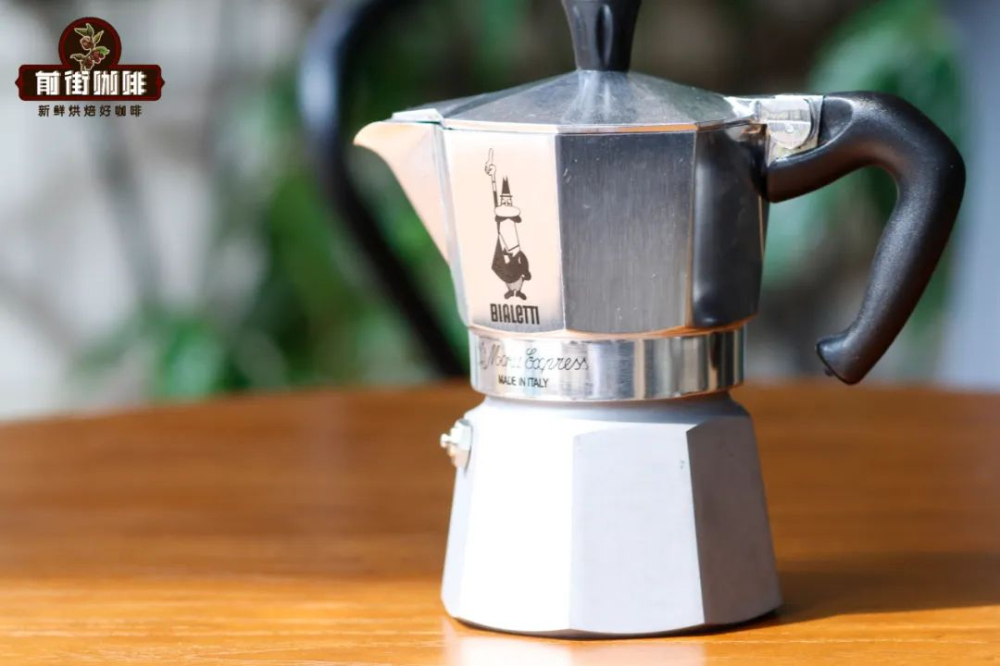
Introduction:In recent years, the moka pot has quietly gained popularity among coffee enthusiasts. This classic Italian brewing device, originating from 1933, is beloved for its simple operation, affordable price, and ability to produce rich espresso with crema—making it a top choice for many home users just starting out. This article will explore in depth why the moka pot has become so popular, and break down key usage tips from equipment advantages, bean selection, grind size, to the full brewing process. We’ll also share practical techniques for adding fresh milk, helping you brew rich, flavorful Italian-style coffee at home.
The moka pot has gradually become a favorite among many home coffee lovers in recent years. This iconic Italian device, born in 1933, is not only compact and portable but also relatively affordable, making it the go-to tool for many who want to make espresso at home. Sales data shows that the top four best-selling moka pots on the market collectively sell over 2,000 units per month, reflecting their high popularity among consumers. Coffee brewed with a moka pot is typically rich in crema and bold in flavor—not only enjoyable on its own but also an excellent base for Americano or latte, and even suitable for attempting latte art. It’s a practical choice for anyone looking to get into Italian-style coffee.
Why Has the Moka Pot Suddenly Become So Popular?
In fact, the moka pot was invented way back in 1933. With its simple structure, ease of use, and ability to quickly brew rich-tasting coffee, it rapidly became widespread in Italy. There’s even a saying that serving guests without a moka pot might be considered impolite in an Italian household. In the film *To Rome with Love*, characters can be seen using the moka pot to brew coffee. However, just a few years ago, the moka pot was still a relatively niche tool in Chinese-speaking communities, and online tutorials were scarce. But now, the situation has completely turned around. A quick search engine query yields countless tutorial videos and user experiences, clearly showing its rapidly rising popularity.
What exactly is driving the moka pot trend? The primary reason is that it offersa high cost-performance alternative to espresso.Compared to professional espresso machines that can cost several thousand or even tens of thousands of yuan, a quality moka pot usually costs just a few hundred, yet can achieve around 60–70% of the extraction effect of an espresso machine. For beginners who want to make coffee at home but are on a budget, the moka pot is undoubtedly the best entry point. Even compared to other common home brewing tools like pour over, French press, or AeroPress, the moka pot can produce richer, more crema-forward coffee, closely mimicking the everyday “espresso” taste.

How to Choose the Right Coffee Beans?
To brew satisfying coffee with a moka pot,bean selection is crucial,especially if you plan to add milk to make drinks like lattes. Generally, you can choose based on your personal taste preferences in three main directions:
1. Rich & Bold Style: If you prefer coffee without acidity, rich in crema and full-bodied aroma, go for medium to dark or dark roasted blends, such as classic Italian espresso blends, Mandheling, Brazilian Cerrado, or Huila. These beans are usually ideal for those who enjoy a strong, intense flavor.
2. Bright & Fruity Acidity: If you want a coffee with bright acidity and floral or fruity notes, choose medium to light roasted beans, such as Huakui, Kafa Forest, or Little Tomato. These beans are well-suited for brewing refreshing Americanos.
3. Distinctive & Unique Flavor: If you’re drawn to fruit-forward, uniquely profiled brews, try specialty beans like Strawberry Sugar Espresso, Mozart, Sidamo, or Big Belly Button. These beans can showcase rich fruitiness and layered flavors in the moka pot, and pair beautifully with milk.
How to Control Grind Size?
The moka pot requires a grind size between pour over and espresso, butslightly coarser than typical espresso grind.Too fine a grind can cause channeling, excessive pressure, uneven extraction, or even splattering; too coarse may lead to insufficient pressure, affecting crema development and extraction efficiency. Adjust according to the density of the filter basket—coffee grounds should not fall into the lower chamber—and maintain an even, well-tamped bed to ensure stable extraction.
Brewing Parameters and Step-by-Step Guide
Take a popular Strawberry Sugar blend as an example. Composed of beans from Panama and Costa Rica, this blend often exhibits notes of strawberry taffy, raisins, and rose, suitable for various brewing methods. Here’s how you can brew it step by step:
1. Water Filling: Pour water into the lower chamber, keeping the water level about 0.5 cm below the safety valve to prevent overflow during boiling.
2. Coffee Ground Loading: Add the coffee grounds into the filter basket, gently level them into a small mound, then use a distribution tool or your fingers to lightly tamp and flatten the surface, ensuring consistent density for stable extraction.
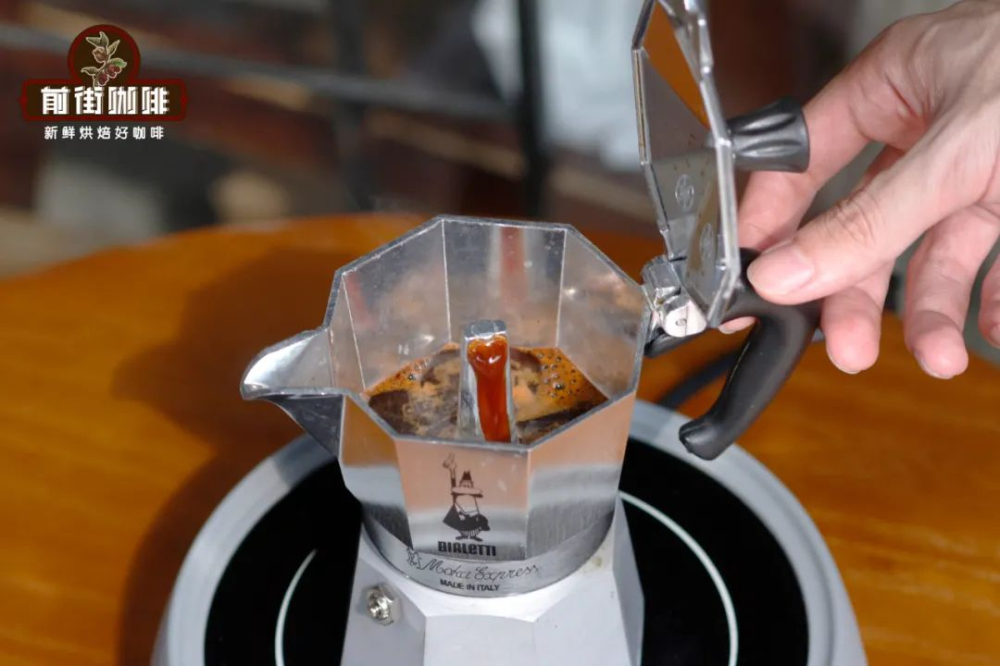
3. Assembling and Heating: Insert the filled filter basket into the lower chamber, securely tighten both chambers, and place the moka pot on an electric stove over high heat. Keep the lid open to observe the brewing process.
4. Adjusting Heat: When you hear a distinct “wuuu” sound, it means pressure is building up. At this point, reduce the heat and wait for the coffee to slowly flow out.
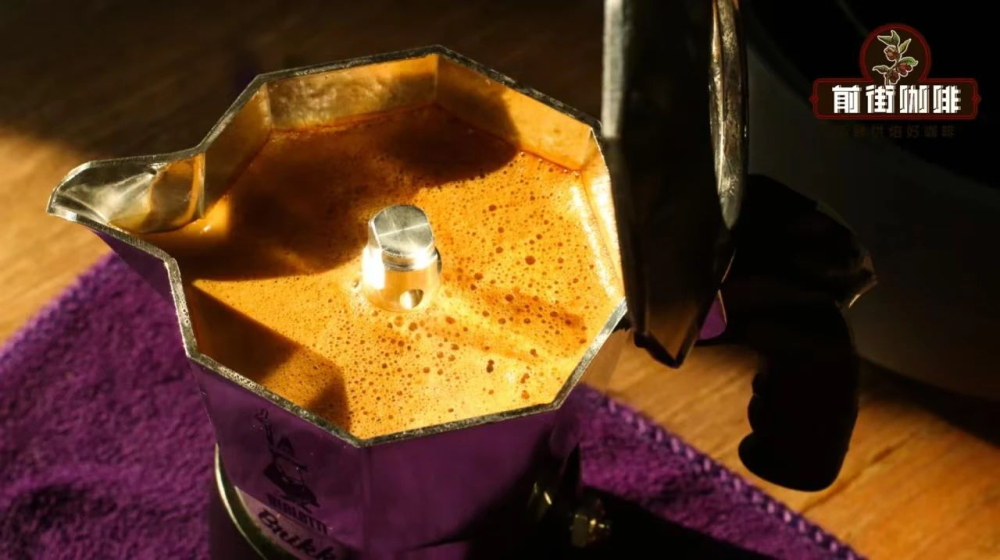
5. Completing Extraction: Once the upper chamber is about half full with coffee, turn off the heat. Let residual heat and pressure finish the final stage of extraction.
6. Serving the Coffee: Pour the extracted espresso into a cup—you can enjoy it directly, or use it to make an Americano or latte.

When consumed straight, moka pot coffee usually delivers complex flavors like honey, nuts, raisins, and sweet orange. But due to its high concentration, it’s recommended to dilute it or mix with milk. For instance, adding hot water turns it into a bold Americano; combining it with fresh milk and ice creates a smooth, flavorful iced latte—perfect for summer.
If you’d like to add fresh milk, opt for chilled, fresh milk to enhance smoothness and foam stability. Though moka pot lattes may not achieve the delicate latte art of professional machines, with solid technique, you can still create simple patterns—adding extra fun to your drink.
The above content is compiled by CoffeeHunters, a coffee news website.


