







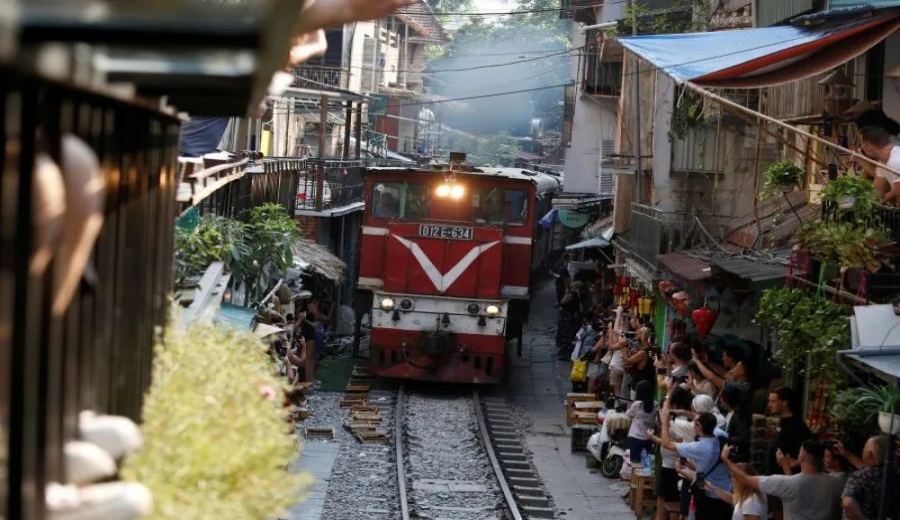
Introduction:More than two years after being closed due to the pandemic and safety concerns, Hanoi’s famous railway coffee street has reopened—only to be ordered shut again within days. This narrow alleyway where trains pass through was once a popular Instagram hotspot, but frequent instances of visitors trespassing on the tracks led to numerous dangerous incidents. This article takes an in-depth look at how local authorities, railway operators, and businesses are navigating the tension between safety and tourism demands, along with key precautions visitors should heed.
Hanoi’s “railway coffee street” has finally reopened to visitors more than two years after it was shuttered due to the pandemic and violations of railway safety regulations. However, just days after reopening, it was once again forcibly closed by relevant authorities. This narrow railway lane, located in Hanoi’s Hoan Kiem District, sits just about one meter away from residential homes on either side. It had previously attracted crowds of tourists who would sit at tables and chairs alongside the tracks, sipping coffee while watching trains roll by—a unique scene that made it a beloved social media attraction.
Yet, this romantic sight masked serious safety risks. Train drivers have repeatedly reported that visitors often step onto the tracks to take photos, with some even standing on the rails as trains approach, forcing emergency stops. In one alarming case, a train driver recalled witnessing an Asian female tourist taking a selfie on the tracks as a train drew near—she ignored the horn warnings and the train only managed to stop three meters away, creating a truly perilous situation.
To thoroughly address this long-standing safety issue, Vietnam Railways has formally requested the Hanoi People’s Committee to “comprehensively rectify illegally operated cafés and businesses around the northern area of Hanoi Railway Station.” In response, the Hoan Kiem District People’s Committee took swift action, ordering the mandatory closure of all businesses on both sides of the railway street starting from the afternoon of September 14. Their business licenses were also revoked, with plans to complete the cleanup within three days at most.
Currently, relevant departments in Hoan Kiem District have set up barriers at all major entrances to the railway street, completely banning visitors from entering sections of the tracks including Phung Hung, Dien Bien Phu, and Tran Phu. Many travelers who made the trip specifically to see the site arrived only to find the street sealed off and had no choice but to leave disappointed. Some opted to take photos by the roadside as a consolation, not wanting their journey to be in vain.
In fact, this railway street began to take shape back in 2018, when an increasing number of foreign tourists started gathering by the tracks to watch passing trains. In response, houses along the railway were converted into cafés, restaurants, and specialty shops, drawing visitors to stop and spend. However, since the railway is essentially just a narrow alley separated from the homes by less than a meter, many businesses placed tables and chairs directly next to the tracks and only hurriedly cleared them when trains approached—posing serious risks to pedestrian safety.
Despite clear warning signs advising people not to walk or stay on the tracks, many tourists ignored them, taking photos and sipping tea on the rails until trains came dangerously close—then scrambling out of the way. Such behavior not only endangered their own lives but also put immense pressure on train drivers.
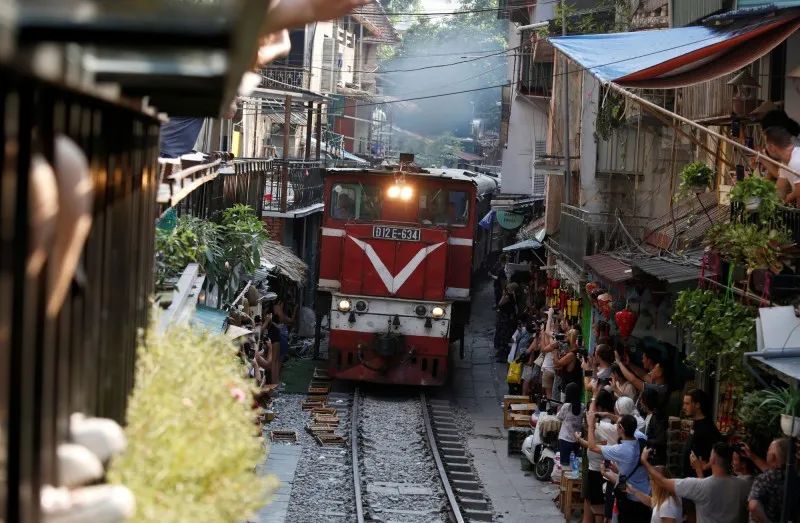
According to local media reports, train drivers commonly said they must reduce speed and stay highly alert every time they pass through the area, having had to make multiple emergency stops due to sudden trespassers. One anonymous train driver recalled witnessing a female tourist standing on the tracks taking a selfie while he was driving from Hanoi to Hai Phong. Despite sounding the horn, she didn’t react, and he had to brake hard—stopping the train just three meters from her. The incident left him shaken, and he added that such occurrences happen at least three times a month, each time placing significant psychological strain on the train crews.
To tackle this persistent safety hazard, Hanoi’s local government and railway management authorities have carried out multiple rounds of rectification in the past, which initially improved the situation. However, the area was then closed for over two years due to the pandemic. Now that the pandemic has eased and the railway coffee street is drawing crowds again, the safety issues have resurfaced.
To strike a balance between tourism development and safety management, Nguyen Anh Quan, Vice Chairman of Hoan Kiem District in Hanoi, stated that they have received extensive feedback from residents and tourists. They will collaborate with relevant units to develop more comprehensive measures based on train schedules, aiming to create a tourist environment that preserves the area’s character while ensuring visitor safety. However, until a new solution is implemented, closing the street and suspending business operations remain the most effective risk control measures for now.
The temporary closure of the railway coffee street has left many business owners who rely on it for their livelihood feeling helpless and disheartened. For them, it’s not just a source of income, but also a symbol of the fusion between local culture and tourism. Yet, until the safety concerns are effectively resolved, figuring out how to preserve this unique attraction while ensuring the safety of every visitor and worker remains a major challenge for the local government.
The above content is compiled by CoffeeHunters, a coffee news website.


