







Introduction:Following the foray of brands such as Li-Ning and Tong Ren Tang into the coffee market, another major sports goods company, Xtep, has officially applied to register the trademarks “Xtep Coffee” and “XTEP COFFEE,” marking its entry into the beverage sector. Why are cross-industry brands increasingly drawn to coffee? Is Xtep’s move a short-term upgrade in customer experience or part of a long-term strategic plan? This article analyzes the motivations behind brand cross-sector moves and explores the challenges and opportunities of entering the coffee market.
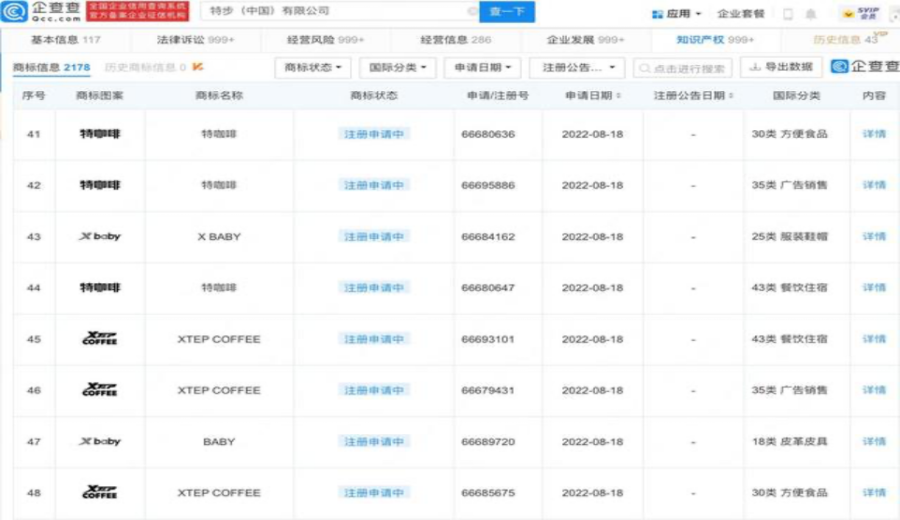
After Li-Ning’s launch of “Ning Coffee” caught the market’s attention, another sports giant—Xtep—has quietly begun laying out its presence in the coffee market. According to corporate information platforms, Xtep (China) Co., Ltd. has recently submitted multiple trademark applications related to coffee to relevant authorities, including “Xtep Coffee” and “XTEP COFFEE.” These cover categories such as catering and accommodation, convenience food, and advertising sales, and are currently under review.
Not only sports brands—various industries have been testing the coffee waters in recent years. From restaurant chains and tea beverage brands to traditional Chinese medicine companies, and even education and tech firms have joined this wave of cross-sector enthusiasm. For consumers, these “unexpected” combinations continue to reshape their perception of coffee consumption scenarios. So is Xtep’s move aimed at enhancing the in-store experience or seeking new business growth?
Data shows that Xtep had already begun experimenting through physical stores as early as July this year. At that time, official channels in Pu’er reported that the Xtep Kids store in Pu’er had collaborated with local coffee brand “Manya Coffee” to launch a co-branded café. Although it did not directly use the “Xtep Coffee” brand, it demonstrated the company’s interest in the coffee business model. This move was also seen as Xtep’s initial exploration of integrating leisure and sports elements in end-consumer settings.
Looking at the overall market, there were already 14 coffee industry financing events as of August 2022, indicating sustained capital interest in this sector. Cross-sector brands are drawn to coffee largely due to its relatively low barriers to entry, a mature and stable supply chain system, and the ability to quickly establish physical stores—helping brands reach younger consumer groups and enhance the overall customer experience.
Among Xtep’s competitors, Li-Ning can be considered a pioneer in the sports brand coffee crossover. In April this year, Li-Ning officially applied for the “NING COFFEE” trademark and launched a trial operation in its Xiamen flagship store in May. Initially, it adopted a “free drink after reaching a certain spending threshold” model: customers who spent RMB 499 in-store could receive a free cup of Ning Coffee. It later gradually expanded to stores in cities like Guangzhou and Beijing, offering products such as nine drinks including coconut latte and South African oat milk latte.
Li-Ning officials have stated that launching coffee service aims to increase customers’ in-store dwell time and comfort level, viewing it as part of retail experience innovation. Though some netizens joked, “You have to spend 500 yuan just for one cup? That’s unaffordable,” this strategy undeniably captured market attention and laid the foundation for future full-scale sales.
Beyond sports and F&B, even the century-old traditional Chinese medicine brand Tong Ren Tang has entered the market with “punk wellness coffee,” combining herbal concepts in a novel way. In the education sector, Grid Coffee, backed by the parent company of Yuanfudao, has also opened stores in Beijing, showcasing the diversity of cross-sector efforts. It’s clear that brand involvement in coffee is no longer just about selling beverages—it is more deeply tied to brand identity, consumer interaction, and experience design.
However, operating in the coffee market as a cross-sector player comes with significant competitive pressure. Market saturation is gradually increasing, and consumers are becoming more demanding when it comes to coffee quality, flavor, and brand consistency. Relying solely on foot traffic and short-lived trends makes it difficult to build a solid consumer base. If Xtep wants to gain a firm foothold in this sector, beyond leveraging its existing retail network, it must adopt differentiated strategies in product positioning, brewing techniques, and customer experience.
In summary, Xtep’s application for coffee trademarks is an attempt at diversified brand development and a renewed exploration of end-consumer experiences. Whether it can stand out among numerous cross-sector brands ultimately depends on its deep understanding of the coffee market and execution capabilities. For coffee enthusiasts, this wave of cross-industry trends also means that in the future, they might encounter unique coffee experiences in places like sports goods stores, bookshops, or pharmacies.
The above content is compiled by CoffeeHunters, a coffee news website.


