







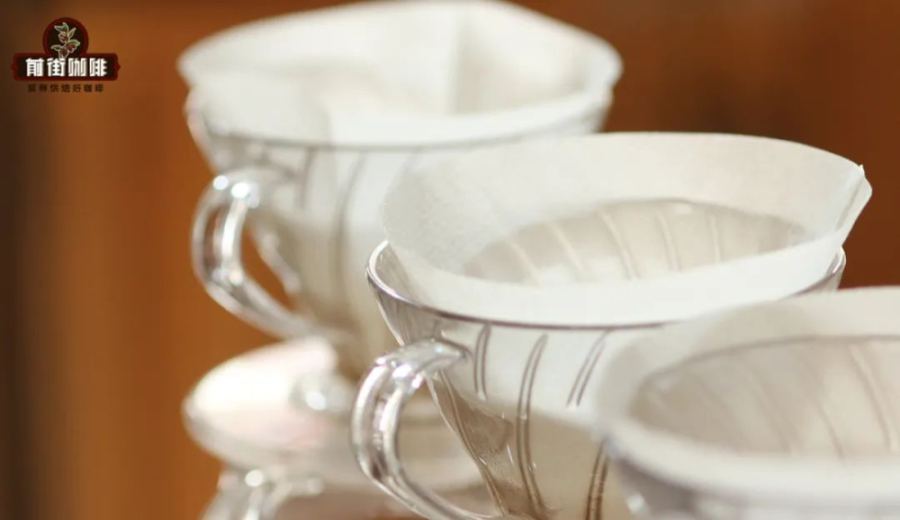
Introduction:Have you ever wondered if whether the filter paper is tightly attached to the filter cone can actually change the flavor of your pour over coffee? By conducting a practical test with four different conditions—fully attached filter paper, folded edges lifted, misplaced placement, and completely unattached—we observed subtle differences in extraction time, sweetness, acidity, and mouthfeel. This helps you fine-tune your pour over technique and enhance the overall quality of your coffee.
During the pour over process, wetting the filter paper is a common and important step. Its main purposes include preheating the brewing vessel, removing any paper odor, and ensuring the filter paper adheres closely to the filter cone, which contributes to more even extraction of the coffee. But have you ever considered just how much of an impact it has when the filter paper is or isn’t fully attached to the cone?
To answer this question, we conducted a controlled experiment using a V60 filter cone and Yirgacheffe Red Cherry beans. The variables were fixed at 15 grams of coffee, a 1:16 coffee-to-water ratio, 80% extraction through a #20 sieve, a water temperature of 91°C, and a three-pour brewing method. In the experiment, we specifically designed four scenarios based on the attachment condition of the filter paper: fully attached, folded edges lifted, misplaced placement, and completely unattached. We recorded the extraction time and flavor profiles for each case.
The experimental results showed that while the degree of filter paper attachment does not drastically alter the main flavor profile of the coffee, there were noticeable differences in sweetness, acidity, overall mouthfeel, and whether any grassy or astringent notes emerged. Below, we’ll analyze each scenario step by step based on the actual brewing process, exploring the causes and effects of each condition.
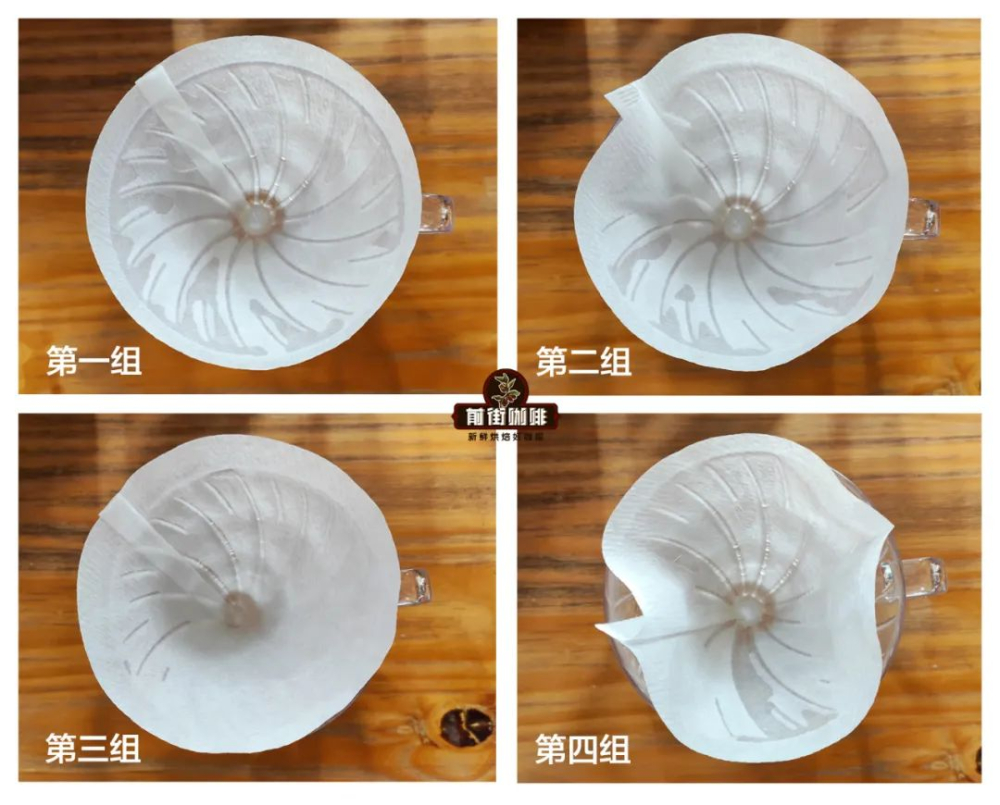
[First group: Filter paper fully attached] This is the standard condition, with the whole brewing process running smoothly. The extraction time was about 2 minutes. The sweetness was relatively prominent, the most noticeable among the four groups. The balance between sweetness and acidity was excellent, and the mouthfeel was smooth with distinct layers. It serves as a strong reference as the flavor baseline group.
[Second group: Folded edges of the filter paper lifted, not fully attached] Due to improper folding, the creases did not adhere well to the inner wall of the filter cone, especially during the blooming stage. The unattached areas tended to trap air, causing poor gas release from the coffee grounds and resulting in visible large bubbles. Under this condition, the extraction time extended to 2 minutes and 18 seconds. Interestingly, when the temperature dropped slightly, this group exhibited a more pronounced grassy note, which was absent in the other groups. This is likely related to uneven hot water penetration caused by poor gas release, which in turn affected the even extraction of the coffee grounds.
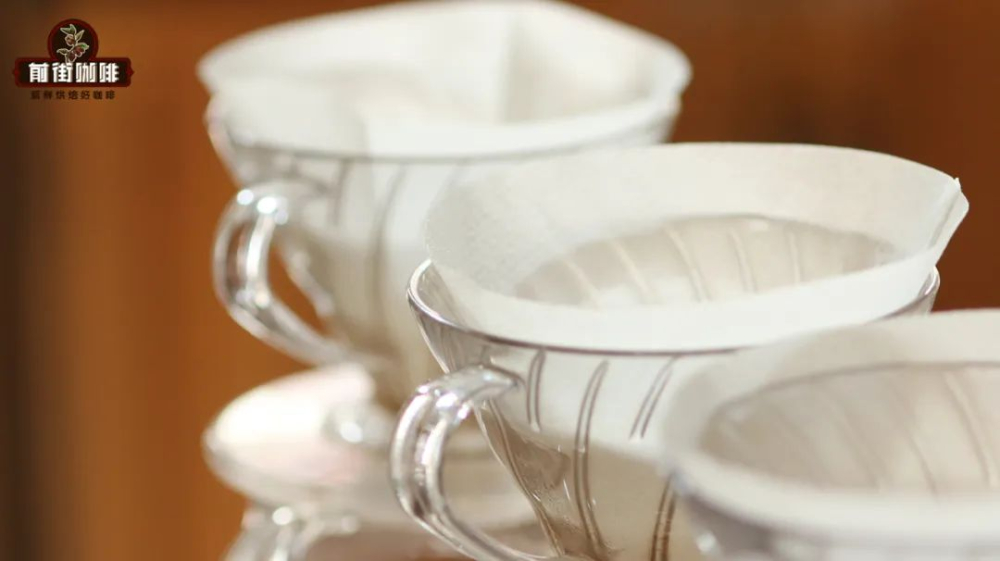
[Third group: Filter paper misplaced, not centered] When placing the filter paper, if it’s not aligned with the center of the filter cone, the paper can tilt as a whole, leaving about half of its surface unable to adhere to the filter cone’s ribbing. However, as blooming water is poured and the coffee grounds absorb moisture, gravity causes the filter paper to gradually reattach to the cone, particularly at the bottom where adhesion is better. The extraction time for this group was 2 minutes and 10 seconds. Compared to the first group, the flavor profile was similar, but the overall acidity was slightly more pronounced, possibly due to slightly less effective gas release during the blooming phase.
[Fourth group: Filter paper completely unattached] The filter paper was simply opened up and then wetted without proper attachment. While the bottom part adhered decently, a large area at the top remained uncontacted with the filter cone. During blooming, gas release was obstructed, leading to the appearance of large bubbles. Throughout the pouring process, the filter paper was not flattened by water pressure, causing the liquid surface to become irregular and elliptical. Water flow could easily impact the filter directly, creating a “channeling effect,” which led to a noticeably thin final cup. The extraction time was 2 minutes and 10 seconds.
From the overall experiment, we observed that the key impacts of filter paper attachment boil down to two aspects: first, whether gas release during the blooming stage is smooth—poor gas release can lead to uneven extraction; second, whether the filter cone’s ribbing can function effectively—which requires close contact with the filter paper to properly guide the water flow, thereby influencing overall extraction uniformity and draw-down speed.
It’s particularly worth noting that even if the filter paper is initially unattached, it may gradually adhere due to the wetting effect and gravity after pouring water. As seen in the third group, the final outcome can approach the ideal state. However, if it remains unattached throughout, as in the second and fourth groups, issues such as grassiness, thinness, and channeling-induced flavor defects are more likely to occur.
In conclusion, although the attachment between the filter paper and the filter cone may seem like a small detail, it can have a non-negligible impact on the nuanced flavors of pour over coffee. To improve brewing consistency and extraction quality, mastering the correct method of wetting and attaching the filter paper is a fundamental skill that no coffee enthusiast should overlook. If you want to dive deeper into filter folding and attachment techniques, you can explore further practical tutorials on the topic.
The above content is compiled by CoffeeHunters, a coffee news website.


