








Introduction:An in-depth exploration of how Panama’s Santos Café Estate achieves its distinctive Geisha flavor profile through the ASD anaerobic low-temperature slow sun-dried processing method. This article breaks down the estate’s background, altitude and climate, and processing details step by step, along with professional roasting and pour over recommendations to help you fully understand this specialty coffee bean that combines deep berries and a black tea finish.
Panama Santos Café Estate (Santos Café Panamá) is located in the Nacascolo region of Santa Clara Province and has been owned by the Lezcano family since 1947, now in its fifth generation. The estate has a long history of coffee cultivation, but it wasn’t until 2014, after acquiring La Mimada Estate, that it officially entered the specialty coffee production phase. Under the careful management of a professional team, the 2021 launch of the Pacamara "White Horse" won the BOP Traditional Washed category championship, rapidly boosting the reputation of Santos Café Estate.
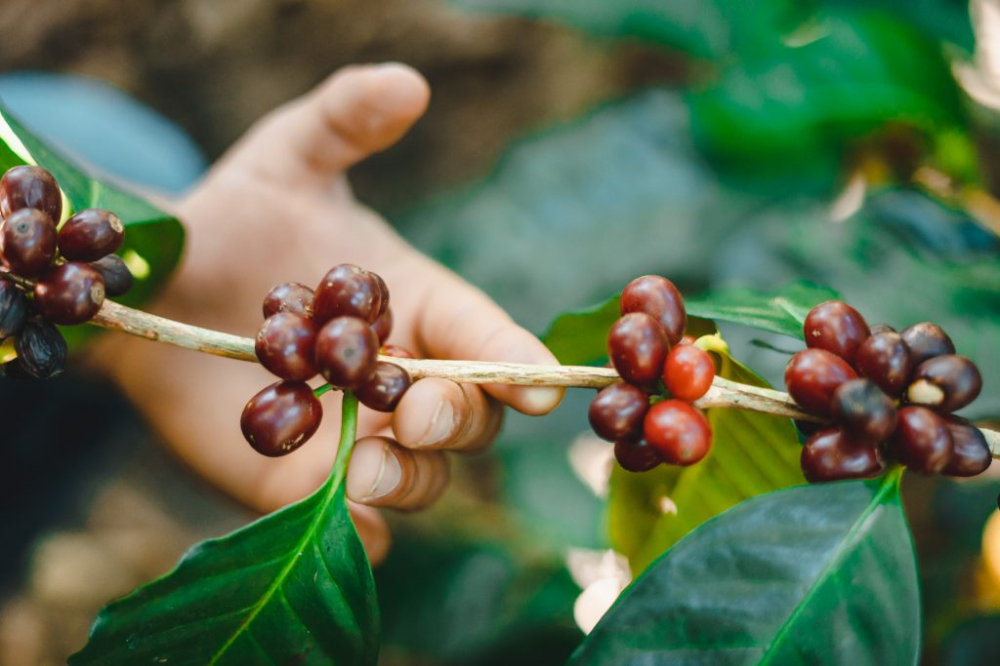
Currently, Santos Café Estate includes three main sub-farms: El Bajo, Bartolo, and La Mimada, covering a total cultivation area of about 55 hectares with over 32,000 coffee trees. The altitude ranges between 1100 and 1400 meters, adjacent to the Barú Volcano, enjoying fertile volcanic soil. With abundant sunlight during the day and significant diurnal temperature variations that can drop to 13°C at night, the conditions create rich flavor potential in the beans. In addition to the well-known Geisha variety, the region also grows Pacamara, Caturra, Catuaí, and Yellow Bourbon among other diverse varieties.

When it comes to the most representative processing method of Santos Café Estate, none surpasses the ASD anaerobic low-temperature slow sun-dried process. This technique is primarily applied to the Geisha variety, beginning with a series of meticulous steps right after harvest. First, freshly picked coffee cherries are placed in a completely sealed container for fermentation, with the duration controlled between 24 to 72 hours. During this period, natural microbes and yeast within the container actively interact, imparting a more three-dimensional aroma and layered complexity to the beans.
After fermentation, the coffee fruit is evenly spread on raised beds for a lengthy drying process. Considering the high temperatures typical of the local harvest season, workers turn the beans every two hours to ensure even drying and avoid localized overheating or mold. Additionally, if rain occurs at night, protective covering is promptly applied, and drying resumes once the weather clears. The entire drying process takes approximately 15 days until the coffee bean moisture content is stably reduced to11%, at which point it is complete. It’s worth mentioning that manual sorting for defective beans is carried out throughout the entire process, resulting in an exceptionally low defect rate in the final product, which helps deliver a purer and richer flavor during brewing.

The Geisha processed via ASD anaerobic fermentation and low-temperature slow sun-drying boasts a highly distinctive flavor profile. Upon tasting, the acidity carries distinct hints of hawthorn and dark berries, while the aroma presents a rich layer of deep berry notes. The overall mouthfeel is smooth like black tea, with a long and mellow aftertaste, providing drinkers with a sensory experience that is both refreshing and full-bodied.
Taking this Panamanian Geisha as an example, many professional roasters opt for a medium-light roast to preserve its innate floral and fruity characteristics and clear layering. According to cupping results, the dry fragrance of this bean features strong fermentation aromas and deep-toned floral notes, with tropical fruits and hawthorn jointly shaping a solid acidity backbone, while a tea-like rich body continues to unfold into the aftertaste.
Since Geisha is typically grown in high-altitude regions, the beans are relatively dense. If a lighter roast level is used, the internal structural changes in the coffee beans are smaller, so a relatively higher water temperature and medium-fine grind are recommended for extraction to fully bring out its potential flavors. A V60 filter is recommended, with specific parameters as follows:
- Water temperature:90-91°C
- Coffee dose:15 grams
- Coffee-to-water ratio:1:15
- Grind size:Fine sugar-like (approximately 78% passing rate through a #20 sieve)
In practice, it is recommended to use a three-stage pouring method: first, place the coffee grounds into the V60 filter, pour an equal amount of hot water (about double the dose) for the bloom, for around 30 seconds; then pour with a fine stream in a circular motion from the inside out. When the total water volume reaches 125 grams, perform the first pour break, wait for the coffee bed to descend to the middle of the filter, then continue pouring with the same fine stream up to 225 grams, until all the coffee liquid has completely dripped through, for a total process of about 2 minutes (allowing a margin of about 10 seconds). This method effectively balances extraction yield, avoiding over- or under-extraction, and fully highlights the multi-layered flavors of ASD-processed Geisha.
In summary, this Panama Santos Café Estate Geisha, thanks to the unique ASD anaerobic low-temperature slow sun-dried processing method, delivers the aroma of dark berries and tropical fruits, paired with the bright acidity of hawthorn and the smooth black tea-like finish. Whether you’re a pour over enthusiast or a specialty coffee aficionado, it’s definitely worth a try. Mastering the correct roasting and brewing parameters will allow you to fully unlock its richly layered flavor profile.
The above content is compiled by CoffeeHunters, a coffee news website.


