







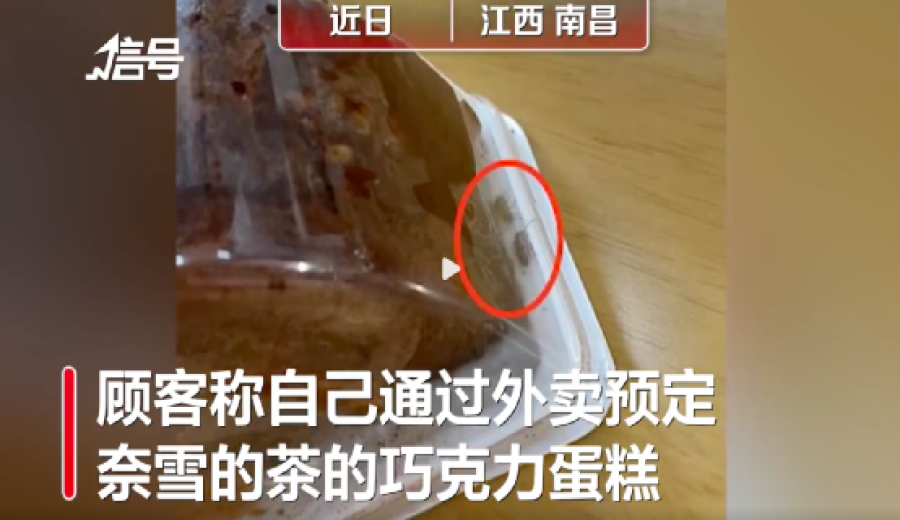
Introduction:As demand for summer desserts rises, concerns about food safety in delivery services have come to light. A consumer in Nanchang, Jiangxi, received a chocolate cake from Nayuki and was shocked to find two live worms inside, sparking a dispute over liability. This article details the incident, analyzes the differing accounts from both sides, and offers practical advice on inspecting and safeguarding rights regarding delivered food to help readers avoid similar issues.
With rising summer temperatures, the consumption of tea drinks and desserts enters its peak season, but so do food safety concerns. Recently, a resident of Nanchang, Jiangxi, ordered a chocolate cake from Nayuki Tea via a delivery platform. Upon opening the package, they were horrified to find two live worms still crawling inside the cake, which was extremely off-putting.
After noticing the issue, the consumer immediately contacted the Nayuki outlet involved. The store manager, after reviewing surveillance footage, stated that there had been no abnormalities during the cake’s frozen storage or thawing process, leading them to believe the issue did not stem from the store’s preparation or preservation. Additionally, the manager pointed out that nearly three hours had passed between the order being dispatched and the customer receiving it, making it difficult to determine where responsibility lay.
However, the customer expressed skepticism about this explanation. They insisted they had never opened the external packaging of the cake and suspected the worms might have hatched from eggs during transit. Regarding this dispute, netizens have shared their opinions, particularly focusing on the challenges of gathering evidence and protecting one's rights with delivered food.
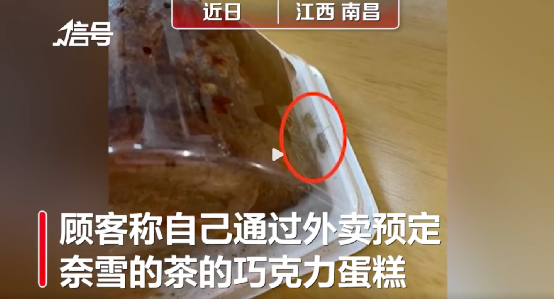
On the day of the incident, July 20, staff at the involved outlet stated that they had offered the customer a solution: to remake the cake and redeliver it. However, the customer did not accept this. Since the entire delivery process took nearly three hours, the outlet could not clearly determine at which stage the problem occurred. As a result, they are currently awaiting investigation and liability determination from relevant government departments and the delivery platform, and have chosen not to make any further public statements for the time being.
Regarding the customer’s speculation that the worms may have hatched from eggs, many netizens expressed doubts. One netizen shared their own experience, pointing out that once delivered food leaves the store and is not consumed immediately, it often becomes very difficult to protect one's rights if problems arise afterward. Even if feedback is given to the merchant, some stores can provide in-store surveillance footage to clarify responsibility, but others cannot prove the product was intact when it left the store. More importantly, if consumers do not take videos of the unboxing or inspection process upon receipt, it is often difficult to gain recognition from market regulatory authorities.
This netizen also mentioned that, based on advice from legal professionals they consulted regarding civil law, it is recommended that consumers record the entire food reception process when receiving delivered meals or have a notary present. However, even with such evidence, merchants might still shift responsibility to the delivery personnel. Therefore, in most cases, gathering evidence and defining responsibility for delivered food remains quite challenging.
Food safety is directly related to consumer health. In this incident, the question of who is responsible for the live worms in the cake remains unresolved. Although the country has gradually been tightening food safety enforcement, similar incidents continue to occur and are difficult to completely eliminate.
Experts suggest that, from the merchants' perspective, internal self-inspection mechanisms should be strengthened to ensure that every step of the food preparation process is fully documented, and all aspects of food preservation are properly managed. For consumers, upon receiving delivered food, they should immediately inspect the condition of the product. If any abnormalities are found, it is best to film the issue on the spot in the presence of the delivery rider. These seemingly simple steps can actually play a practical role in safeguarding the rights of both parties.
The above content is compiled by CoffeeHunters, a coffee news website.


