







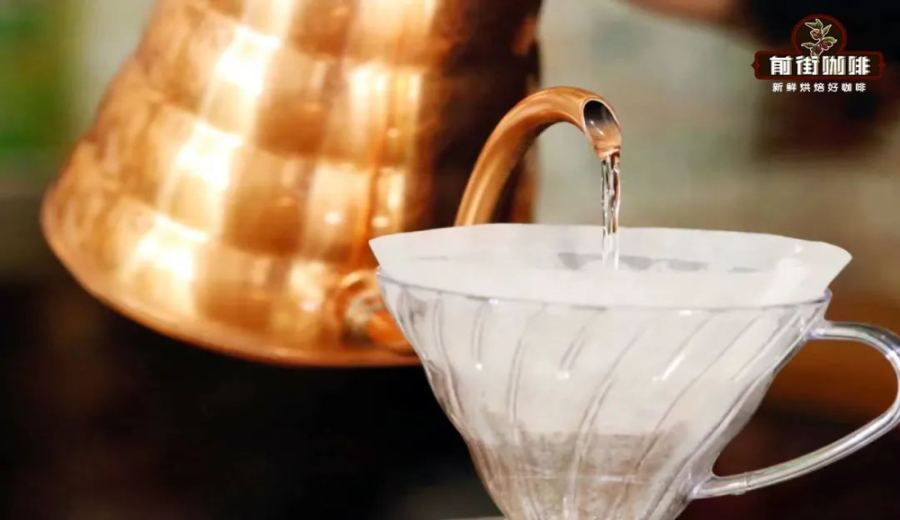
Introduction:Mastering pour over coffee hinges on understanding four core parameters: coffee-to-water ratio, grind size, water temperature, and extraction time. These elements not only influence one another but also directly determine the balance of acidity and sweetness, as well as the overall flavor profile of the coffee. This article delves into the interactive logic behind these parameters and offers practical adjustment suggestions tailored to different coffee origins and roast levels, helping you systematically improve your pour over skills and brew more desirable coffee flavors.
Many coffee enthusiasts, when first trying pour over, are often captivated by the barista’s smooth pouring technique, assuming that brewing a great cup mainly relies on skilled hand movements. However, what truly affects the flavor is the mastery and flexible application of extraction parameters. Through years of experience, we’ve found that while water control is a fundamental skill for beginners, the essence of flavor adjustment lies in understanding the relationship between the four key elements—coffee-to-water ratio, grind size, water temperature, and time—and making corresponding adjustments based on the beans’ characteristics.
People often ask: “Is pour over coffee about feel or understanding?” The answer is clear—while stable pouring technique is certainly important, without understanding how each parameter influences the final flavor, it’s difficult to consistently brew an ideal cup. It’s like learning to play the piano: finger dexterity is just the first step; understanding music theory and rhythm is what allows you to play a moving melody. The same applies to pour over—steady hand control is the foundation, but what truly makes the coffee shine is your scientific control over the extraction conditions.
The four key parameters of pour over coffee—grind size, coffee-to-water ratio, water temperature, and time—each directly impact the extraction outcome. For example, if you grind finer or increase the water temperature, the extraction rate rises, leading to a bolder coffee flavor that may even turn overly bitter. Conversely, using a coarser grind or lower water temperature reduces the extraction rate, often resulting in a more acidic and less complex cup. Additionally, grind size indirectly affects extraction time: the finer the grind, the slower water flows through, naturally extending the brew time; a coarser grind speeds up filtration and shortens total extraction time.
Each parameter has a recommended adjustment range, derived from extensive practical brewing experience. For instance, a common grind size benchmark is 70% to 80% passing through a #20 sieve, suitable for most medium to light roasted coffee beans. As for coffee-to-water ratio, it’s generally advised to stay within 1:13 to 1:18, fine-tuned according to personal taste, with 1:15 or 1:16 being the most commonly used. Water temperature is typically controlled between 86 to 93°C, slightly higher for light roasts and lower for dark roasts. Regarding extraction time, taking 15 grams of coffee as an example, most cases fall between 1 minute 40 seconds and 2 minutes 20 seconds—times that are too long or too short may lead to flavor imbalance.
To consistently brew delicious coffee, you can’t rely solely on intuition—you need to understand how changes in each parameter interact. For example, simply grinding finer to increase extraction rate, without adjusting water temperature or time, can easily lead to over-extraction, resulting in unpleasant bitterness. Therefore, it’s recommended toadjust only one variable at a timeand carefully observe the flavor changes, so you can accurately gauge how each parameter affects the final taste.
With so many coffee beans from diverse origins and flavor profiles on the market, designing a unique brewing recipe for each bean can be quite challenging. Therefore, it’s advisable to categorize beans based on origin and roast level, using similar parameter settings as a starting point. For example, beans from Ethiopia such as Yirgacheffe and Sidamo typically exhibit distinct citrus and berry notes, characterized by high acidity and a light body—ideal for medium to high water temperatures and slightly finer grinds to highlight their bright acidity and aromas. On the other hand, beans from Central and South American regions like Guatemala and Colombia often carry deeper flavors such as smokiness, nuts, and chocolate, usually medium to dark roasted, so lowering the water temperature and using a slightly coarser grind can help reduce the sharpness caused by over-extraction.
Roast level is also a crucial factor in determining parameter choices. Medium to light roasted beans emphasize acidity and fruity notes; it’s recommended to use a medium-fine grind with 75% to 80% passing through a #20 sieve, and set the water temperature between 90 to 93°C to help bring out delicate flavor layers. For medium to dark roasted beans, where caramelization reactions are more pronounced and bitterness along with body become the main characteristics, it’s better to adjust the grind to 70% to 75% passing through a #20 sieve and lower the water temperature to 86 to 89°C to avoid excessive extraction that could result in heavy tannins.
During each actual brew, it’s recommended to meticulously record the parameters used, including coffee dosage, grind size (referenced by sieve percentage), coffee-to-water ratio, water temperature, pouring technique, and total extraction time. Through continuous experimentation and tasting, you’ll gradually discover the optimal combination for each specific bean. For example, there was a case where 15 grams of red honey processed Yirgacheffe were brewed with initial parameters of 80% sieve grind, 1:15 coffee-to-water ratio, 91°C water temperature, and a three-pour method resulting in a total time of 2 minutes 30 seconds—the outcome was a bitter flavor with an overly heavy cocoa aftertaste. Later, the grind was adjusted to 75% sieve, keeping other factors the same, and the brew time was shortened to 1 minute 55 seconds—the resulting cup featured a more refreshing profile of citrus, berries, and oolong tea notes, significantly more balanced and smooth.
In summary, pour over coffee is an art that blends science and sensory perception. Only by understanding the interplay of coffee-to-water ratio, grind size, water temperature, and time can you tailor the optimal extraction approach for different coffee varieties, showcasing the most captivating spectrum of flavors. Remember, stable technique is just the beginning—the real advancement comes from grasping the meaning behind each parameter and skillfully applying them in every brew.
The above content is compiled by CoffeeHunters, a coffee news website.


