








Introduction:Have you ever thought about opening a coffee shop because of your love for coffee? Specialty coffee is not synonymous with pour over or single-origin coffee, and running a café involves much more than just brewing skills. This article will help you clarify the true definition of specialty coffee, analyze common misconceptions and operational challenges of opening a coffee shop, and take you through everything from roasting and quality control to operating costs—providing comprehensive knowledge and practical advice essential for transitioning from a coffee enthusiast to a café owner.
Many people, driven by their passion for coffee, dream of opening their own café. However, once they actually enter the industry, they realize that “loving to drink coffee” and “running a coffee shop” are two entirely different things. If you’re also considering opening a café but haven’t yet clarified your direction, start by understanding the essence of specialty coffee and the realities of running a shop.
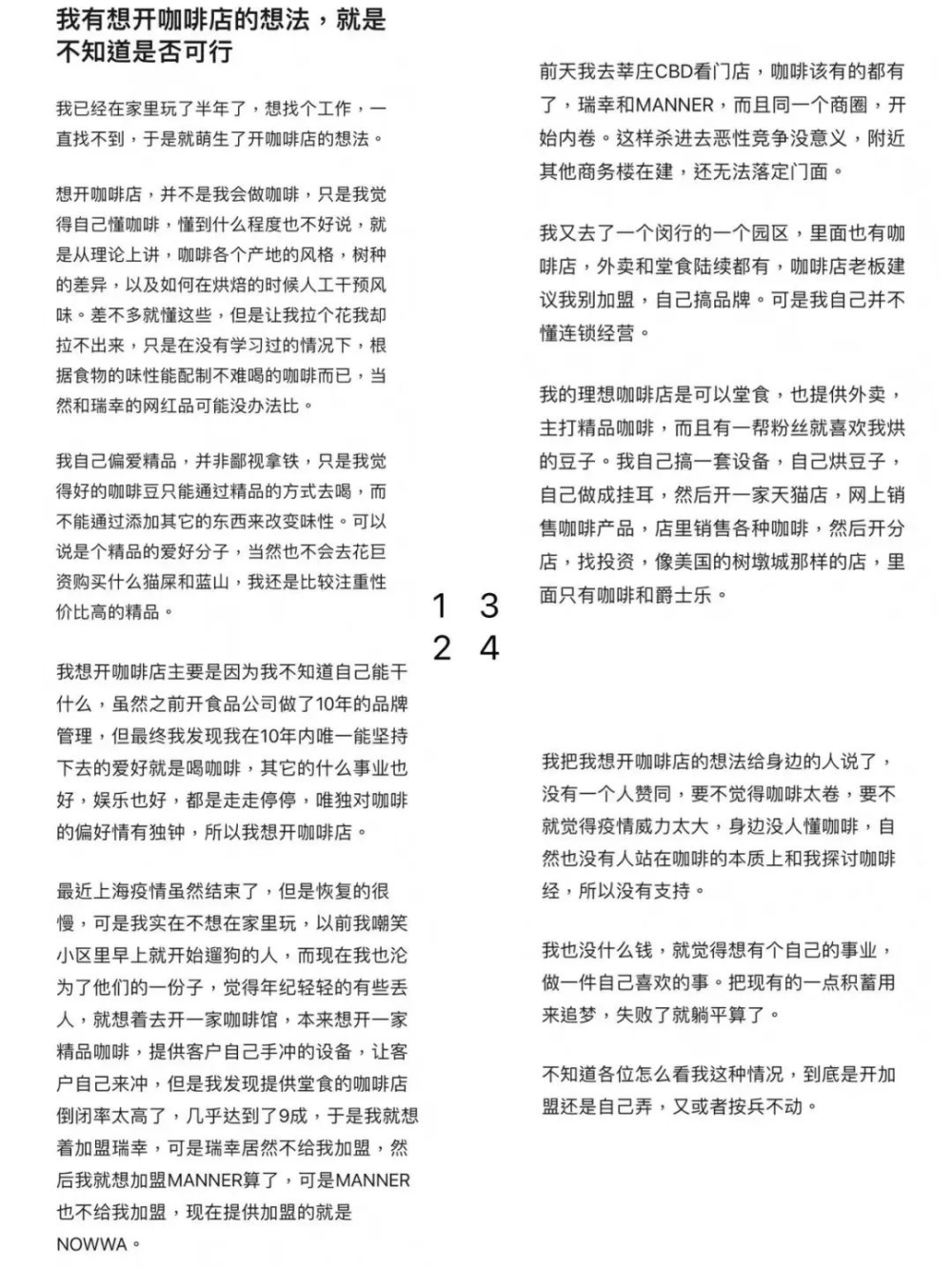
One netizen posed this question: “I have the idea of opening a coffee shop, but I’m not sure if it’s feasible.” This question actually reflects a common misconception. Many people, either because they haven’t found an ideal job yet or have some savings on hand, get the idea to open a shop. But the reality is, simply liking coffee is far from enough to sustain a café in the long term.
First, we need to correct a common misunderstanding: specialty coffee ≠ pour over coffee, nor is it the same as single-origin coffee. Many people often confuse these three concepts when discussing specialty coffee, even mistakenly believing that specialty coffee must be brewed using a pour over method. This notion not only narrows the definition of specialty coffee but can also lead entrepreneurs astray in their direction.
In English, “specialty coffee” is referred to as Specialty Coffee, meaning high-quality coffee beans grown in specific climates and geographical environments, possessing distinct regional flavor profiles. The key lies in their growing conditions and the resulting flavor expression, not merely the price or brewing method. In other words, even blends can be classified as specialty coffee as long as their raw materials meet strict standards.
As for “single-origin coffee,” it refers to coffee beans sourced from a single origin, region, farm, or plot, emphasizing their regional characteristics—but not limited to a specific coffee variety. It stands in contrast to “blended coffee,” which is a mix of beans from multiple regions in certain proportions. For example, native varieties from the Ethiopian region may consist of multiple types, but because they come from the same geographic area, they can still be considered single-origin coffee.
Many people promoting specialty coffee often bring personal preferences into play, such as believing that only pour over methods can showcase the pure flavors of coffee. But the essence of specialty coffee actually lies in the precise control of every step—from green bean selection and roast profile setting to the final extraction—in order to fully express the unique terroir characteristics of the beans. And this process is by no means limited to just pour over.
The Specialty Coffee Association of America (SCAA) has pointed out that specialty coffee depends not only on the quality of the beans themselves but also on the entire production and brewing process. From green bean procurement and roasting to brewing and presentation, every step must strive for the highest standard to truly qualify as specialty coffee. Therefore, if you want to open a shop centered around specialty coffee, you must first have an in-depth understanding of the entire industry chain, rather than just staying at the tasting stage.
Assuming you plan to focus on pour over and let customers brew their own, you also need to consider: do you have sufficient brewing knowledge to guide customers in extracting the desired flavors? The value of specialty coffee often comes from the technical ability to consistently present the characteristics of the beans. If the person in charge lacks stable brewing skills themselves, how can they earn the trust of customers?
Now let’s talk about roasting. Many people think roasting is simply cooking the beans, but in fact, it’s a complex craft involving temperature, time, rotation speed, and the changing state of the beans. Different regions, altitudes, and processing methods all affect the optimal roast level for coffee beans. Adjusting the roasting strategy according to the characteristics of each batch is one of the keys to determining the final flavor of the coffee—and this requires long-term learning and hands-on accumulation.
If you plan to hire professional baristas, labor costs will be another major challenge. Take Shanghai as an example, where both rent and wages are at high levels, and new shops often struggle to attract steady foot traffic right from the start. Many successful coffee brands rely on long-term market sedimentation or ample capital backing, rather than achieving success overnight.
Additionally, if you consider selling your own roasted beans through e-commerce platforms like Tmall, you’ll also need to pre-evaluate the related costs. Joining Tmall requires registering a brand trademark, applying for a food operation permit, and paying a deposit (usually 100,000 to 150,000 RMB), with each transaction also incurring a platform commission of about 3%–5%. These hidden expenses can be a significant burden for small-scale startups.
As for franchising, while many coffee chains on the market offer so-called “low-barrier” entrepreneurial opportunities, in reality, aside from a high one-time franchise fee, subsequent expenses for rent, labor, and ingredients are also considerable. Especially in first- and second-tier cities, where the market is nearing saturation, non-mainstream brands find it even harder to break through.
All in all, if you’re truly interested in getting into the coffee industry, it’s advisable to first deeply study coffee knowledge—mastering core skills step by step from green beans, roasting, to brewing—and carefully evaluate your financial situation and market positioning. Opening a shop isn’t something that can be achieved on a whim; it’s a complex endeavor that turns passion into business.
The above content is compiled by CoffeeHunters, a coffee news website.


