







Introduction:Coffee and tea beverages both belong to the popular drinks category, but their development trajectories have been vastly different. While new tea beverages have been cutting prices, new-style coffee has gone against the trend by raising prices, even showing signs of becoming "milk-tea-like." This article delves into the price trends, market positioning, and product innovations to explore whether new-style coffee might repeat the over-competition pitfalls of new tea beverages, and analyzes how consumers perceive these changes.
With the arrival of summer, cold drink consumption has peaked. Whether at busy street corners or bustling commercial areas, the beverages most commonly seen in the hands of young people are either tea or coffee. But if you look closely, you’ll notice that their development paths in recent years have clearly diverged: new tea beverage brands like HEYTEA and Nayuki have chosen to lower prices to survive, while coffee brands like Luckin and Starbucks have done the opposite by raising product prices. At the same time, more cross-industry players—such as Huawei, Li-Ning, and China Post—have entered the coffee market, intensifying competition further.
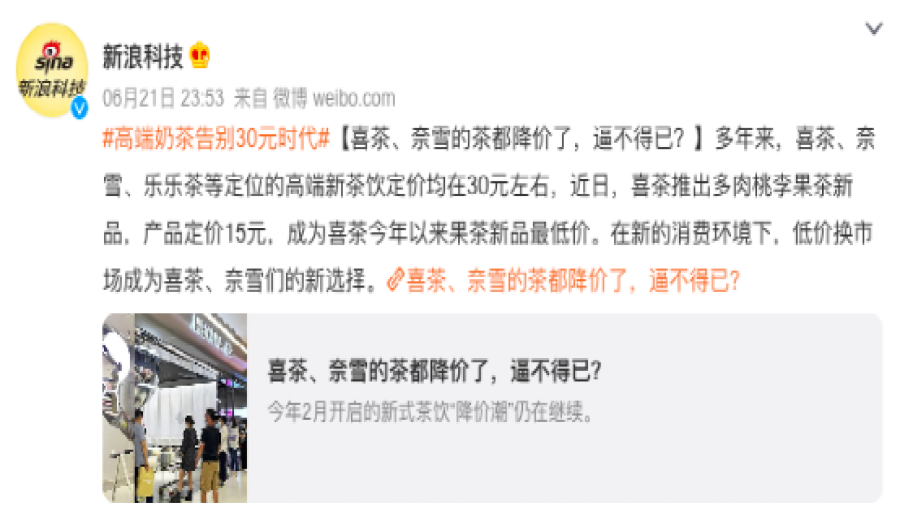
Looking back over the past few years, new tea beverages were once the darlings of capital, with new brands constantly emerging and financing amounts hitting record highs, with single cup prices even surpassing 40 RMB. However, starting in 2021, many brands began adjusting their strategies—for example, HEYTEA announced in early 2022 that it was bidding farewell to the 30 RMB pricing era, focusing on mid-range products around 15 RMB, and brands like Nayuki Tea and Lelecha followed suit with price cuts. These adjustments reflect the gradually declining perceived value of new tea beverages in the market, especially among younger consumer groups.
In contrast, the Chinese coffee market presents a different picture. Take Luckin as an example: despite facing financial turmoil in 2020, it made a rapid rebound within just two years—not only achieving profitability but also surpassing Starbucks in store count by 2022. Luckin’s success is largely due to its aggressive expansion strategy and steadily increasing average spending per customer. According to its Q3 2021 financial report, the average selling price of Luckin drinks had reached 15.2 RMB, 5.5 RMB higher than in Q4 2019, indicating a gradual increase in its perceived value among consumers.
Notably, unlike the price-cutting trend in new tea beverages, coffee prices have not decreased but have instead risen. This is true not only for Luckin but also for Starbucks, which has raised prices on some products. Price fluctuations often reflect shifts in market positioning. The rise in coffee prices suggests that its status and perceived value among consumers are growing, which is also related to the increased exposure of coffee culture in films, TV, and daily life.
However, the newly emerged new-style coffee has gradually deviated from tradition, with a trend toward becoming "milk-tea-like" becoming increasingly evident.Image source: Internet In many new-style coffee beverages, in addition to the basic coffee and milk, common ingredients like cheese, matcha, and black sugar-flavored syrups—often used in milk tea—are frequently found, along with milk tea toppings such as black sugar tapioca pearls. Some products even replace classic milk with flavored milk bases, and creative names like "Watermelon Latte" and "Meteor Thick Milk Latte" are emerging one after another. While these drinks are novel, they inevitably draw comparisons to the development model of new tea beverages.
The once red-hot new tea beverage market has now entered an adjustment phase, while new-style coffee seems to be taking up the baton of "creative beverages." A variety of novel drinks are continuously launched, new brands are springing up like mushrooms after rain, and even brands originally focused on tea beverages, like HEYTEA, have begun investing in the coffee market. Against this backdrop, whether new-style coffee will fall into the same trap of irrational over-competition and price wars as new tea beverages is a matter of concern for both the industry and consumers.
In summary, although coffee and tea beverages are both high-frequency consumer drinks, there are significant differences in market positioning, consumer psychology, and pricing strategies. Whether new-style coffee can forge a healthy and sustainable development path—rather than repeating the mistakes of new tea beverages—will depend on whether brands can strike a balance between innovation and quality, and truly meet consumers’ pursuit of the authentic flavor of coffee.
The above content is compiled by CoffeeHunters, a coffee news website.


