







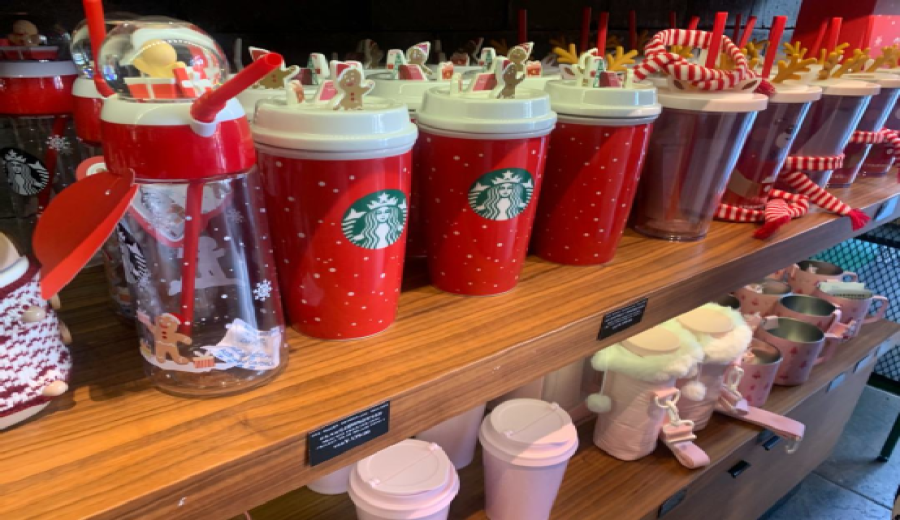
Introduction:Starbucks is often seen as a representative of chain coffee shops in the Taiwanese market, but in fact, its best-selling items are not coffee, but rather various seasonal and collaboration cup designs. Dozens of themed cups launched each year often trigger buying frenzies, with prices ranging from just over a hundred to several hundred New Taiwan Dollars. Their sales performance even surpasses that of the coffee itself. This article takes an in-depth look at Starbucks’ “cup factory” phenomenon and explores why cups have become a cash cow for the brand.
In Taiwan and even globally, Starbucks is often regarded as a symbol of coffee culture, but its business highlights go beyond just coffee beverages. Interestingly, compared to frequently updated coffee products, Starbucks’ cups more often become the focus of the market. Many consumers would rather cut back on their coffee budget to get their hands on a limited-edition or collaboration cup.
In terms of price, a cup of Starbucks coffee typically ranges from around thirty to a hundred New Taiwan Dollars, making it a kind of “luxury” item that some consumers enjoy only occasionally. However, when a meticulously designed cup priced between one or two hundred, or even as high as four or five hundred New Taiwan Dollars, is released, many young people hesitate not at all to join the rush to buy. Each year, Starbucks launches dozens of limited-edition themed cups and collaborative designs, and their total revenue may actually exceed that from coffee sales themselves.
Take the 2019 “Cat Paw Cup” as an example — the moment it was launched, it triggered a buying craze. At that time on the Tmall platform, the product sold out in just 0.07 seconds after going live, with many customers even queuing overnight outside stores, and some even getting into disputes over the cups. On Taobao, search volume for the keyword “Starbucks Cat Paw Cup” surged by 12,000%, and what was originally a cup costing less than a hundred New Taiwan Dollars was being resold in the second-hand market for as much as 2,500 New Taiwan Dollars. The intensity of the market reaction was astonishing.
Not just the Cat Paw Cup — every time Starbucks releases a new cup design, it manages to attract a large number of loyal fans eager to be the first to buy. Whether it's seasonal themes, anime collaborations, or holiday exclusives, the wide variety of ever-changing designs means cups are no longer just drinking tools, but also a way to showcase trends and personal taste.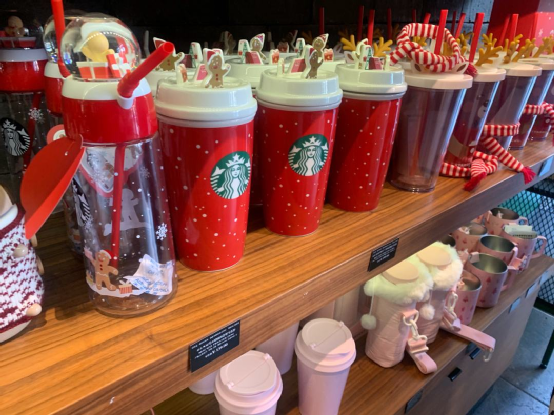
Compared to coffee beverages, Starbucks’ cup strategy clearly resonates more with the psychology of younger consumers. Many are willing to “switch their drinkware just to have a unique and aesthetically pleasing cup,” believing that as long as the cup is attractive enough, even drinking water becomes more motivating. Psychologically, the stimulation of new objects can trigger the brain to release dopamine, generating a sense of pleasure; however, when the same cup is used for too long, the brain’s response to its stimulus gradually dulls, which in turn drives consumers to continuously seek out new cup designs, creating a cycle of repeat purchases.
Interestingly, although Starbucks performs outstandingly in the cup market, it is relatively conservative when it comes to developing new coffee products. According to market observations, Starbucks launches only about 30 new coffee products each year in the Chinese market, far fewer than competitors like Luckin Coffee, which introduced 113 new drinks in 2021 alone. Even some drinks considered “new flavors” in the Taiwanese market, such as “Iced Shaken Espresso,” actually already existed in Europe and America under the original name “Caffe Shakerato,” and are not entirely new inventions.
On the other hand, brands that focus on specialty coffee place greater emphasis on the selection of coffee beans and the freshness of roasting, highlighting the beans themselves to deliver a more layered and flavorful coffee experience. For consumers who truly value coffee quality, choosing stably supplied, professionally roasted coffee beans often brings more satisfaction than chasing limited-edition cups.
Overall, through its ever-changing lineup of limited-edition cups, Starbucks has successfully created a “cup culture” among younger consumer groups. Many are willing to reduce their coffee purchases but refuse to miss out on any new cup design. This strategy of transforming peripheral products into a core source of brand revenue is undoubtedly one of the unique approaches that sets Starbucks apart in the market.
The above content is compiled by CoffeeHunters, a coffee news website.


