







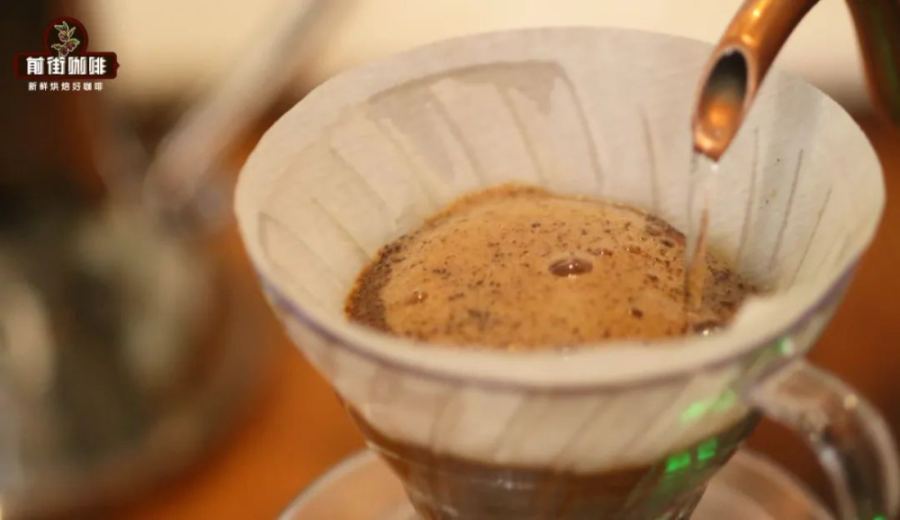
Introduction:The flavor profile of pour over coffee is actually determined from the very start by the height at which you pour the water. Most coffee enthusiasts tend to keep their pouring height between 0 to 7 centimeters, but this seemingly simple action can significantly alter the extraction efficiency and taste layers of the coffee through three key factors: the penetration power of the water stream, temperature loss, and vertical stability. This article delves into the practical effects of different pouring heights, supported by experimental comparative data, to help you find a pouring strategy that suits your brewing style—beneficial for both beginners and advanced brewers alike.
In the world of pour over coffee, many people don’t pay special attention to the distance between the spout and the coffee surface, yet this action has a considerable impact on the final flavor. The pouring height of most pour over enthusiasts typically ranges between 0 to 7 centimeters. Some prefer to keep the spout close to the liquid surface and pour slowly, while others like to create a longer water stream. Although there’s no absolute right or wrong with these methods, different pouring heights will produce noticeable differences in extraction effectiveness and flavor profile through three critical elements: the penetration power of the water stream, heat dissipation, and vertical stability.
Water Stream Penetration Power: The force that agitates the coffee bed determines extraction evenness
During the pour over process, the effect of the water stream on the coffee grounds is not merely about wetting them—it’s more about its ability to penetrate and agitate. Generally, the streams we pour are not perfect cylinders but rather inverted cones that are thicker at the top and narrower at the bottom. When the pouring height is too high, the water stream is prone to breaking into droplets or even intermittent flow. To avoid affecting stable extraction, it’s generally recommended to keep the pouring height within 7 centimeters.
When the water stream falls from a higher position, its penetration power significantly increases, creating a stronger impact and agitation on the coffee bed, which helps accelerate the release of flavor compounds. However, if the stream is too low, its penetration power is relatively gentle, and its effect on agitating the coffee bed is less obvious. It’s important to note that excessive agitation can easily lead to over-extraction, which is one of the main reasons some coffees taste bitter or astringent. Therefore, adjusting the pouring height appropriately allows for more precise control over the evenness of extraction.

Temperature Loss: Height affects the actual brewing water temperature
Many people pay close attention to water temperature settings when configuring their pour over parameters, but in reality, the water temperature begins to dissipate as soon as it leaves the spout. One coffee brand conducted a set of comparative experiments where all other conditions were kept identical, changing only the pouring height—brewing with 2 cm and 10 cm respectively. The results showed that the coffee brewed at 2 cm had a concentration of 1.44%, noticeably higher than the 1.30% concentration from the 10 cm pour.
The main reason for this concentration difference is the temperature loss caused by the water stream cooling down as it interacts with the air. When the water stream falls from a greater height, it has a larger surface area exposed to air, resulting in more significant heat loss, which leads to a lower actual water temperature reaching the filter. This, in turn, affects extraction efficiency and coffee concentration. Therefore, when using large-capacity filter cones for small coffee doses, a higher pouring position is more likely to cause temperature loss issues—not only increasing the difficulty of operation, but also potentially compromising overall flavor due to insufficient temperature.
Water Stream Verticality: Maintaining a stable stream ensures even extraction
The water outlet design of most pour over kettles is not entirely vertical but has a slight parabolic curve. Especially at lower pouring heights, the arc of the stream can easily lead to uneven extraction. When the spout is too close to the coffee surface, an imperfectly vertical stream may result in one side of the coffee bed being thicker and the other thinner, or even cause localized over-extraction or under-extraction.
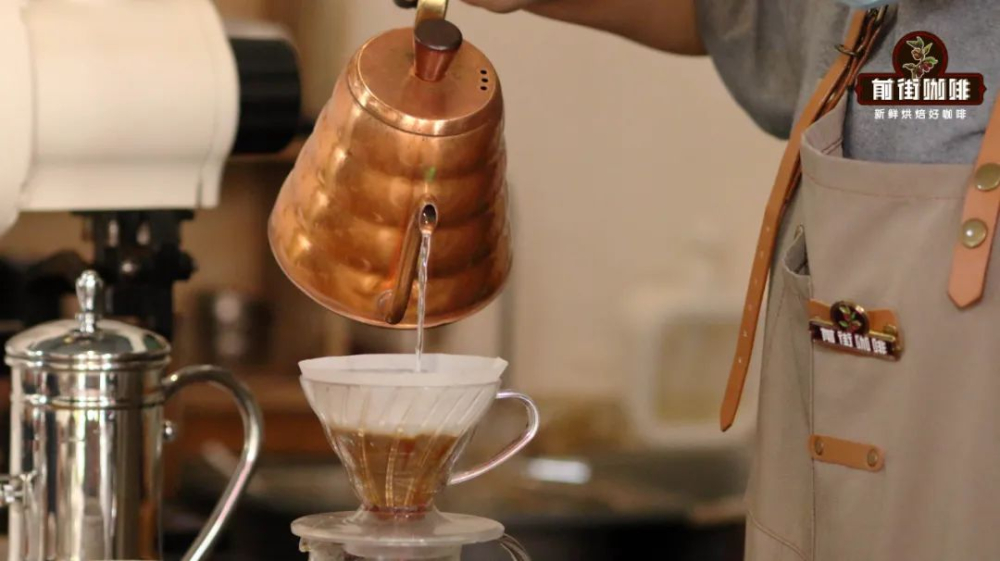
To ensure the water stream remains stable and even when it contacts the coffee bed, it’s recommended to maintain a distance of at least 2 to 3 centimeters between the spout and the liquid surface during pouring. This gives the slightly arced stream enough space to adjust into a straighter form, thereby improving the uniformity of the overall extraction.

Practical Advice: How to Adjust Pouring Height Based on Your Needs
In summary, pouring height mainly affects three key elements: the force with which the water stream penetrates the coffee bed, the actual brewing water temperature, and the stability and verticality of the water flow. While there is no absolutely ideal pouring height, understanding the impacts of different heights can help you make more suitable choices during actual brewing.
For example, one coffee brand typically keeps its pouring height between 3 to 4 centimeters during actual brewing. This height strikes a balance between stability and avoids significant flavor deviations caused by being too high or too low. Of course, each barista or enthusiast can adjust to the most suitable pouring strategy based on their own brewing habits and equipment characteristics—the key lies in understanding how each variable influences the final cup.
The above content is compiled by CoffeeHunters, a coffee news website.


