








Introduction:Luckin Coffee’s “Blue Sky White Cloud Latte,” inspired by the summer sky, garnered attention with its eye-catching sky-blue sugar powder topping. However, it sparked discussions due to its excessive sweetness and preparation flaws. This article delves into this special drink, which is based on the popular Coconut Cloud Latte, analyzing its sweetness ratio, challenges in applying the sugar powder, consumer experiences, and comparing its taste profile with the similar Coconut Thousand-Layer Nari Ice. It also offers purchasing and customization suggestions to help coffee enthusiasts make better choices.
Recently, Luckin Coffee has launched a limited-edition special drink called the “Blue Sky White Cloud Latte,” centered around a fresh summer aesthetic and inspired by the visual imagery of a clear blue sky. This beverage is built upon the previously well-received Coconut Cloud Latte, with the addition of a layer of sky-blue sugar powder on top to enhance its visual appeal and create a more layered presentation. Upon launch, it quickly became a popular choice for social media photo opportunities.
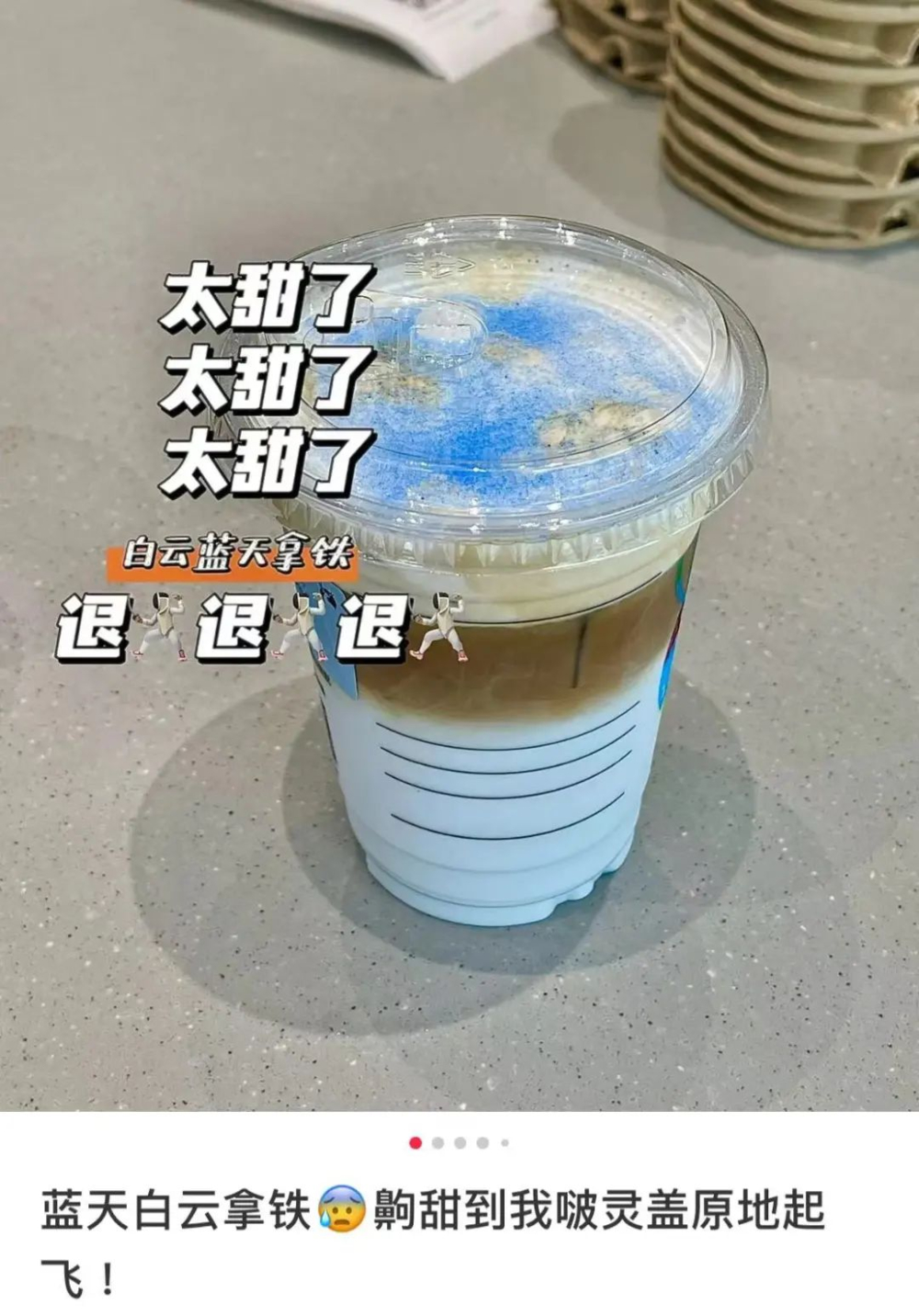
However, many customers were left disappointed by the actual sweetness level after trying it. Most consumers reported that even when they requested “less sugar” or “no sugar” at the time of ordering, the final drink still turned out overly sweet and cloying, with the strong coconut flavor almost completely overpowering the original coffee taste. Some netizens even went as far as saying the drink’s sweetness was almost “throat-coating,” making it hard to enjoy.
According to internal sources, the drink’s sweetness comes from multiple sources: the coconut milk base itself is already somewhat sweet, additional syrup is added during preparation, the whipped cream topping is also on the sweeter side, and the final touch of blue sugar powder adds yet another layer. With these multiple sources of sweetness stacking up, even when customers opt for reduced sugar, the improvement is minimal. In reality, the so-called “less sugar” option only slightly reduces the amount of base syrup used, while the sweetness of other ingredients remains unchanged, resulting in an overall taste that is still noticeably sweet.

Additionally, many consumers noticed that in the official promotional images, the blue sugar powder is evenly scattered, creating a refreshing visual effect. However, in the actual drinks received, the sugar powder is often clumped in one area, which not only affects the appearance but also leads to uneven flavor distribution. Some customers suggest that if you can’t tolerate overly sweet tastes, it’s better to go for no sugar at all and stir the drink thoroughly before drinking, which can help balance the sweetness with the coffee flavor slightly.
Aside from customer complaints about the sweetness, baristas in stores also face practical difficulties when preparing this drink. According to several baristas, the sky-blue sugar powder used is extremely prone to clumping. Before sprinkling it, they have to forcefully tap the container to loosen it slightly, yet even then, it’s difficult to ensure an even distribution when sprinkling. Sometimes using a spoon to scoop the powder instead yields similarly unsatisfactory results. More troublesome is that the sugar powder tends to scatter easily during handling, and if not cleaned up promptly, it may even attract flying insects, adding to the store’s hygiene management challenges.
In addition to the Blue Sky White Cloud Latte, Luckin has also launched another new product this time: the “Coconut Thousand-Layer Nari Ice.” Although this icy drink also contains caramel sauce for flavoring and is not low in sweetness, its presentation in the form of a slushie allows for relatively better integration of flavors. As the ice melts gradually, the sweetness and coconut aroma are released more progressively. Some consumers feel its taste performance is slightly better than that of the Blue Sky White Cloud Latte. However, it is still recommended that customers stir the caramel sauce thoroughly before drinking to avoid localized excessive sweetness. For those who prefer less sweetness, opting for half-sweet or reducing the amount of caramel sauce is advised, though it is not recommended to eliminate it entirely, as it may affect the overall flavor balance.
Based on market feedback and real-world experiences, Luckin’s summer-themed special drinks, while receiving some praise for their visual presentation, still have room for improvement in terms of sweetness control and the details of ingredient application. For consumers, if you prefer a lower sweetness level, it is recommended to actively choose the no-sugar option and stir the drink well, or consider the relatively more balanced Coconut Thousand-Layer Nari Ice from the same series. For the business side, future new product development should not only focus on visual appeal but also take into account sweetness balance, ingredient storage conditions, and ease of actual preparation, in order to provide a more satisfying consumer experience.
The above content is compiled by CoffeeHunters, a coffee news website.


